
Shani remedies
Shani Amavasya remedies
Shani Amavasya is a new moon that falls on a Saturday. Because Saturday is Shani's own day and Amavasya is traditionally kept for the ancestors, the coincidence of the two is treated as a day of particular weight. It occurs only once or twice a year.
Why the day is singled out
Two observances that are usually kept separately fall together: the Saturday observance for Shani, and the Amavasya observance for the ancestors. Where they coincide, the tradition holds that both are kept with more care.
It is a day for observance rather than for asking, which is worth saying plainly given how often it is marketed as an urgent opportunity.
What is customarily done
The Shani observances are as on any Saturday, kept with more attention: sesame oil, lamps, recitation, restraint in food and conduct.
Where a family keeps tarpan or pind daan for their ancestors, Amavasya is the day for it. That is a distinct observance with its own requirements, and we would rather point you to it than fold it into a puja and imply we have covered it.
What is traditionally done
- Til tel abhishek
- Sesame oil offered as on any Saturday, with more care on this one.
- Deep daan
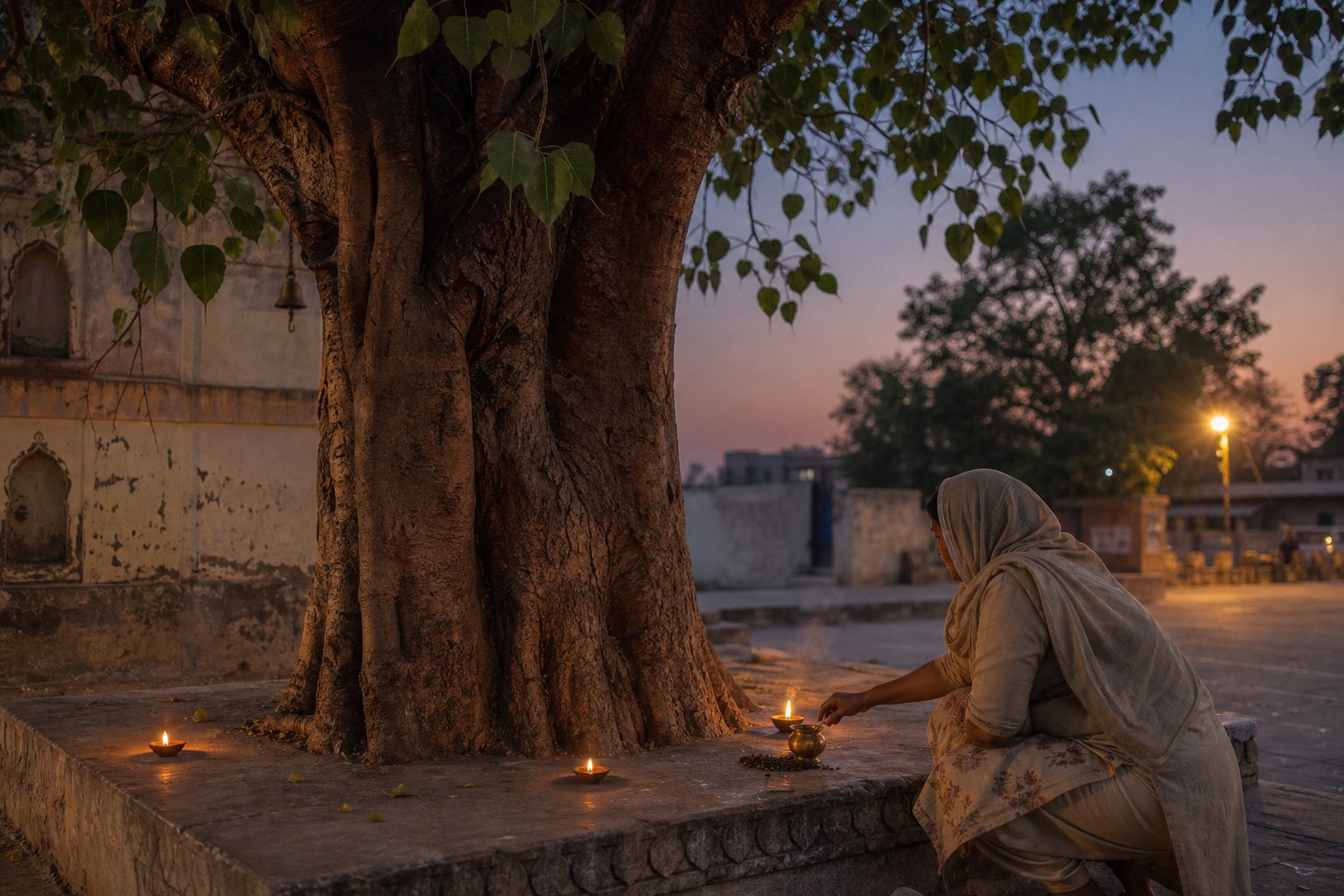
- Lamps lit at dusk.
- Shani mantra jaap
- Recitation kept on the day.
- Daan
- Giving, particularly food and particularly unannounced.
Questions we are asked
Is Shani Amavasya the same as Shani Jayanti?
No. Shani Jayanti marks Shani Dev's birth and falls in Jyeshtha. Shani Amavasya is any new moon falling on a Saturday.
Do you perform ancestral rites on Amavasya?
Not currently. We perform Shani seva. We would rather tell you that than take a booking and let you assume otherwise.