
Shani remedies
Shani Jayanti remedies
Shani Jayanti marks the birth of Shani Dev. It falls on the Amavasya of the month of Jyeshtha, which in the Gregorian calendar usually lands in late May or June. It is the single most observed day in the year for Shani worship, and the day on which our own centre is busiest.
When it falls
The date moves each year because it is set by the lunar calendar. Regional calendars also differ: in some traditions Shani Jayanti is observed on Vaishakha Amavasya rather than Jyeshtha.
We publish the date we are performing on rather than asking you to work it out, and places for that day are limited because it is one ceremony at one centre.
What is traditionally kept
The observances are those kept for Shani generally, done with more care on the day: abhishek with sesame oil, lamps lit with the same, recitation, fasting, and giving.
The emphasis in the tradition is on the giving. Feeding people, and giving quietly to those who work with their hands, are the observances most consistently recorded for the day.
What is traditionally done
- Til tel abhishek
- The central offering of the day.
- Deep daan
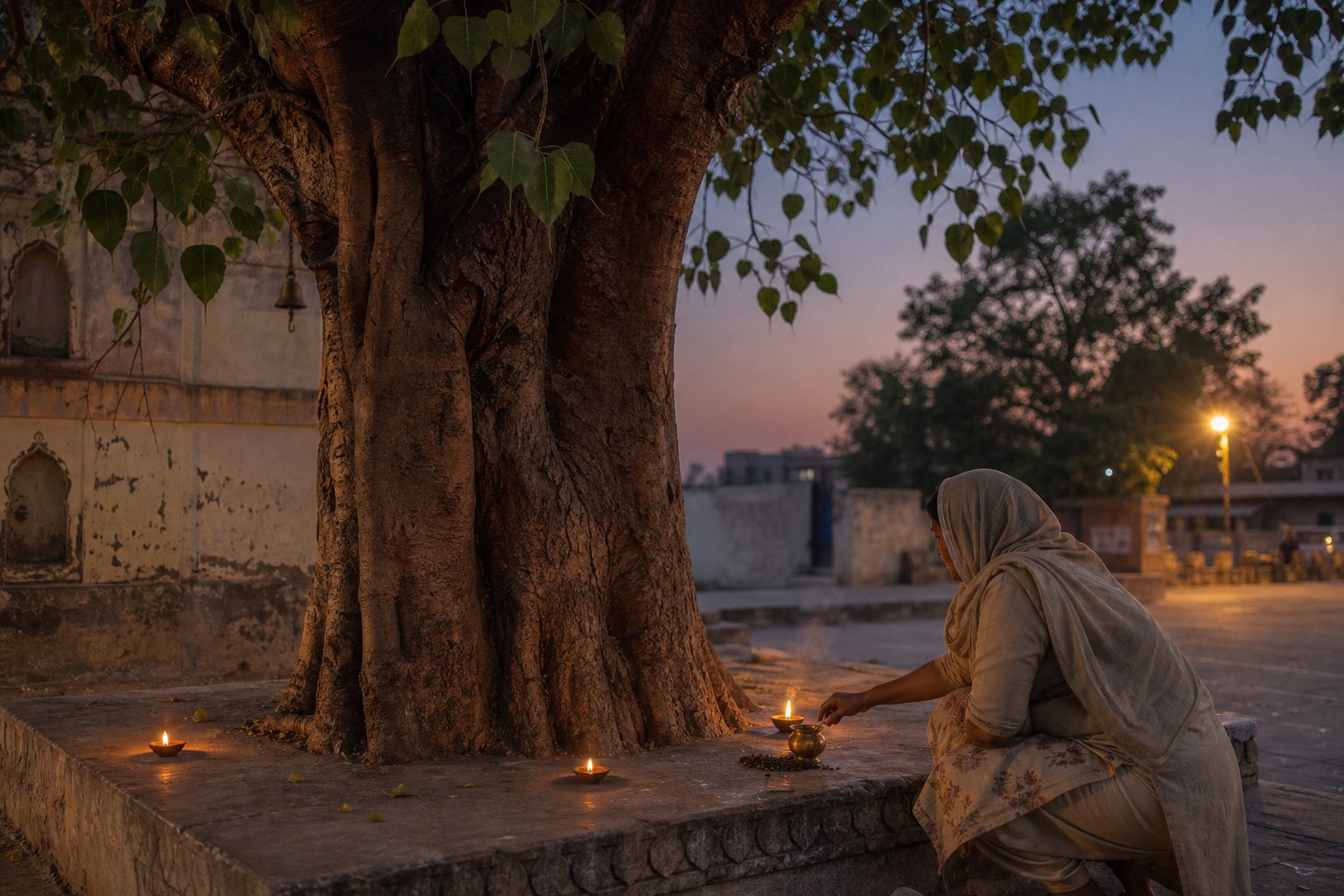
- Lamps lit with sesame oil, offered in the evening.
- Fasting
- Kept by many from sunrise until the evening observance.
- Anna daan
- Feeding - the observance the sources return to most often for this day.
Questions we are asked
When is Shani Jayanti this year?
The date moves with the lunar calendar. The date we are performing on is shown on our booking page rather than stated here, so it can never be out of date.
Do you take more bookings on that day?
Places are limited, because it is one ceremony performed at one centre. When it is full, it is full - we do not add names beyond what can genuinely be recited.