
शास्त्र से From scripture
The Birth of Shani Dev
शनि देव का जन्म
शनि देव सृष्टि के प्रत्येक कर्म को तौलते हैं, और बिना भय, बिना पक्षपात तौलते हैं। यह पद उन्हें दिया नहीं गया था। उनका जन्म एक छाया से हुआ, उनके अपने पिता ने उनकी ओर देखने से मुख मोड़ लिया, और यह पद उन्होंने अकेले खड़े होकर अर्जित किया।
Shani Dev is the one who weighs every deed in creation, and he weighs them without fear and without favour. He was not handed that office. He was born to a shadow, his own father would not look at him, and he earned it standing alone.
वह तेज, जिसके पास कोई रह न सका The light no one could live beside
सूर्य का विवाह संज्ञा से हुआ था, और वह उनसे प्रेम करती थी। कथा यहीं से आरम्भ होनी चाहिए, क्योंकि आगे जो कुछ घटा, वह प्रायः ऐसे कहा जाता है मानो उसमें प्रेम था ही नहीं।
Surya was married to Sanjna, and she loved him. That is where the story has to begin, because everything that follows is usually told as though she did not.
किन्तु वे सूर्य थे। कोई दीपक नहीं, कोई चूल्हे की अग्नि नहीं। साक्षात् सूर्य। उनके समीप बैठना ऐसा था मानो किसी ऐसी भट्ठी में बैठना, जो न कभी शान्त होती है, न कभी मन्द पड़ती है। वह उनके सम्मुख वर्ष दर वर्ष दृष्टि झुकाए रही, और वे इसे लज्जा समझते रहे। वह लज्जा नहीं थी। वह उन्हें देखकर अपनी दृष्टि नहीं बचा सकती थी।
But he was the sun. Not a lamp, not a fire on a hearth. The sun. To sit beside him was to sit inside a furnace that never cooled and never dimmed. She lowered her eyes in his presence, year after year, and he took it for modesty. It was not modesty. She could not look at him and keep her sight.
उसने उन्हें सन्तान दी। उसने अपना स्थान निभाया। और प्रतिदिन वह दाह चलता रहा, और प्रतिदिन वह मौन रही, यहाँ तक कि वह मौन इतना लम्बा हो गया कि अब कहने का कोई आरम्भ ही शेष न रहा।
She bore him children. She kept her place. And every day the burning went on, and every day she said nothing, until the saying of nothing had gone on so long that there was no longer a way to begin.
वह अपने स्थान पर किसी को खड़ा कर देती है She makes someone to stand in her place
तब उसने वह किया, जो केवल एक शिल्पी की पुत्री ही कर सकती थी। वह जाकर उस प्रकाश में खड़ी हो गई, और अपनी ही छाया को, उस श्याम आकृति को जो उसके शरीर ने भूमि पर डाली थी, उसने प्राण दे दिए।
So she did something that only the daughter of a maker could do. She went and stood in the light, and she took her own shadow, the dark shape her body laid on the ground, and she gave it breath.
वह उठ खड़ी हुई। उसका मुख वही था। वही स्वर, वही चाल, वही ढंग जिससे वह दो अँगुलियों से केश पीछे कर लेती थी। कोई भी कहता, यही तो संज्ञा है।
It rose. It had her face. It had her voice, her walk, the way she tucked her hair back with two fingers. Anyone would have said, that is Sanjna.
उसने उसका नाम छाया रखा, जो केवल छाया के लिए शब्द है, और उसे एक ही आदेश दिया, और वह आदेश उसके पति के विषय में नहीं था। वह उसकी सन्तानों के विषय में था। इनके साथ रहना। इन्हें पालना। इन्हें बताना मत।
She named her Chhaya, which is simply the word for shadow, and she gave her one instruction, and it was not about her husband. It was about her children. Stay with them. Raise them. Do not tell them.
फिर वह घर से निकल गई, और देवों के लोक से भी निकल गई, और अश्विनी का रूप धरकर वहाँ चली गई जहाँ प्रकाश साधारण था और देह उसमें विश्राम कर सकती थी।
Then she went out of the house and out of the world of the gods, and she took the form of a mare, and she went where the light was ordinary and a body could rest in it.
छाया का पुत्र The child of the shadow
छाया वहीं रही। उसने घर सँभाला। उसने दूसरी स्त्री की सन्तानों को अपना कहकर पाला और कभी एक बार भी न कहा कि वे किसकी हैं। और समय आने पर वह स्वयं गर्भवती हुई।
Chhaya stayed. She kept the house. She raised another woman's children as her own and never once said whose they were. And in time she was carrying a child of her own.
परम्परा कहती है कि वह काल उसने तप में बिताया। विश्राम में नहीं, सेवा करवाते हुए नहीं, दासियों के हाथों मिष्ठान्न खाते हुए नहीं। वह खुले में नंगे सिर खड़ी रही, सूर्य ठीक उसके ऊपर, और उसने उपवास किया, और अपना मन शिव पर टिकाए रखा और उसे हिलने न दिया।
The tradition says she spent that time in tapas. Not resting, not waited on, not fed sweets by attendants. She stood in the open with her head bare and the sun directly above her, and she fasted, and she held her mind on Shiva and did not let it move.
माता उन महीनों में जो कुछ होती है, शिशु उसी का बना होता है। उसने उसका अनुशासन लिया। उसने उसकी स्थिरता ली। और उसने वह सूर्य भी लिया जो प्रतिदिन उस पर तपता रहा था, और वह उसके भीतर उतरकर उसे श्याम कर गया।
Whatever a mother is in those months, the child is made of. He took her discipline. He took her stillness. And he took the sun that had beaten down on her every day of it, and it went into him and turned him dark.
वह नीलाञ्जन के वर्ण का जन्मा। वह वैसे नहीं रोया जैसे शिशु रोते हैं। वह शान्त था, और मन्द था, और आगे चलकर उसी मन्दता से उसका नाम पड़ा: शनैश्चर, जो धीरे चलता है।
He was born the colour of blue-black collyrium. He did not cry the way infants cry. He was quiet, and he was slow, and later they would name him for that slowness: Shanaishchara, the one who moves slowly.
पिता ने उसे एक बार देखा His father looks at him once
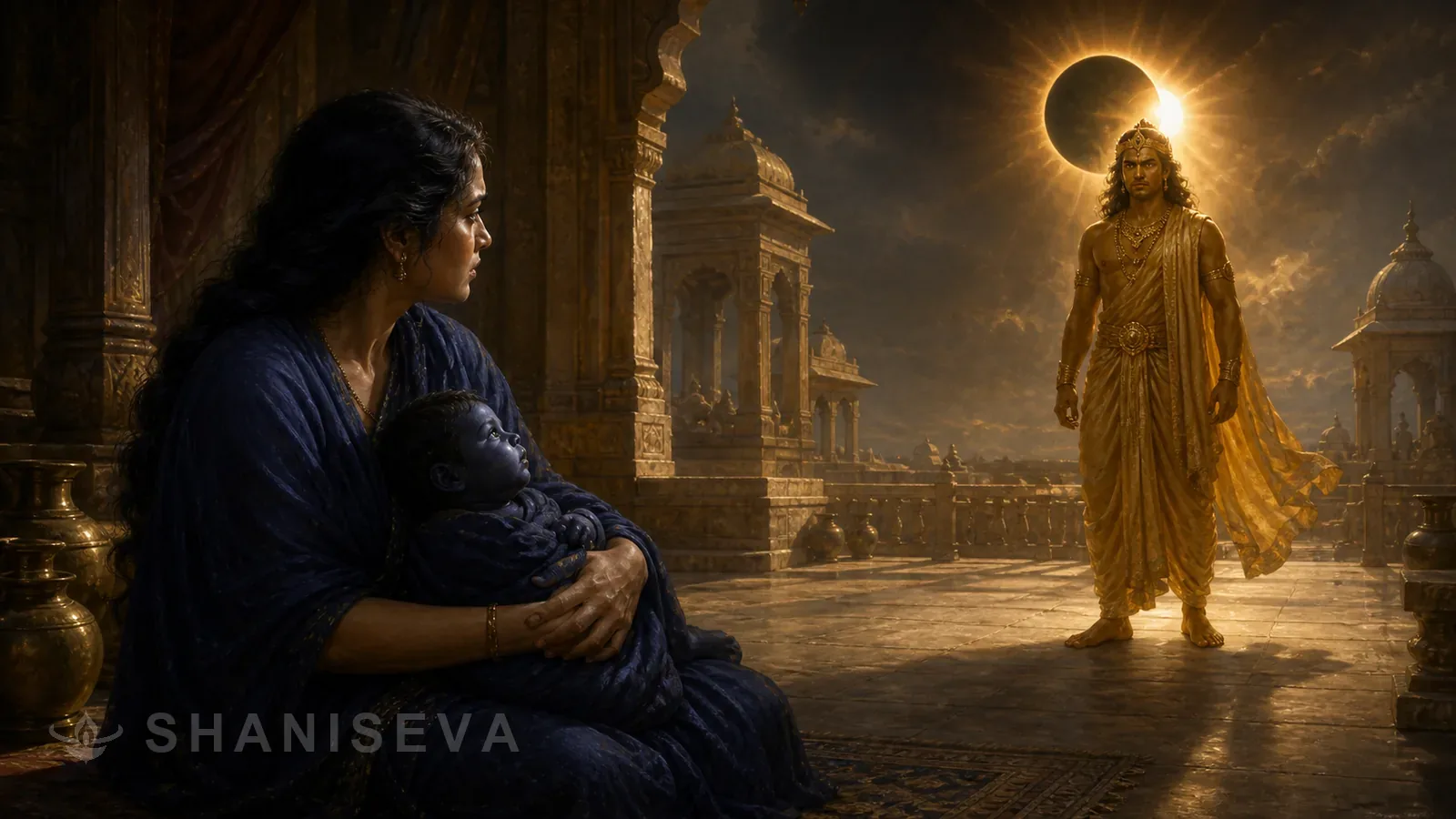
सूर्य अपने पुत्र को देखने आए।
Surya came to see his son.
और शिशु ने पहली बार आँखें खोलीं, और अपने पिता को देखा।
And the child opened his eyes for the first time, and looked at his father.
सूर्य काले पड़ गए। मन्द नहीं हुए। ग्रहण लग गया। जहाँ बालक की दृष्टि पड़ी, वहाँ से उनका ताप निकल गया, और जब तक वह दृष्टि रही, सूर्य वही थे जो उनका पुत्र है: श्याम, और शीतल, और मन्द।
The Sun went dark. Not dimmed. Eclipsed. The heat went out of him where the boy's gaze landed, and for as long as it held, Surya was the thing his son was: black, and cold, and slow.
उन्होंने उसे भोगा था। यही वह अंश है जिसे सब छोड़ देते हैं। उन्हें अपने पुत्र के विषय में पहले से चेताया नहीं गया था, और बाद में किसी देखने वाले ने आकर समझाया भी नहीं था। वह उन्हीं पर, उन्हीं की देह में घटा, और क्षण भर के लिए सूर्य ने ठीक-ठीक जान लिया कि शनि होना क्या है।
He had felt it. That is the part everyone leaves out. He was not warned about his son and he did not have it explained to him afterwards by someone who had seen it. It happened to him, in his own body, and for a moment the Sun knew exactly what it is to be Shani.
और उन्होंने उसी क्षण निश्चय कर लिया, और वह निश्चय उन्होंने सदा के लिए निभाया। वे उस बालक की ओर फिर कभी नहीं देखेंगे।
And he decided, in that moment, and he kept the decision for the rest of time. He would not look at the boy again.
शेष बात भी उन्होंने स्वर में कह दी, जैसे मनुष्य तब कहता है जब वह न मानने का मन बना चुका हो। बालक श्याम है। माता छाया है। यह मेरा नहीं है।
He said the rest of it out loud too, the way a man does when he has already made up his mind not to believe. The child was dark. The mother was a shadow. This is not mine.
नवजात इसका उत्तर नहीं दे सकता। उसके पास कोई तर्क न था। उसके पास केवल अपनी देह थी, जिसका वर्ण गलत था, और एक माता थी जो अपने विषय में सत्य कहती तो वह वचन टूटता जिसे निभाने के लिए ही उसे रचा गया था।
A newborn cannot defend himself against that. He had no argument. He had only the fact of his own body, which was the wrong colour, and a mother who could not tell the truth about herself without breaking the promise she had been made to keep.
ज्योतिष के ग्रन्थों ने आगे जो हुआ उसे कभी कोमल नहीं किया। सूर्य और शनि शत्रु लिखे गए हैं। पिता और पुत्र। यह आकाश के ढाँचे में ही अंकित है।
The astrological texts have never softened what followed. Surya and Shani are set down as shatru, enemies. Father and son. It is written into the framework of the sky itself.
उसने उसका क्या किया What he did with it
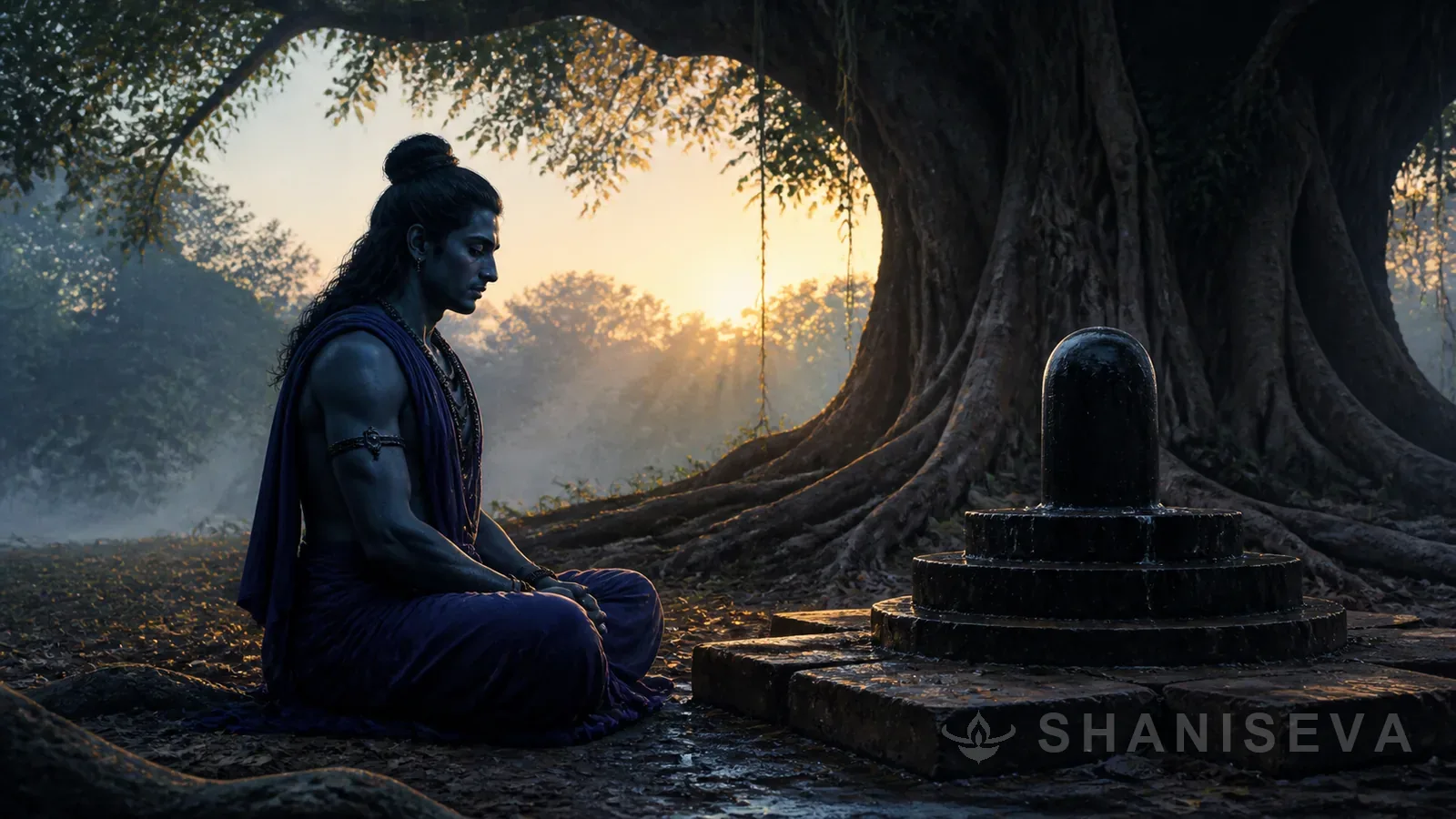
अब वह भाग, जो प्रायः कभी नहीं कहा जाता, और वही भाग सबसे महत्त्वपूर्ण है।
Here is the part that almost never gets told, and it is the part that matters.
वे कटु नहीं हुए। उन्होंने अपने साथ हुए अन्याय के लिए स्वर्ग से युद्ध नहीं किया। वे गए और तप किया, और उसी तप से उन्होंने एक पद अर्जित किया। स्कन्द पुराण इसे स्पष्ट लिखता है: शनैश्चर ने भक्ति और तपस्या से यह लोक और ग्रह का उच्च पद प्राप्त किया।
He did not become bitter. He did not go to war with heaven over what had been done to him. He went and performed tapas, and by that austerity he earned an office. The Skanda Purana records it plainly: Shanaishchara obtained his world and the lofty status of a planet through devotion and penance.
उन्हें यह स्थान इसलिए नहीं मिला कि उनके पिता कौन थे। उनके पिता तो उन्हें अपनाते तक न थे। उन्होंने यह स्वयं खड़े होकर, अकेले, कठिन मार्ग से अर्जित किया।
He was not handed his position because of who his father was. His father would not even own him. He earned it standing up, alone, the hard way.
और जो पद उन्होंने अर्जित किया, वह यह था: प्रत्येक प्राणी को उसके अपने किए हुए कर्म का फल देना। दण्ड देना नहीं। चुनना नहीं। पहुँचाना। वे यह निर्णय नहीं करते कि आपने क्या अर्जित किया है। वे उसे आपके हाथ में रख देते हैं।
And the office he earned was this: to give every living being the fruit of what that being has already done. Not to punish. Not to choose. To deliver. He does not decide what you have earned. He hands it to you.
जिस शिशु को कोई अपनाने को तैयार न था, वही आगे चलकर वह बना जो किसी का, कभी कोई बहाना नहीं मानता। और जो अध्याय उनके तप का वर्णन करता है, वही काशी में उनका अपना पूजास्थल भी बताता है, शनैश्चरेश्वर लिंग, क्योंकि जो दूसरों से भक्ति का पालन करवाता है, वह स्वयं भी भक्त है, और शनिवार को सबकी भाँति शीश झुकाता है।
The child no one would accept became the one who accepts no excuses, from anyone, ever. And the same chapter that records his penance places his own place of worship in Varanasi, the Shanaishchareshvara linga, because the one who enforces devotion in others is himself a devotee, bowing on Saturdays like everyone else.