
Sade Sati means a traditional Saturn transit period that begins when Saturn enters the zodiac sign before a person's Moon sign, continues across the Moon sign and ends after Saturn leaves the next sign. The full cycle is called seven and a half years because Saturn moves slowly through these three signs, spending roughly two and a half years in each. In Jyotish, it is often associated with responsibility, delay, discipline and emotional maturity rather than with any single fixed outcome. It is not a medical diagnosis or a scientific prediction, it is a traditional framework that many families in India use to think about a stretch of years.
The phrase can sound frightening because it is usually explained through worst-case stories passed around at family gatherings or forwarded messages. Sade Sati is not a punishment label and it is not proof that someone is doomed to suffer. Before getting into remedies or predictions, it helps to slow down and actually unpack what the words mean, where the idea comes from, and why even trained astrologers do not always agree on how serious it is.
What Does "Sade Sati" Actually Mean?

The term itself is simpler than the anxiety around it suggests. "Sade" is a Hindi word meaning "and a half", and "Sati" here is a form of "saat", the Hindi word for seven. Put together, Sade Sati literally translates to "seven and a half", referring directly to the approximate length of the transit in years. It is not a Sanskrit term for suffering or curse, as some retellings imply. It is simply naming a duration, the way English might describe a "seven year itch" without that phrase itself carrying any doom.
The astronomical basis is straightforward too. Saturn, called Shani in Sanskrit, takes close to twenty-nine and a half years to complete one full orbit through the twelve zodiac signs, spending about two and a half years in each sign on its slow path. Sade Sati refers to the specific stretch when Saturn occupies three signs in a row relative to a person's natal Moon sign, the sign before it, the Moon sign itself, and the sign after it. Three signs at roughly two and a half years each gives the seven and a half years that names the period, as explained on the Wikipedia entry for Sade Sati.
Why Is the Moon Sign So Important?

Sade Sati is calculated from the Moon sign, not the Sun sign that Western horoscope columns use. In Jyotish, the Moon, or Chandra, is linked with the mind, emotional habits, memory and the way a person instinctively reacts to daily life. Where the Sun sign describes identity in a broad sense, the Moon sign is treated as closer to the emotional core, the part of a person that feels secure or unsettled.
The Moon sign is calculated from the exact date, time and place of birth, since the Moon moves through the zodiac far faster than the Sun, changing signs roughly every two and a half days. Two people born on the same date can have completely different Moon signs, and therefore completely different Sade Sati timing. A precise birth time genuinely matters here, an approximate time can shift the calculation.
How Remote Shani Seva Fits Into This Picture

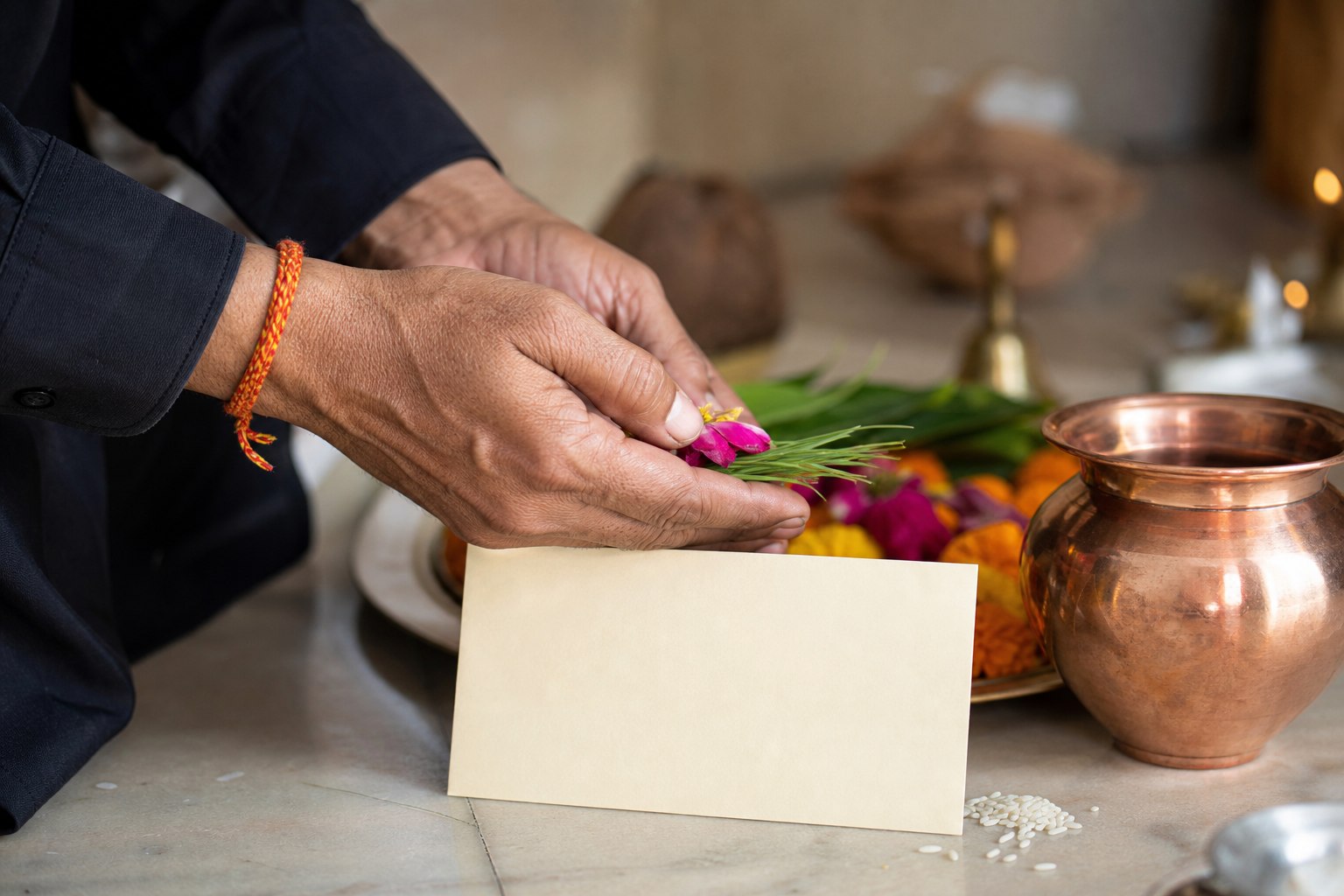
Many families who learn they are entering or living through Sade Sati look for a way to mark the period with prayer, without necessarily traveling to a temple or organising an elaborate ceremony at home. This is where a remote Shani Dev puja can fit naturally into an ordinary week.
The Three Phases of Sade Sati
Classical Jyotish divides the seven and a half years into three roughly equal phases, each tied to Saturn's position relative to the natal Moon. The phases are commonly called the rising phase, the peak phase and the setting phase.
| Phase | Saturn's Position | Traditional Theme | Approx. Duration |
|---|---|---|---|
| First (Rising) | Sign before the Moon sign | Preparation, rising expenses, changes to familiar routines and structures | ~2.5 years |
| Second (Peak) | The Moon sign itself | Emotional matters, identity, family duties, patience under pressure | ~2.5 years |
| Third (Setting) | Sign after the Moon sign | Consolidation, practical lessons, steadying of earlier changes | ~2.5 years |
The first phase begins when Saturn enters the sign immediately before the natal Moon, traditionally described as a preparatory stretch marked by rising expenses, small disruptions to familiar routines, and a sense that plans need revisiting. The second phase occurs while Saturn actually crosses the Moon sign, and classical tradition consistently treats this as the most demanding of the three, since the Moon governs emotional life directly, so pressure is felt at the level of mood, confidence and close relationships rather than just external circumstances. The third phase covers Saturn's transit through the sign after the Moon, generally read as a time of consolidation, when earlier lessons settle into more practical, workable habits. Phase boundaries are rarely a sharp switch, most astrologers describe a gradual build and a gradual release rather than a hard line.
How Different Astrologers Read Its Severity
One of the more useful things to understand about Sade Sati is that trained astrologers themselves do not agree on how severe it typically is, and this disagreement is not new. Older, more folk-oriented traditions tend to describe the period in stark terms, warning of seven and a half years of hardship without much nuance. Other schools of thought within the same broader tradition argue that this reading overstates the case, and that Sade Sati, while genuinely challenging, is not inherently destructive for most charts, as discussed on Indastro's overview of Sade Sati.
Modern Vedic astrologers tend to frame the transit less as a fixed sentence and more as a period of karmic maturation, where Saturn's slow pressure reveals areas of life that need more discipline or restructuring. This is consistent with how some contemporary writers describe Sade Sati, as a time for building resilience and confronting long-avoided responsibilities rather than a period defined purely by loss, as outlined in Rudraksha Ratna's article on Sade Sati.
Severity is also traditionally said to depend heavily on the individual chart, not just the transit alone. The same astrological texts that describe Sade Sati as testing also acknowledge that its expression varies enormously depending on how Saturn is placed in the birth chart itself, how strong the Moon is, and what other planetary influences are active at the same time. This is one reason serious astrologers are usually cautious about making sweeping statements from the transit alone, without looking at the full chart.
What Are People Traditionally Told to Expect?
Traditional descriptions of Sade Sati tend to mention a similar cluster of themes across sources, even when the tone varies:
- Increased duties at home or at work, often involving family responsibilities that cannot easily be delegated.
- Slower progress on plans that once seemed straightforward, requiring more patience than expected.
- Changes in employment, business circumstances or living arrangements.
- A need to manage energy, money and health more carefully than usual.
- Emotional lessons around patience, humility and long-term thinking rather than quick results.
Two people can pass through exactly the same transit, in the same phase, with very different circumstances. One person's Sade Sati might coincide with a demanding but ultimately manageable stretch of work pressure, while another's coincides with a comparatively quiet period. Jyotish itself accounts for this by pointing to the rest of the birth chart, not the transit in isolation, as the fuller picture.
Common Myths Versus What Is Traditionally Claimed
A lot of the fear around Sade Sati comes from myths that have grown up around the term rather than from what classical texts actually claim. It is worth separating the two.
- Myth: Sade Sati guarantees disaster. What is traditionally claimed is more limited, that the period tends to bring tests and responsibility, not that misfortune is certain.
- Myth: Every Sade Sati is equally hard. Classical tradition itself says severity depends on chart strength, so blanket predictions are not accurate to the source material.
- Myth: Illness, bereavement or abuse can be explained away by Sade Sati. Nothing in the traditional framework supports blaming personal tragedy on a transit, this is a modern distortion, not an old teaching.
- Myth: Only expensive remedies can protect a person. Traditional practice generally points to modest devotional acts, not costly purchases, as the more common recommendation.
- Myth: Sade Sati only ever brings loss. Several well documented cases exist of people reaching significant achievements during their Sade Sati years, which sits oddly with the idea that the period is purely destructive.
Reading older astrological writing alongside these popular myths, the gap becomes obvious. The tradition describes a demanding period that calls for discipline. It does not describe a curse.
Is Sade Sati a Punishment?
It is more constructive to understand Sade Sati as a traditional language for responsibility and time, rather than as a punishment handed down for past wrongdoing. Framing it as karma being "settled" can be useful as a way of thinking about patience and effort, but it should never be used to blame someone for illness, bereavement, financial loss, abuse or any other hardship they are going through.
This distinction matters in daily life. Telling someone that their bad year is simply "their Sade Sati" can unintentionally minimise real problems that deserve proper attention, whether that is medical care, professional advice or plain practical support. Jyotish, understood carefully, is meant to offer a framework for reflection, not an excuse to stop looking for real solutions.
What Can Sade Sati Teach?
Whatever view an astrologer takes on severity, the traditional lessons associated with Sade Sati are broadly practical and hold up well even for someone who treats the astrology loosely. They generally include keeping commitments rather than letting them slide, making realistic plans instead of overreaching, avoiding unnecessary debt during a period already described as demanding, paying closer attention to health and rest, being fair and transparent in dealings with others, and asking for help early rather than waiting until a small problem becomes a large one.
None of this advice depends on believing in the astrology at all. It is simply good practice during any demanding stretch of years, which may be part of why the framework has stayed useful across generations.
How Family Members Can Support Someone Going Through It
Family support during Sade Sati is talked about far less than remedies, yet it is often more useful in daily life. A few practical approaches tend to help more than repeated warnings about the transit:
- Avoid framing every setback around Sade Sati. Constantly attributing tiredness, stress or bad days to the transit can make a person feel like nothing they do matters, which is discouraging rather than supportive.
- Offer practical help, not just astrological commentary. Sharing the load of a household task or a stressful errand tends to matter more than discussing planetary positions.
- Encourage rest and steady routines. Since the traditional themes include fatigue and pressure, consistent sleep, meals and exercise support the person more directly than any remedy.
- Support devotional practice if the person finds it meaningful, whether that is a Saturday prayer, a visit to a Shani temple, as discussed in do you need to visit a Shani temple, or a quieter form of worship at home.
- Watch for signs that need more than reassurance. If low mood, anxiety or health concerns are serious, family support should include encouraging proper medical or professional help, not only faith-based comfort.
Supporting someone well during this period looks a lot like supporting someone through any demanding phase of life, patience, practical help and steady presence, with devotional practice offered as a comfort rather than a fix.
Should You Perform Remedies?
Many families choose to mark Sade Sati with devotional practice, and this sits comfortably within tradition when it is approached as an act of faith rather than a transaction. Common practices include Saturday prayer, reciting the Hanuman Chalisa, offering charity, visiting a temple, lighting sesame oil lamps, or arranging a Shani seva either in person or remotely. Anyone wanting a fuller list of options can look at Sade Sati remedies or how to please Shani Dev for more detail on specific practices.
What matters most is intention and consistency rather than expense. A remedy is traditionally understood as a way of asking for grace and steadiness, never as something sold with a guarantee attached. Anyone offering a remedy as a guaranteed fix against hardship is not describing traditional practice accurately, and it is reasonable to be cautious of that kind of pressure. Those curious about their own timing can also check a Sade Sati calculator or look at the current Shani transit for 2026 before deciding whether any of this applies to their own chart right now.
Conclusion
The most useful Sade Sati meaning is not fear. It is a traditional way of naming a seven and a half year stretch when Saturn's slow transit is believed to ask more of a person, more patience, more discipline, more honesty about responsibilities. The term itself simply means "seven and a half", astrologers genuinely disagree on how serious it tends to be, and the myths built around it go well beyond what older texts actually claim. Treated with a level head, Sade Sati can be a reminder to plan carefully, look after health, support family well and keep faith practices simple and sincere, rather than a label to dread.