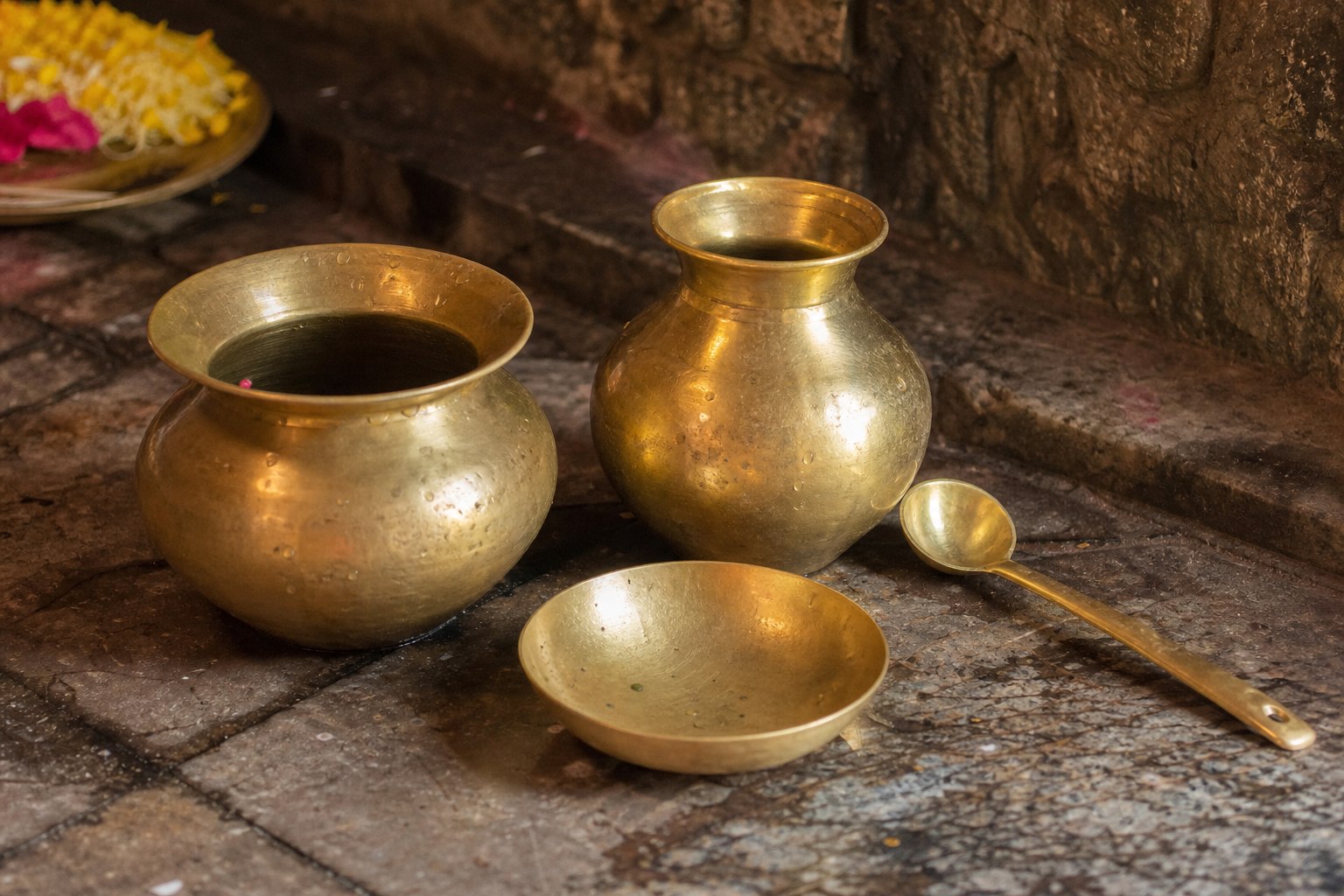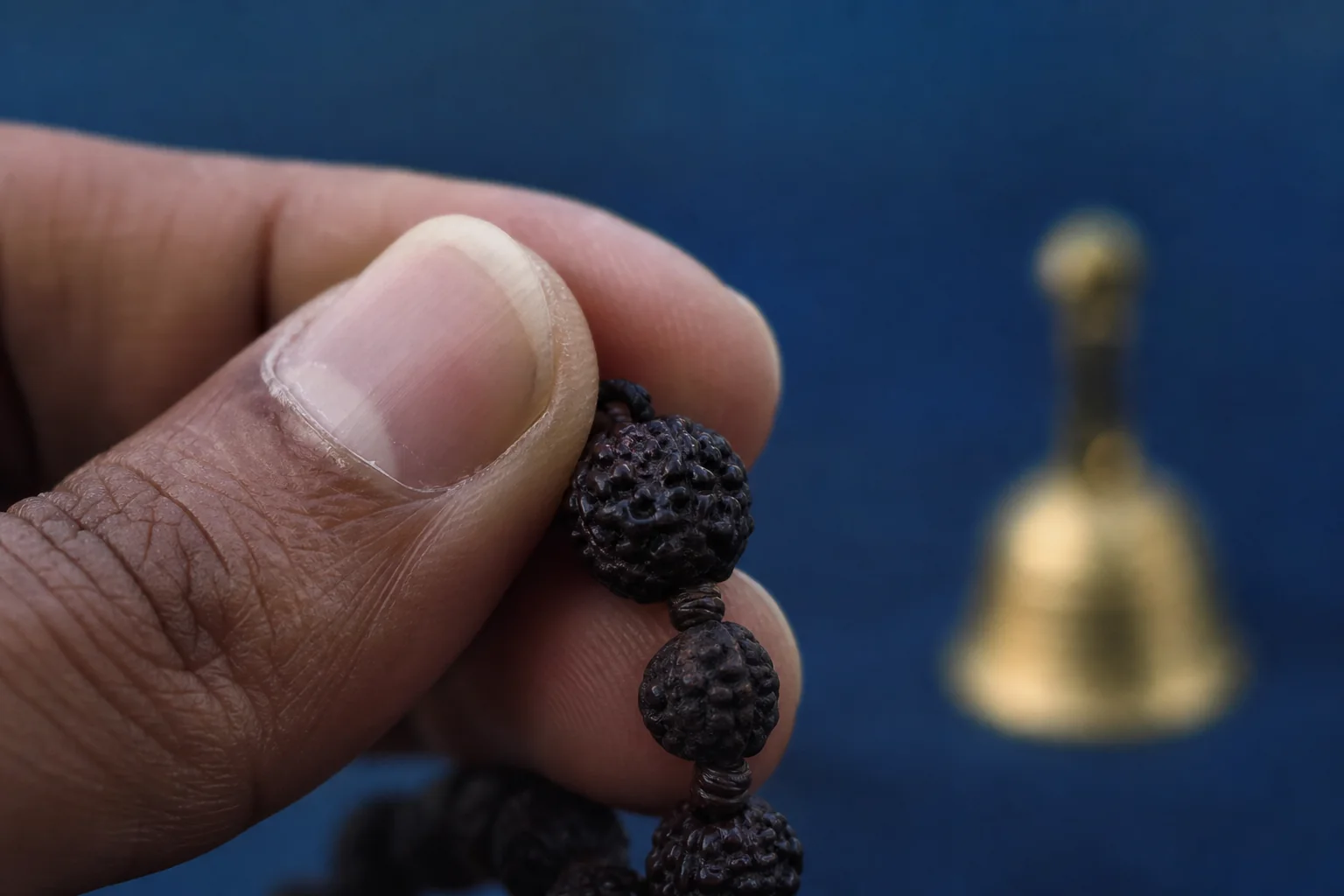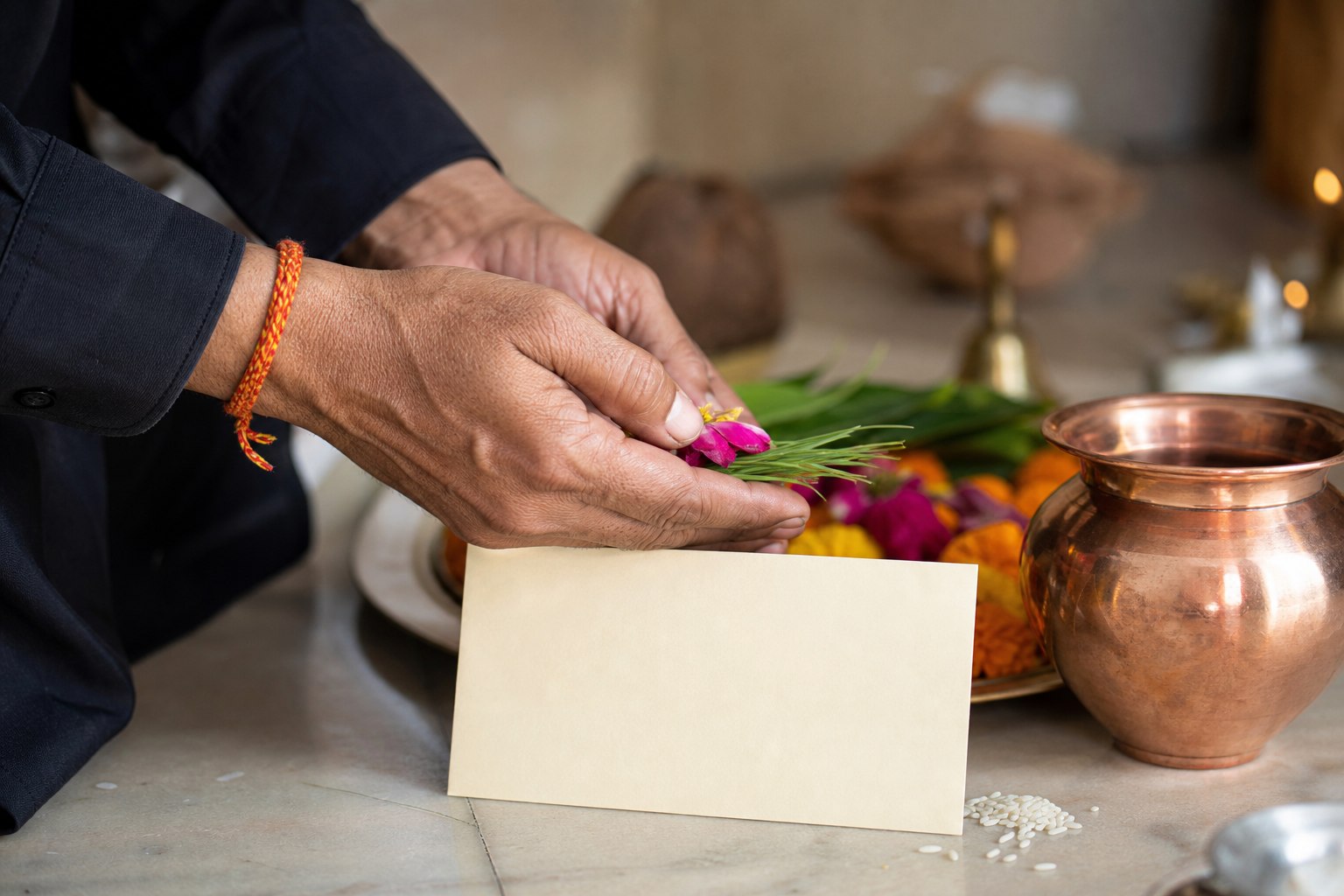

Traditionally recommended remedies for Sade Sati include Saturday prayer and fasting, reciting the Hanuman Chalisa, lighting a til (sesame oil) lamp on Saturday evenings, giving black sesame seeds and mustard oil in charity, and performing a Shani seva such as Til Tel Abhishek, either at a temple or through a pandit. In Hindu tradition, none of these are presented as a guaranteed cure. They are presented as support: ways to steady the mind and build merit while Saturn moves through the sign before your Moon sign, your Moon sign itself, and the sign after it, a transit of roughly seven and a half years known as Sade Sati.
The real tension in Sade Sati remedies is not which ritual to pick. It is resisting the person who tells you that only one expensive object, a particular gemstone or a five-figure puja package, can save you from a difficult few years. Every tradition this article draws on treats prayer, fasting and charity as the foundation, available to anyone regardless of income. Costly extras are optional, not the price of admission to Shani's mercy.
What Sade Sati actually asks of you

Sade Sati asks you to sit through roughly seven and a half years of Saturn's transit with more patience, honesty and discipline than usual, not to buy your way out of it. In Vedic astrology, the period runs while Saturn is in the sign before your Moon sign, then in your Moon sign itself, then in the sign after it, since Saturn takes close to two and a half years to cross each sign (Wikipedia). Most people experience it two or three times across an average lifetime.
Astrologers commonly split it into a rising phase, a peak phase and a setting phase, and the intensity is said to depend heavily on how Saturn sits in your own birth chart, not on the transit alone. If you are unsure whether you are in Sade Sati right now, or which phase, a Sade Sati calculator that uses your actual Moon sign is far more useful than a general date range. What the transit tends to bring up, delay, financial pressure, or a need to rebuild something, is covered in more detail in our piece on Shani Dosha's meaning and effects.
Two shorter, related transits are often mentioned in the same breath and worth telling apart. Ashtama Shani is Saturn's transit through the eighth house from your Moon sign, and Kantaka Shani (also called Ardhashtama Shani) is its transit through the fourth house from your Moon sign. Both are considered testing in their own right, but neither runs anywhere near seven and a half years, and the remedies recommended for them, Saturday prayer, charity, honest conduct, are the same ones covered here rather than a separate set.
Saturday prayer and fasting

The most commonly recommended remedy is simple: pray to Shani Dev on Saturdays and keep a partial fast. Most guides describe the fast beginning before sunrise and ending the next morning, with a single meal eaten in the evening once that day's puja is done (AstroVed). Some households do this every Saturday for the whole transit, others commit to a fixed count, often 11 or 51 Saturdays.
Wearing black on a Saturday is a related, smaller practice, and it is often misunderstood as compulsory when it is really optional. We've written separately about what wearing black on Saturday is actually believed to do. Alongside the fast, reciting the Shani Chalisa or the mantra "Om Sham Shanaishcharaya Namah" is standard, and for a fuller list of what pleases Shani Dev through the week, not only on Saturday, see how to please Shani Dev.
Sesame oil lamps and Shani seva
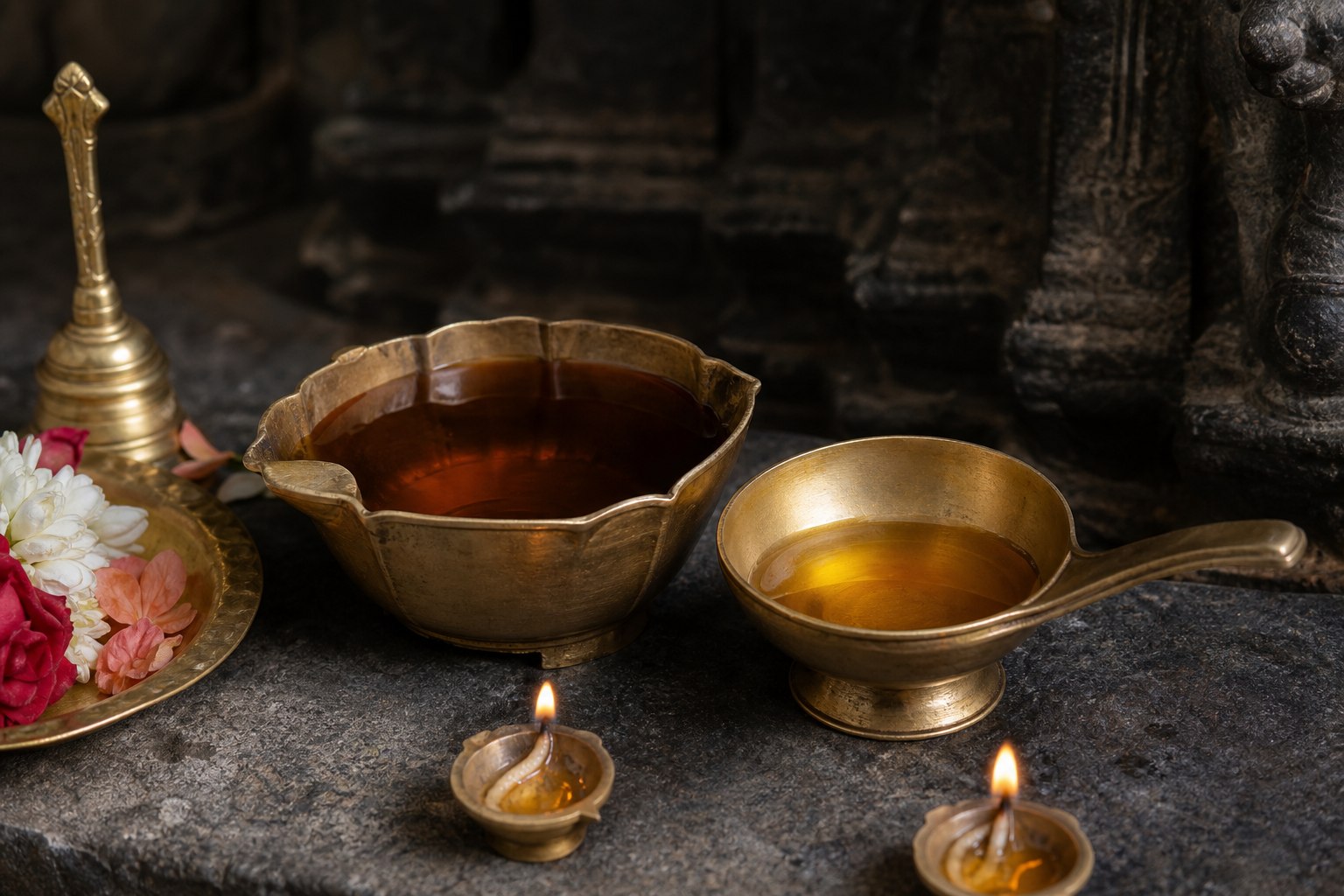
Lighting a sesame (til) oil lamp on Saturday evenings, ideally at a Shani temple or in front of a Shani murti at home, is one of the oldest remedies described in Sade Sati tradition. Offering black sesame seeds and mustard oil directly to Shani, alongside the lamp, is called Til Tel Abhishek, an anointing with sesame oil, and it is considered one of the more significant single rituals a person can perform for Shani Dev (Indastro).
Not everyone lives near a Shani temple, and not everyone can travel there on a Saturday evening. We've covered separately whether you need to visit a Shani temple at all and whether Shani puja can be done at home. The short answer in both cases is that sincerity and consistency matter more than the building you pray in.
Hanuman worship as protection
Hanuman worship sits right beside Shani worship in Sade Sati tradition, because Hanuman is regarded as Shani's protector and the one devotee Shani is said to spare from his harsher effects. Reciting the Hanuman Chalisa daily, especially on Saturdays, is usually the first remedy anyone is told about. Some households go further and read the Sunderkand after sunset, keeping an oil lamp lit with a wick of raw cotton thread through the recitation.
Offering a chola, a covering of vermilion mixed with oil, to a Hanuman idol on Saturdays is another common temple practice. None of this replaces prayer to Shani directly; it sits alongside it. The two are treated as complementary, not either-or, and plenty of devotees who keep a Shani vrat also keep a standing habit of Tuesday and Saturday Hanuman visits.
Charity: what to give, and to whom
Charity, daan, on Saturdays is considered one of the most effective Sade Sati remedies precisely because it costs very little and helps someone directly. Chaya daan, looking at your own shadow reflected in a bowl of mustard oil and then giving that oil away to someone in need, is a specific version of this practice, alongside plainer donations of food, cloth and grain.
| Item to give | To whom | Traditional timing |
|---|---|---|
| Black sesame seeds (kaala til) | Poor households, a Shani temple, or crows | Saturdays, especially Shani Jayanti |
| Mustard oil | Beggars, or as Chaya daan after viewing your shadow in it | Saturday evening |
| Iron items or black iron nails | An ironworker or a needy family | Saturday |
| Black cloth, umbrella or blanket | Elderly poor, especially before winter | Saturday |
| Urad dal (black gram) | Poor households, as food or raw grain | Saturday |
| Feeding a black cow or crows | Directly, no temple needed | Saturday morning |
None of these require wealth. A student giving a handful of black sesame to a temple and a retired person giving away an old iron pot are doing the same remedy. The size of the gift is not the point; the honesty behind it is.
Gemstones, and why we're careful about them
Blue sapphire, neelam, is the gemstone most often linked to Saturn remedies, and it has a reputation, deserved or not, for reacting badly on someone whose chart does not suit it. We go into this in detail separately, including when a neelam actually helps and what its real benefits are said to be, and what a Shani ring is supposed to do if you do choose to wear one.
Be wary of anyone who tells you that a gemstone, and only that gemstone, priced high, is the one thing standing between you and disaster. That is a fear-based sales pattern, not a devotional tradition. Prayer, fasting and charity cost nothing beyond your own time and honesty, and every classical source on Sade Sati treats them as the primary remedy, with gemstones as an optional, chart-specific extra that many people never need at all.
The practical response: discipline, honesty and avoiding debt
Alongside any ritual, the traditional advice for Sade Sati is intensely practical: avoid new debt, avoid dishonesty, and keep your daily discipline steady, because this transit is said to punish shortcuts more than it punishes ordinary effort. A ritual performed once a week does little if the other six days are spent cutting corners.
- Avoid taking on new debt or standing guarantee for someone else's loan during this period, since delay in repayment is a commonly cited Sade Sati theme.
- Keep your word once given. Saturn is associated with karma and consequence, and half-truths tend to surface at the least convenient time during this transit.
- Don't rush irreversible decisions, a property purchase, a resignation, a marriage, without ordinary care just because you feel time pressure.
- Keep a routine. Sleep, work and prayer at consistent times matter more now than any single grand ritual performed once.
- Treat a setback as information, not punishment. Sade Sati is described as testing patience, not condemning a person.
This is also the wider stance behind most of what we write about Shani: rituals build character and steadiness, they do not guarantee a specific outcome. For a broader look at how Shani Dosha shows up and what people try in response, see our guide to Shani Dosha remedies, and for the exact steps of a full puja, Shani Puja Vidhi.
Conclusion
Sade Sati's traditional remedies are consistent across sources: Saturday prayer and fasting, the Hanuman Chalisa and Sunderkand, a sesame oil lamp and Til Tel Abhishek, charity of black sesame, mustard oil, iron and cloth, and a Shani seva performed either at a temple or through a pandit on your behalf. None of them are sold, in genuine tradition, as a guarantee. They ask for patience, honesty and steady discipline over roughly seven and a half years, not a large one-time payment for a single object.
A gemstone might help some people and does nothing for others. A Saturday fast costs nothing and is available to everyone, regardless of income or location. Choose remedies that fit your life, keep your conduct honest through the transit, and treat any seller pushing fear alongside an expensive, only-cure remedy with real suspicion.