
You do not need to visit a Shani temple to pray sincerely or to honour Shani Dev. A visit to a well-known shrine, whether Shani Shingnapur in Maharashtra or a smaller temple in your own town, can bring focus, community, and a welcome pause from daily pressure. But devotion in Hindu tradition has never been rationed by distance, mobility, income, or access to one building. Prayer at home, honest conduct, patience through difficulty, and quiet charity are complete forms of worship, not lesser substitutes.
For some devotees, the walk up to a temple and a few quiet minutes before the murti make an intention feel real. For others, a crowded temple on a Saturday is simply not possible. Neither person is any less devoted. This article looks at both paths honestly: what a temple visit offers, what home worship looks like in practice, and how a family managing distance, health, or a tight schedule can still keep faith with Shani Dev.
Why do people visit a Shani Dev temple?

People go to a Shani temple for many reasons, and rarely for just one. Some are passing through a hard year and want a place to sit with that difficulty. Some grew up with a family habit of Saturday temple visits and keep it going out of respect for that continuity. Others go specifically around Shani Jayanti or Shani Amavasya, when many temples see far larger crowds, or simply for regular darshan on a free weekend.
In many Hindu traditions, Shani Dev is understood as the deity connected with the planet Saturn, and with karma, justice, discipline, delay and endurance. Shani is not usually described as cruel. Tradition holds that Shani teaches through consequence and patience, asking a person to face what they have earned rather than avoid it. That is one reason people seek out Shani during a difficult stretch such as a Sade Sati period or a challenging Shani Dosha phase, hoping for steadiness rather than a quick fix.
Is visiting a Shani temple necessary?

No, and this is not a modern shortcut invented for convenience. Hindu worship has always had room for the home shrine alongside the temple. Grandparents who could never travel far still kept a lamp burning every Saturday, and no one considered that worship incomplete.
There are also very ordinary reasons a visit may not be possible: distance from the nearest temple, ongoing health issues, caring for young children or elderly parents, work that falls on a Saturday, the cost of travel, or simply a preference for quieter, private prayer. None of these reasons need justifying to anyone.
What can you do at home instead?

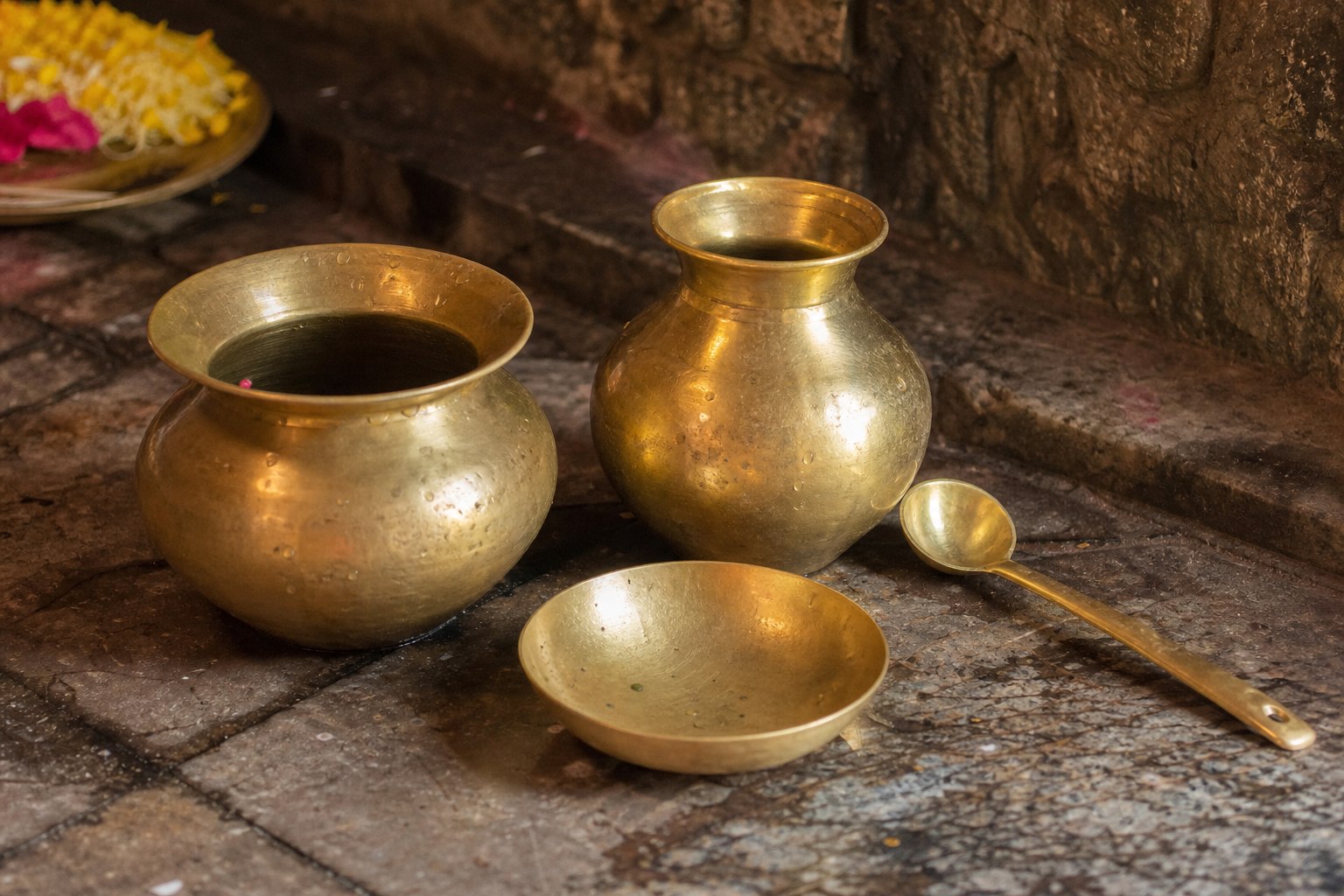
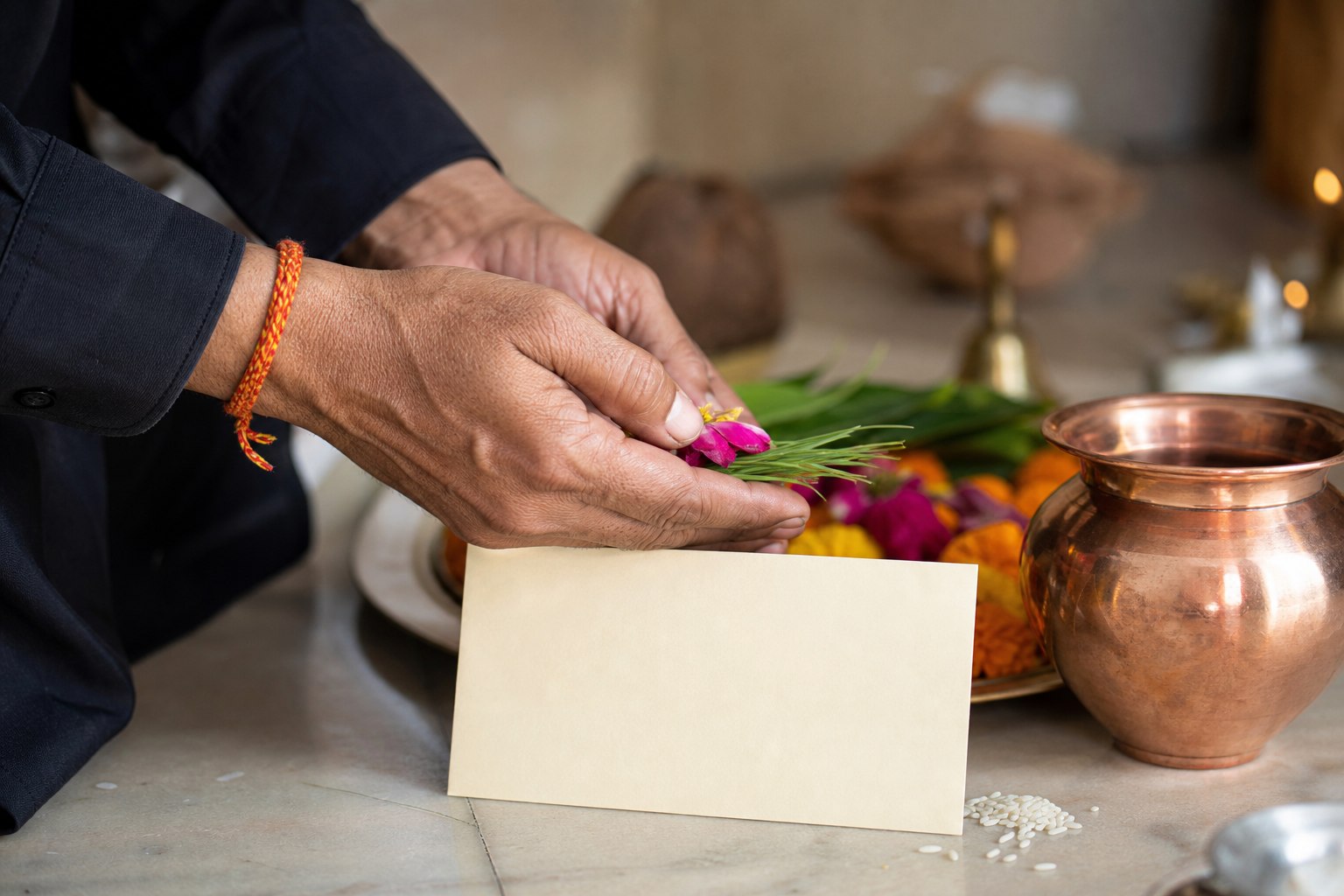
A home shrine does not need to be elaborate. Choose one clean, calm corner, even a small shelf, and keep it for this purpose alone. A simple approach many families follow:
- Bathe or wash before you begin, as a way of settling the mind, not a rule to feel anxious about.
- Light a lamp with care, using oil or ghee, and let it burn undisturbed for a few minutes.
- Name the specific thing you are struggling with. A vague prayer is harder to hold onto than an honest, particular one.
- Ask for patience, clarity and the strength to do your duty, rather than only asking for the problem to vanish.
- Recite whatever prayer is part of your practice. If new to this, our note on the Shani puja mantra is a reasonable start.
- Make one small, practical commitment for the week ahead, within your own control.
- Offer some charity or useful help to someone who needs it. In many traditions this is considered as meaningful as the ritual itself.
This routine takes fifteen or twenty minutes and asks for nothing except quiet and consistency. For a fuller walkthrough, see our guide on doing Shani puja at home.
Setting up a home shrine for Shani Dev
If you would like something more settled than a one-off prayer corner, a few simple choices make a home shrine feel complete.
Pick a spot with some natural light if possible, away from the kitchen and bathroom, at a height where you are not looking down at it. A small stool or shelf works better than the floor. Facing east or north while praying is the more common convention, though not an absolute rule everywhere.
A few items are commonly kept, in modest amounts:
| Item | Common role |
|---|---|
| Small image of Shani Dev | Focus point; need not be a large murti |
| Oil lamp (diya) | Lit before prayer, usually with til or mustard oil |
| Black sesame and mustard seed | Kept for Saturday offerings or donation |
| Dark or blue cloth | Placed under the image or lamp |
| Small bell | Optional, marks the start of prayer |
None of this needs buying all at once; families often build a shrine slowly. Our Shani puja samagri list sets out what is typically used and why, and our note on what to offer Shani Dev on Saturday helps if you are unsure where to begin.
A few well-known Shani temples in Hindu tradition
Some Shani temples carry a long history and a distinct character in tradition, worth knowing even if you never visit in person. Shani Seva is not affiliated with, and does not claim any connection to, any of the temples mentioned below. They are included only as background on this part of the tradition.
Shani Shingnapur, in Ahmednagar district, Maharashtra, is probably the most widely known Shani temple in India. According to local tradition, a large black stone slab surfaced after a flood generations ago and was understood to be a self-manifested (swayambhu) form of Shani Dev. The stone stands in the open, on a raised platform without a roof or walls, and the surrounding village became known for homes without doors or locks, out of a shared belief that Shani himself would guard against theft, as described by Ancient Origins.
Kokilavan Dham, near Kosi Kalan in the Mathura district of Uttar Pradesh, is another well-known Shani temple, close to the wider Vrindavan pilgrimage circuit, associated with Shani Dev's guru, Barkhandi Baba, per Wikipedia's entry on Kokilavan.
Thirunallar, in Puducherry in South India, houses a temple traditionally linked with the story of Lord Shani seeking relief from a curse through prayer to Lord Shiva, worshipped there as Darbaranyeswarar, and remains one of the most visited Shani-related shrines in the south, according to Walkthrough India.
These places matter to many devotees, and their history can deepen a sense of connection to the wider tradition even from a distance. But none of this changes the basic point already made here: the tradition has always allowed sincere worship far away from any of these specific sites.
When might a temple visit help, and what it cannot promise?
A visit can genuinely help when what you need is stillness, structure, or a sense of belonging to something larger than your own week. Standing among other devotees, hearing the same prayers repeated by people you do not know, can loosen a problem that has felt entirely private.
If you decide to visit, follow the specific temple's own rules first, since these vary from place to place. Common offerings across many Shani temples include a diya, sesame or mustard oil, black sesame seeds, simple flowers, dark cloth, or food set aside for donation. Ask at the temple office if unsure what is expected that day, particularly around Shani Jayanti or Shani Amavasya.
What a visit cannot do is promise an outcome. No honest priest, temple, or website can guarantee a single visit, or a single puja, will resolve a job problem, a health worry, or a strained relationship on its own. Tradition frames Shani's influence as something worked through with patience over time, not erased by one ritual. Anyone who suggests otherwise, especially where money is involved, is worth being cautious of.
Temple etiquette: what to do, and what to avoid
If you are visiting a Shani temple, especially for the first time, a little preparation helps you focus on prayer rather than worry about doing something wrong.
Reasonable things to do:
- Dress modestly and remove footwear before the inner area, as instructed at the temple.
- Keep offerings simple. Oil, sesame and flowers are accepted almost everywhere; nothing expensive is needed.
- Queue patiently, especially on a Saturday or during Shani Jayanti, when temples such as Shani Shingnapur can be extremely crowded.
- Speak quietly and let others have their moment before the murti, rather than lingering.
- Ask temple staff directly if a rule is unclear.
Common mistakes to avoid:
- Treating the visit as a transaction, offering something expensive in exchange for a specific demand.
- Pushing to the front of a queue, or touching the murti or another devotee's offerings without invitation.
- Photographing the inner sanctum where this is restricted, as at many Shani temples.
- Letting a well-meaning local guide pressure you into a paid ritual you did not plan for.
- Assuming visible distress or dramatic gestures are expected. Quiet, steady prayer is entirely sufficient.
For elderly or disabled devotees who cannot travel
Many devotees of Shani Dev are precisely the people least able to make a long or crowded temple trip: elderly parents managing joint pain, someone recovering from surgery, a person using a wheelchair, or a devotee for whom heat, crowds, or standing in a queue is genuinely difficult.
If this describes you or someone in your family, none of it reduces the value of your devotion. A few practical adjustments make home worship entirely workable:
- Keep the shrine at a seated height, on a low table beside a chair, so getting up and down is not part of the ritual.
- Shorten the routine rather than skipping it. A five-minute version, a lit lamp, a short prayer and one quiet request, still counts fully.
- Ask a family member to prepare the lamp and offerings in advance on a difficult day.
- Use a chair-based or bed-based version of the steps described earlier. There is no requirement to stand, kneel, or sit on the floor.
- Where a family still wants a full puja with a pandit's recitation, but travel is not possible for anyone, a remote puja is worth considering, discussed next.
Can an online Shani puja be meaningful?
Yes, and for many families managing distance, age, or disability, it is often the most realistic way to have a full Shani puja performed on their behalf with a pandit's recitation, rather than none at all.
If considering this route, whether with Shani Seva or elsewhere, check a few things before booking: what exactly is performed, the date it will be carried out, whether your sankalp (the naming of your intention, name and gotra) is individual or shared with other families in the same session, the total cost including extras, and how confirmation will be sent afterward.
Current pricing for the Shani puja:
For a wider look at what this kind of puja aims to address, and how it sits alongside home prayer, see our articles on Shani puja benefits and Shani Shanti puja cost. None of this is presented as a substitute for temple darshan where that is available and meaningful to you. It is simply a genuine option when it is not.
Conclusion
You do not need to visit a Shani temple to be devoted. A temple such as Shani Shingnapur or Kokilavan can offer something real: stillness, shared prayer, a sense of continuity with generations before you. But Hindu tradition has always made room for prayer offered quietly at home, for charity done without an audience, and for patient, honest conduct through a difficult period. If travel, health, cost, or a preference for quiet keeps you away from a temple, that does not make your Saturday prayer, your home shrine, or a remote puja performed on your behalf any less real. What matters, across every version of this practice, is sincerity and consistency, not the address where you happened to pray.