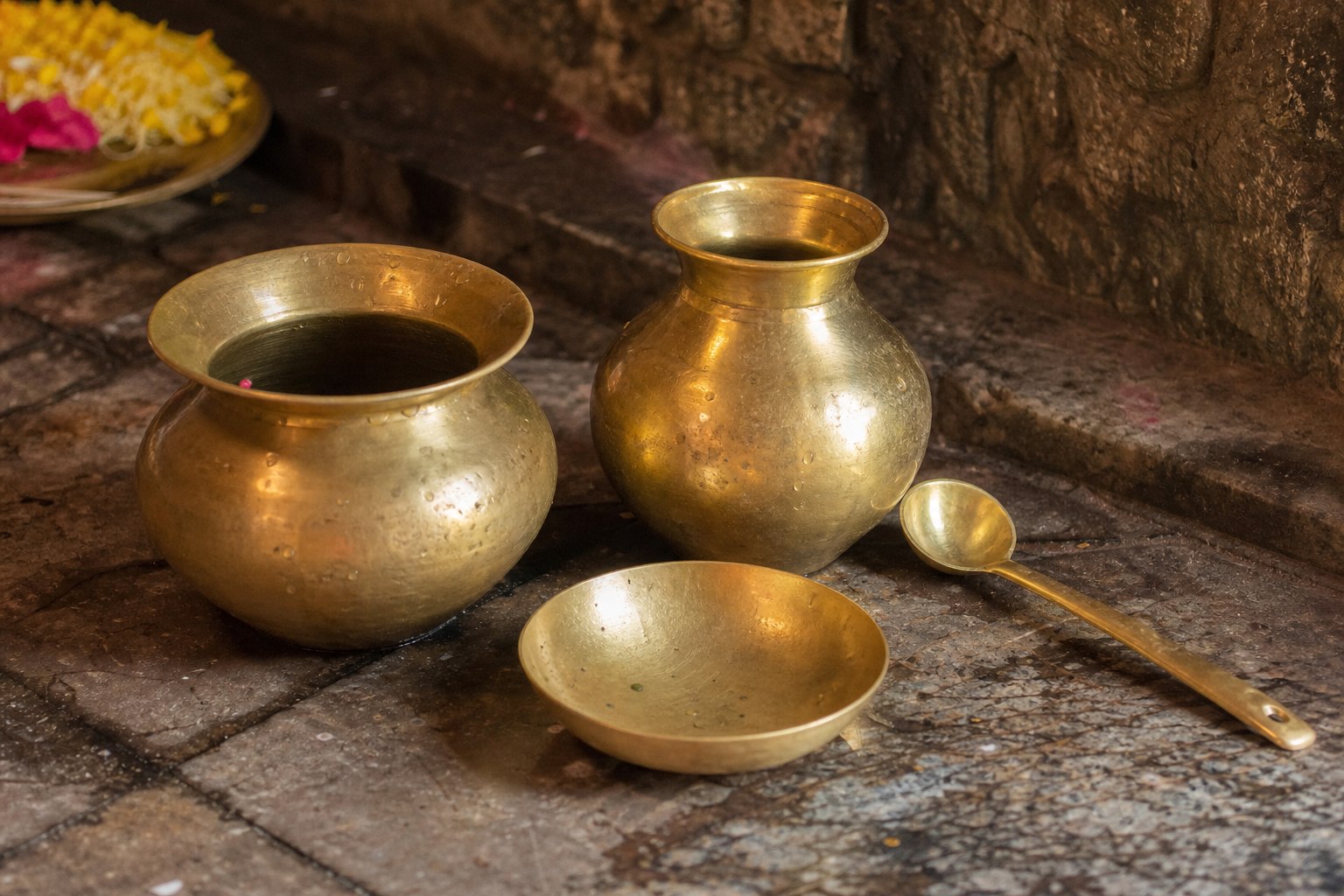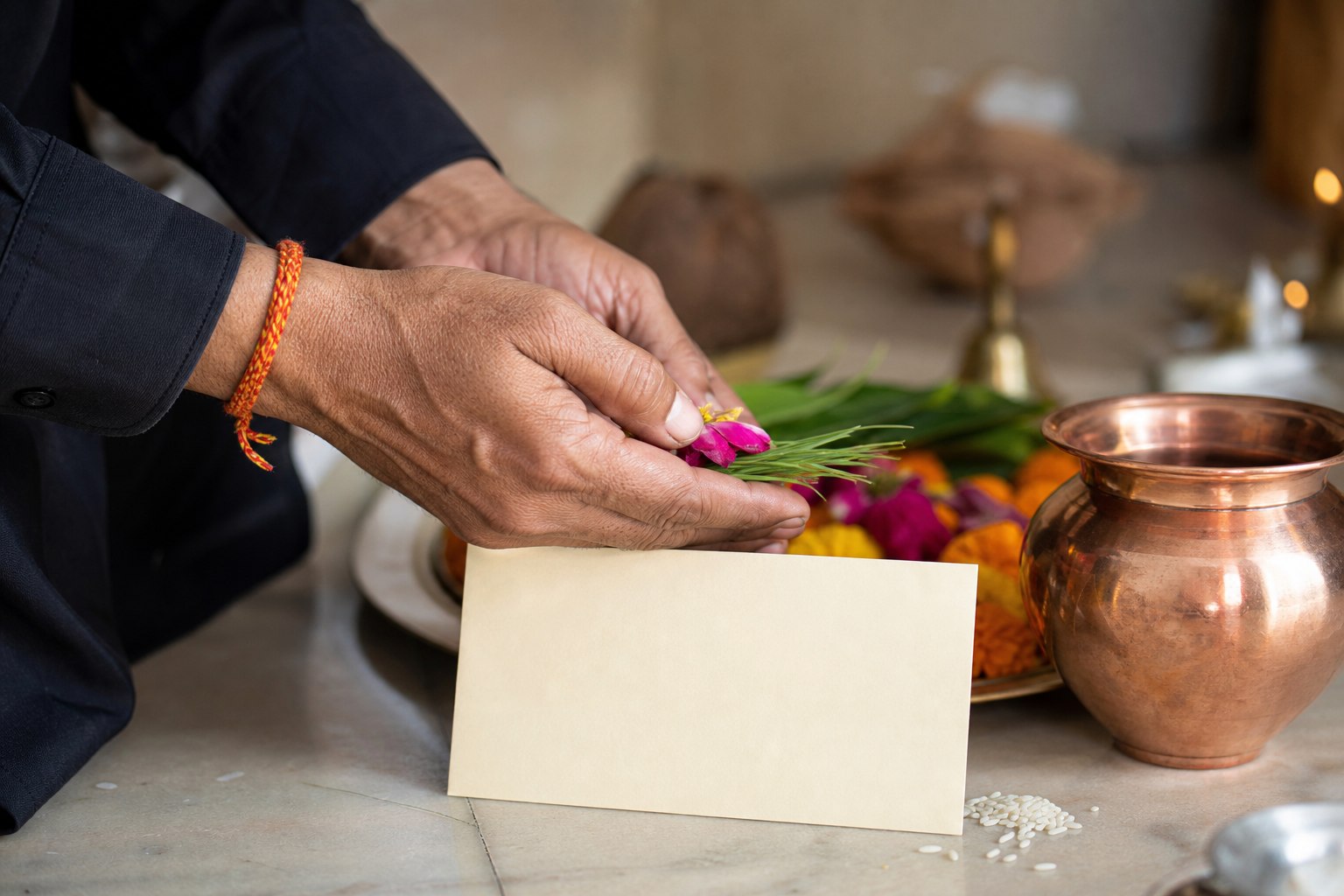
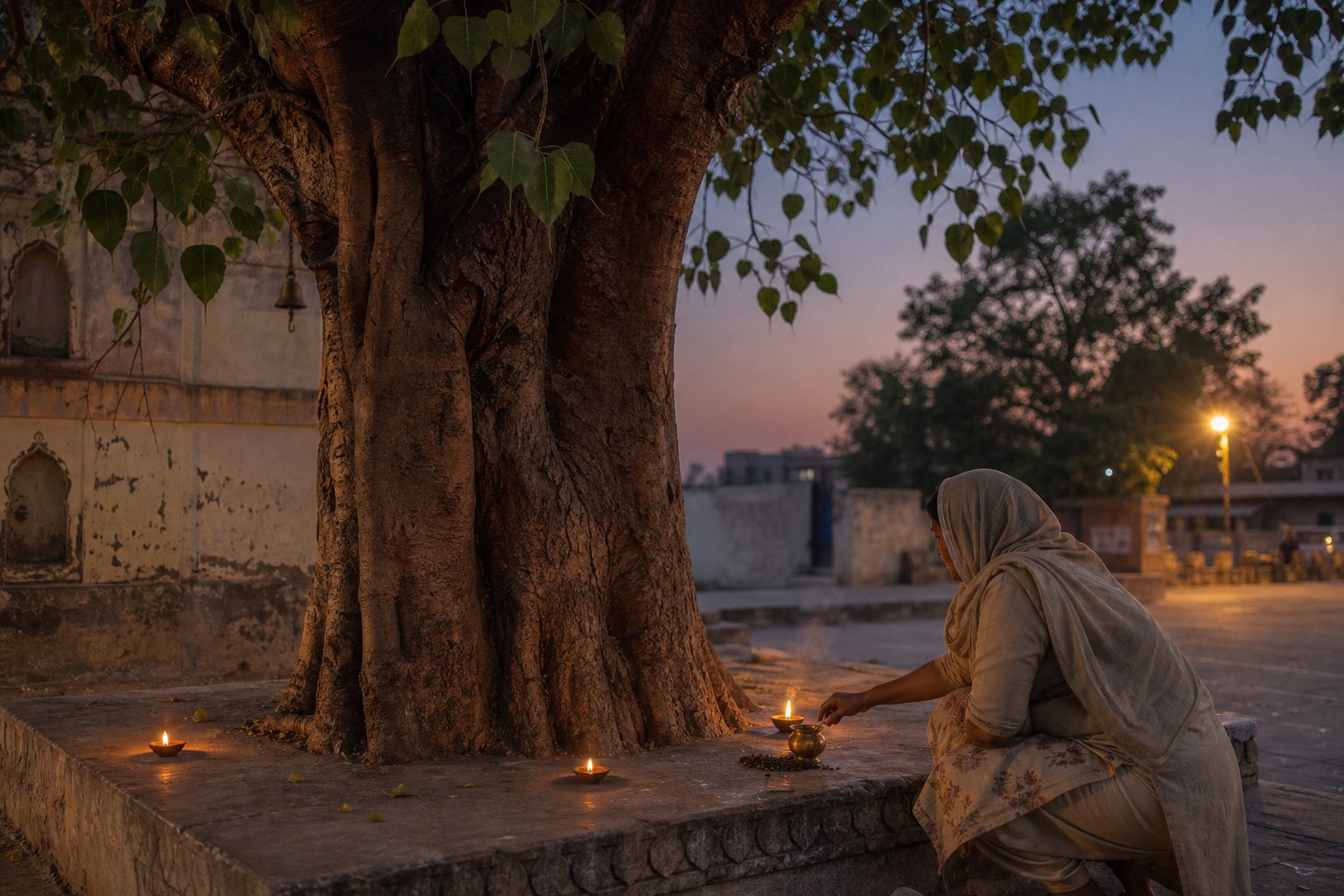
The Shani Chalisa prescribes two remedies: water offered at the peepal tree on Saturday, and the giving of a lamp. The peepal, Ficus religiosa, does not grow in Britain, Canada, most of northern Europe or most of Australia. For a large part of the diaspora, one of the two things the text asks for is unavailable, and the nearest Shani temple may be several hours away or in another country. What the practical tradition permits in that situation is substitution, and it has permitted it for as long as Hindus have lived at a distance from the places their practice describes.
The tree that is not there
Your mother had a tree.
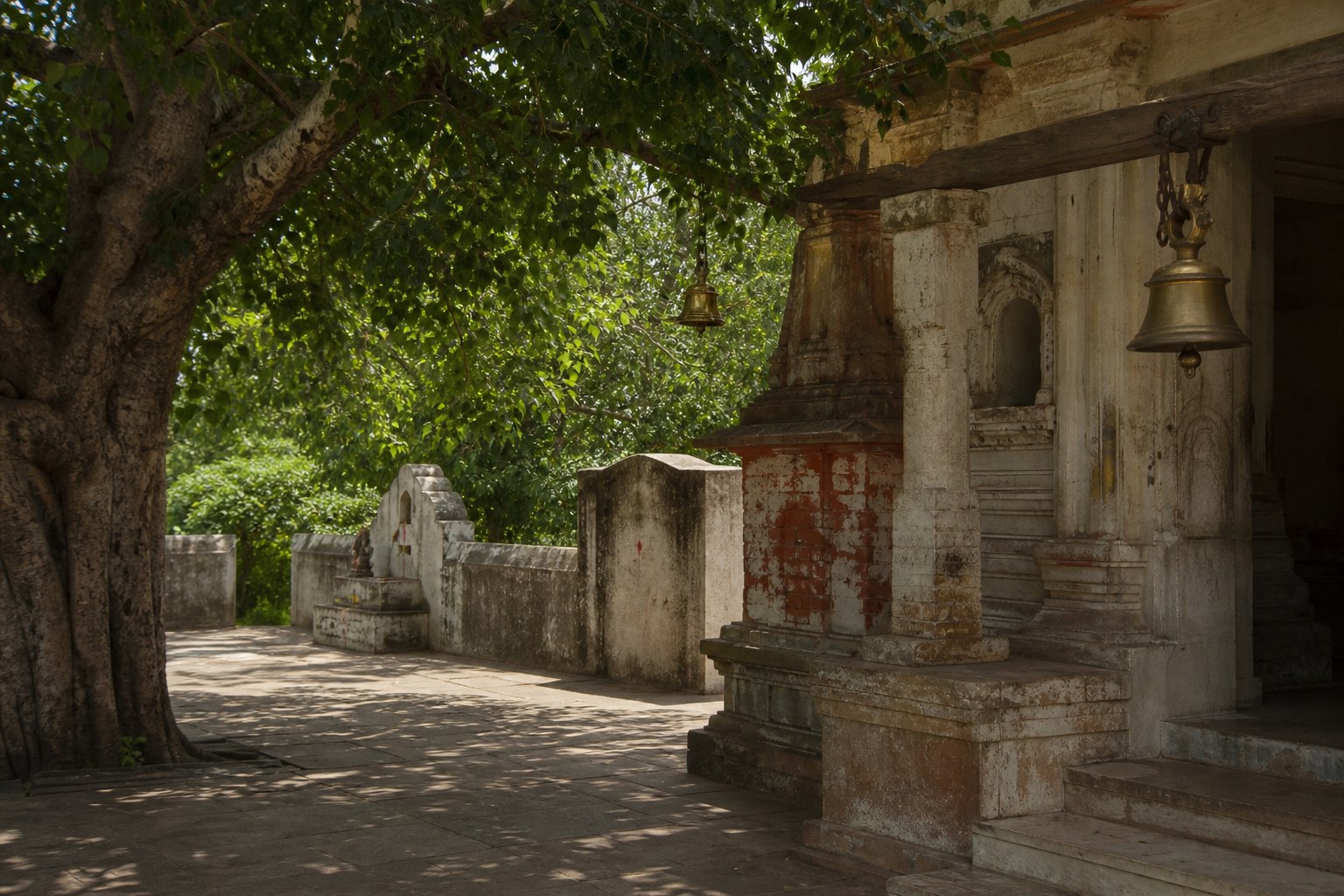
Not in a garden. At the end of a lane, past the shop, one of those peepals that has been standing so long the road was built to go around it rather than through it. Roots over the kerb. A red thread tied by somebody's grandmother forty years ago and never taken down. On Saturdays there was water at the base of it and the ground stayed dark in a ring.
She did not think about the tree. It was simply where you went.
You are in a flat in Coventry and there is no tree.
There is a car park. There is a sycamore the council planted, which is a perfectly good tree and is not the tree. There is no lane, no shop, no red thread, and the nearest Shani temple is a two-hour drive on a Saturday when you are also meant to be somewhere else.
So you have quietly stopped. Not from doubt. From the sense that whatever you did in a kitchen with a saucer of water would be a smaller thing, a stand-in, not quite the real observance.
Here is what the tradition would say about that, and it is not a consolation prize.
Hindus have been arriving somewhere without the correct tree for two thousand years. They went to Java and Bali and there was no Ganges. They went to Fiji and Trinidad and Mauritius on ships, with nothing, and they got off those ships and kept the calendar anyway. Every one of those communities faced exactly your saucer of water, and not one of them concluded that the practice had been left behind at the port.
They named a local river for a holy one. They used the tree that grew where they now lived. They kept the day, because the day travels.
The tradition is older and considerably more practical than the anxiety about it.
What is asked for is the water and the intention.
The tree was always only the address.
What the sources actually require
Considerably less than most guidance suggests, and this is the first thing worth establishing.
The Shani Chalisa prescribes two remedies and no more. The wider Shani literature returns most consistently not to ritual at all but to conduct: honest work, patience under difficulty, and care for the elderly, the poor and those who labour. Shani is Karmaphaladata, the giver of the fruit of action, and the remedies follow from that doctrine rather than from a list of required objects. What the Chalisa actually says takes up what it does and does not promise.
None of the conduct is geographically bound. Patience is available in Coventry. So is giving.
| What the tradition asks | Available abroad? |
|---|---|
| Honest work, patience | Yes, unchanged |
| Giving to those with less | Yes, unchanged |
| Care for the elderly | Yes, unchanged |
| Remembrance on Saturdays | Yes, unchanged |
| A lamp | Yes |
| Recitation of the Chalisa | Yes |
| Water at the peepal | Substitution needed |
| Temple darshan | Often not available |
Six of the eight are unaffected by living abroad. Only two require any adjustment at all.
The peepal, and what may stand in for it

The peepal is sacred across several Indian traditions and is genuinely specific. It is not decorative in the instruction. But the principle the tradition applies when a specified item is unavailable is well established.
Families have kept practice in places without the Ganges, without particular flowers, without particular woods, for a very long time. The consistent resolution is that where a specified item cannot be obtained, the offering is made with what is available and the intention is stated.
Three practical options, in rough order of how closely they hold to the instruction:
- A peepal as a houseplant. Ficus religiosa can be kept indoors in a cool climate. It will not reach anything like the size it does in India and needs warmth and light, but it is obtainable from specialist nurseries and some Indian grocers.
- Another tree. Water offered to a tree, with the intention spoken, is accepted practice where no peepal exists. Many keep this at a tree near the home so the observance has a place attached to it.
- At home, with the intention stated. Where no tree is accessible, the water may be offered at home. The intention is what carries it.
What is not required is elaborate substitution, or anxiety about having got it wrong. The sources do not describe a threshold below which an observance fails.
Saturday works the same everywhere
Saturday is Shanivar in the Vedic scheme of weekdays and it is Saturday everywhere on earth. The weekly observance needs no adjustment abroad, which makes it the most portable part of the whole practice.
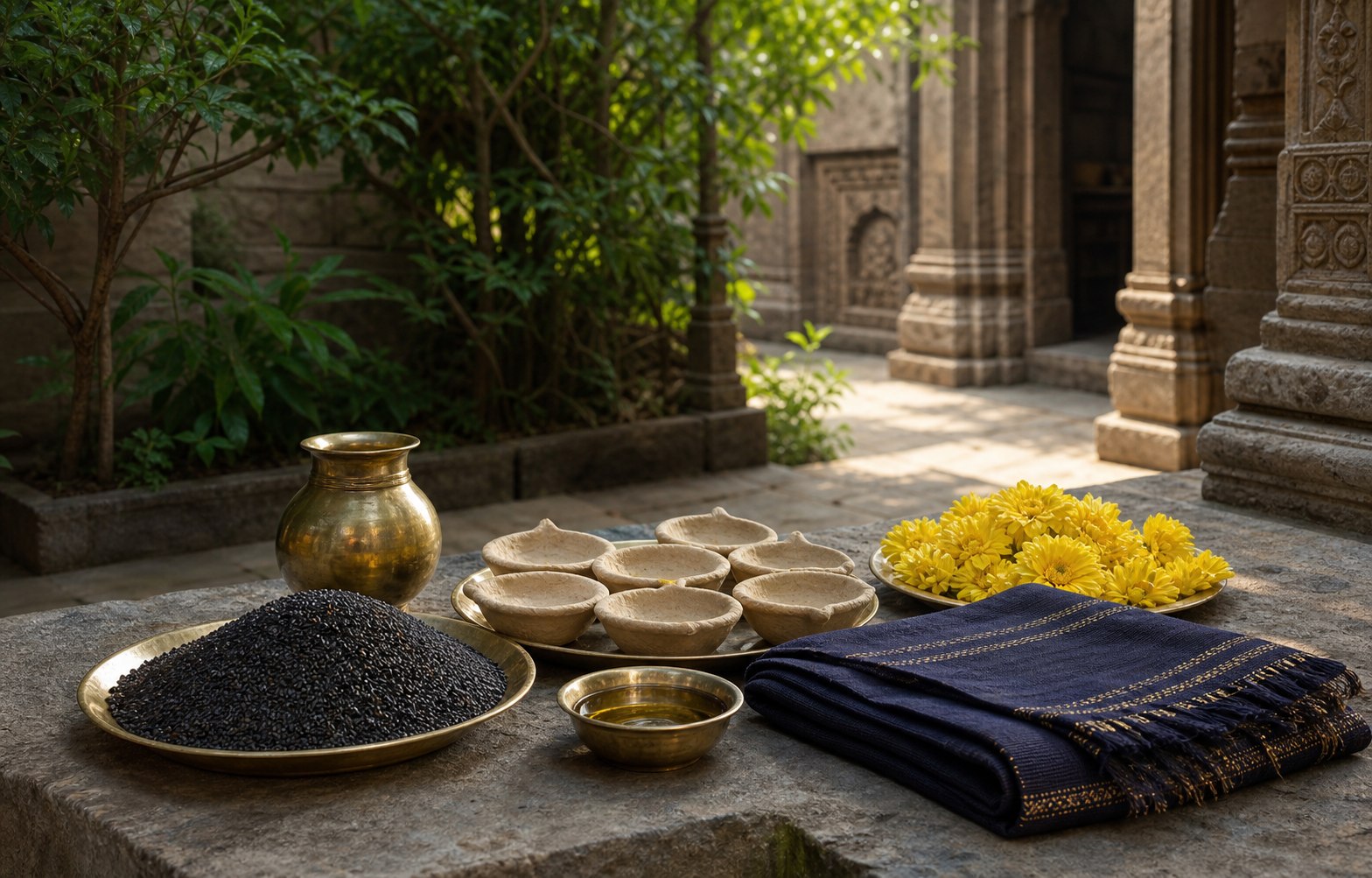
A lamp lit on Saturday evening, the Chalisa recited, something given. That is a complete weekly observance requiring nothing unobtainable in any city in the world. What to offer Shani Dev on Saturday sets out the customary offerings, most of which, sesame, mustard oil, black cloth, iron, are available from any Indian grocer abroad.
Lunar dates do need adjusting
This is the one thing that genuinely catches people out.
Amavasya is not a calendar day. It is the instant at which the Moon and Sun share the same celestial longitude, and the calendar day it falls on depends on where you are standing. A new moon at 23:40 Indian time falls on the previous day in Britain and earlier still in Canada.
Published festival lists almost always assume Indian time without saying so. A family in Toronto following an Indian list will keep Shani Amavasya or Shani Jayanti on the wrong day roughly as often as not.
Use a panchang computed for your own city. This is the same reason our Sade Sati calculator and Saturn return calculator compute from NASA JPL DE440s ephemeris positions rather than reproducing tables that have quietly assumed a location, and how we compute sets that out.
Reciting without the language
A common anxiety in the second generation: whether reciting the Chalisa in English, or in halting Devanagari, or with imperfect pronunciation, counts.
The tradition places weight on intention. There is no phonetic threshold described in the sources. Reciting with attention, in whatever approximation you can manage, is accepted practice. Our Shani Chalisa page publishes the Devanagari, a faithful transliteration and a plain English meaning for every verse, and the Shani beej mantra takes up the same question for the seed mantra.
When a temple is genuinely out of reach
For some observances there is no home substitute, and it would be dishonest to claim otherwise. A rite requiring a ritvij who knows the sequence is not something to improvise from a webpage.
This is the situation the ritvij and yajamana structure was built for. The ritvij performs; the yajamana, named by name and gotra in the sankalp, receives the fruit. The tradition never required the yajamana to be present. It required the yajamana to be named. Seva meaning sets out that structure in full.
Peepal Deepdaan is the two Chalisa remedies kept at a peepal in India on your behalf, which is the one thing a flat in Coventry genuinely cannot provide. Til Tel Abhishek is the sesame oil offering, and every seva is listed with what it involves. How it works sets out each step.
It does not purchase an outcome, does not cancel a transit, and is not a substitute for the conduct the texts ask for. The strongest objection to remote seva, including the position of the Shani Shingnapur temple, is addressed at honest answers.
Conclusion
Six of the eight things Shani practice asks for are unaffected by living abroad. The peepal permits substitution, as the tradition has always permitted where a specified item is out of reach. Lunar dates need checking against a local panchang. Saturday is Saturday everywhere.
What remains is conduct, remembrance and giving, none of it tied to a country. Nothing in the sources suggests that observance at a distance counts for less, and a good deal in them suggests the conduct matters more than the setting.