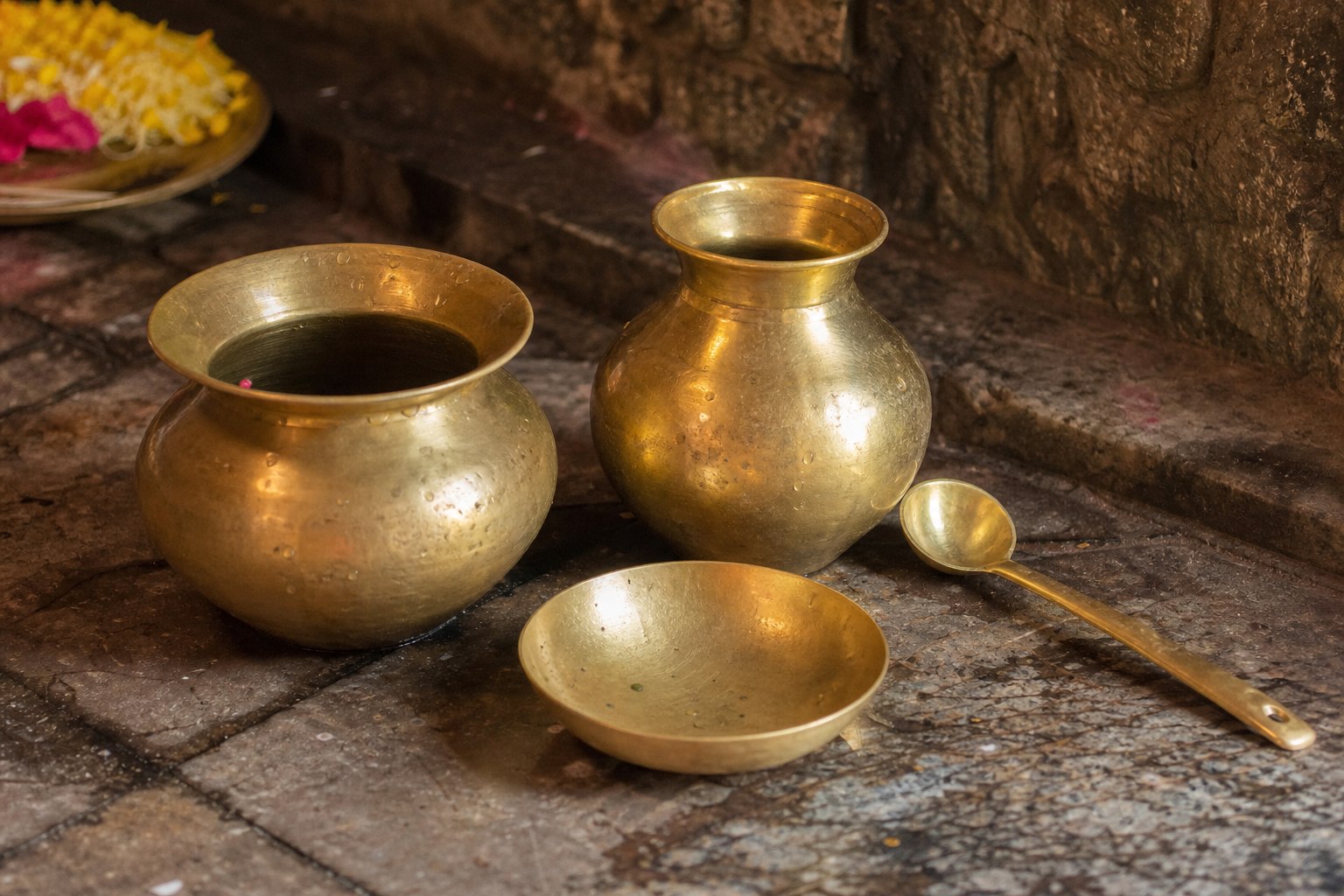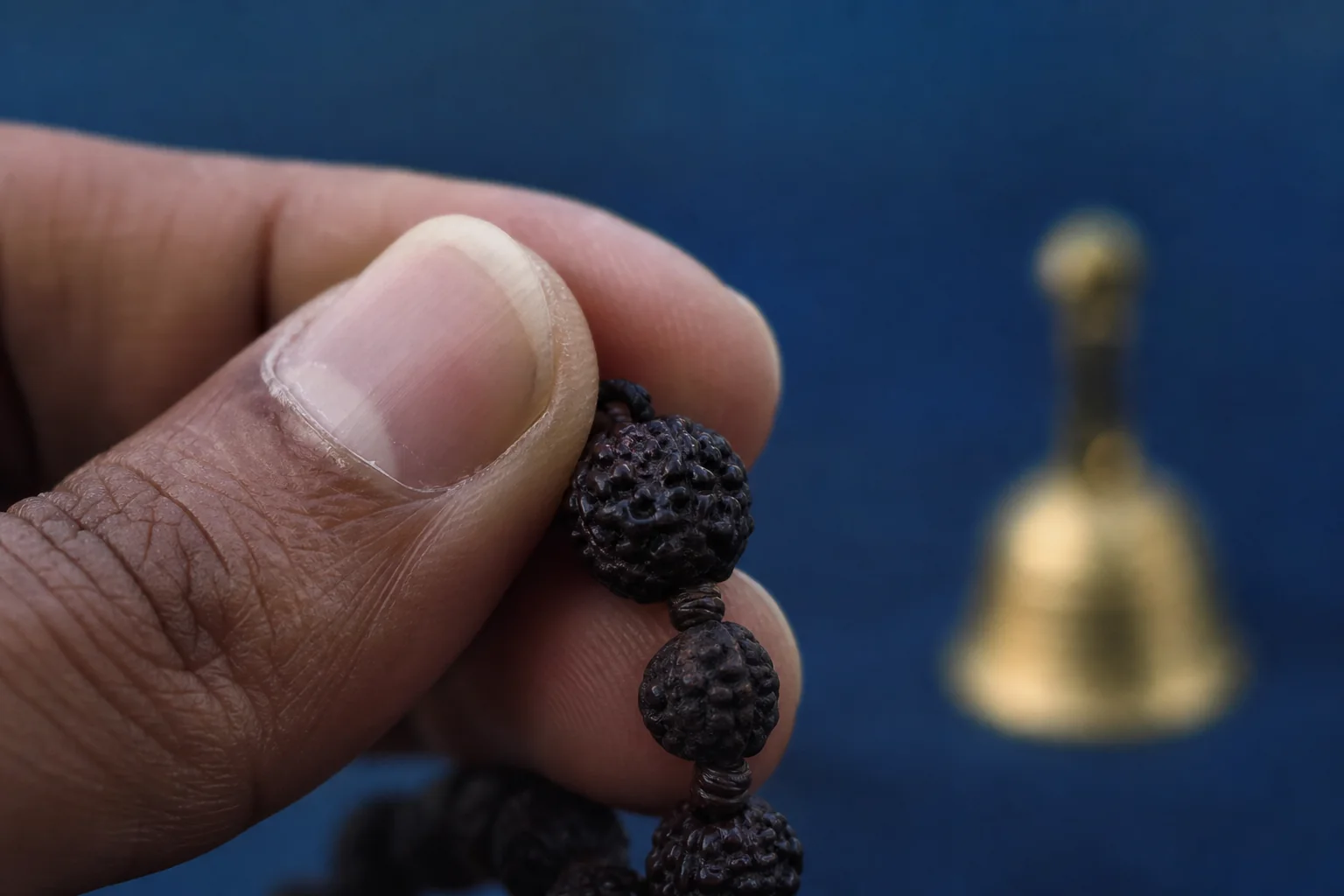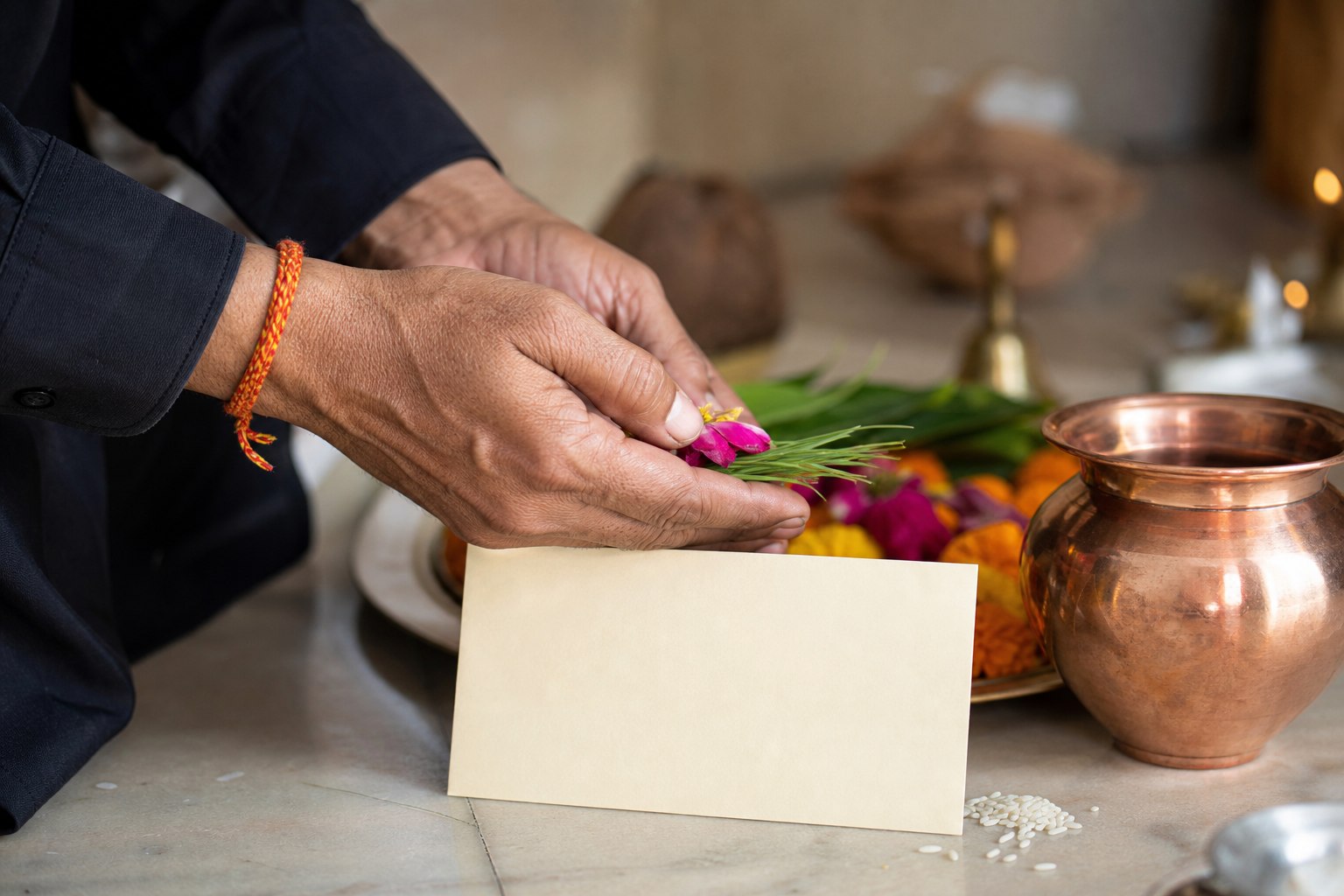
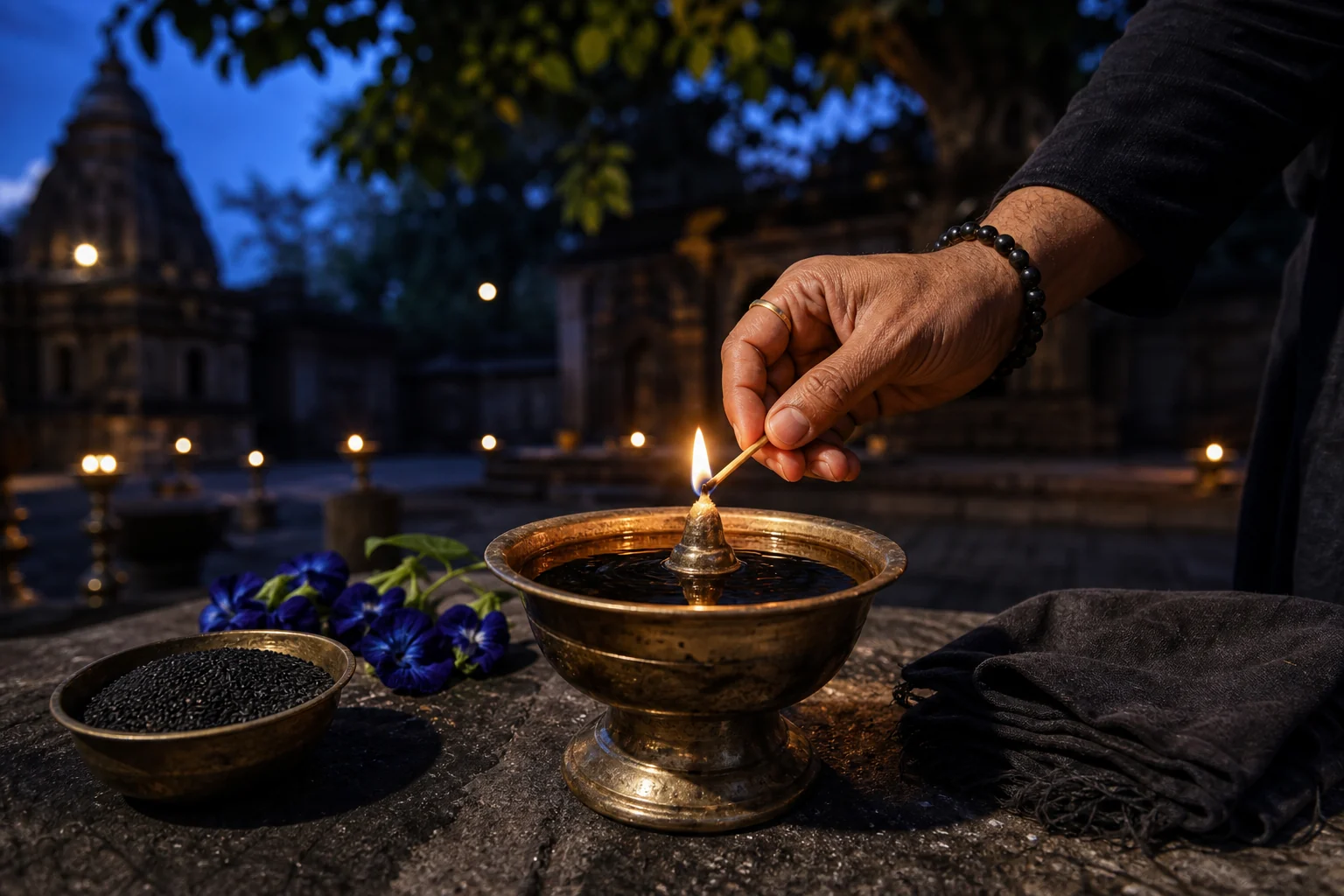
The offerings most commonly given to Shani Dev on Saturday are a mustard or sesame oil diya, black sesame seeds (kala til), black cloth, iron items, and food donated to the poor or to animals such as cows and crows. None of these need to be expensive or hard to find. A single diya, a small packet of black til, and a plate of food shared with someone who needs it carry as much meaning in most traditions as an elaborate spread of items.
Here is the part that surprises people who are new to this practice. Ask several pandits what pleases Shani Dev most on a Saturday and most will not point to an object at all. They will point to the food you gave away, or the kindness you showed someone with less than you. Shani is remembered in tradition as the deity of labourers, the overlooked, and anyone carrying a heavy load quietly, so what leaves your hands often matters more than what you place in front of a murti.
The Core Saturday Offerings, Item by Item
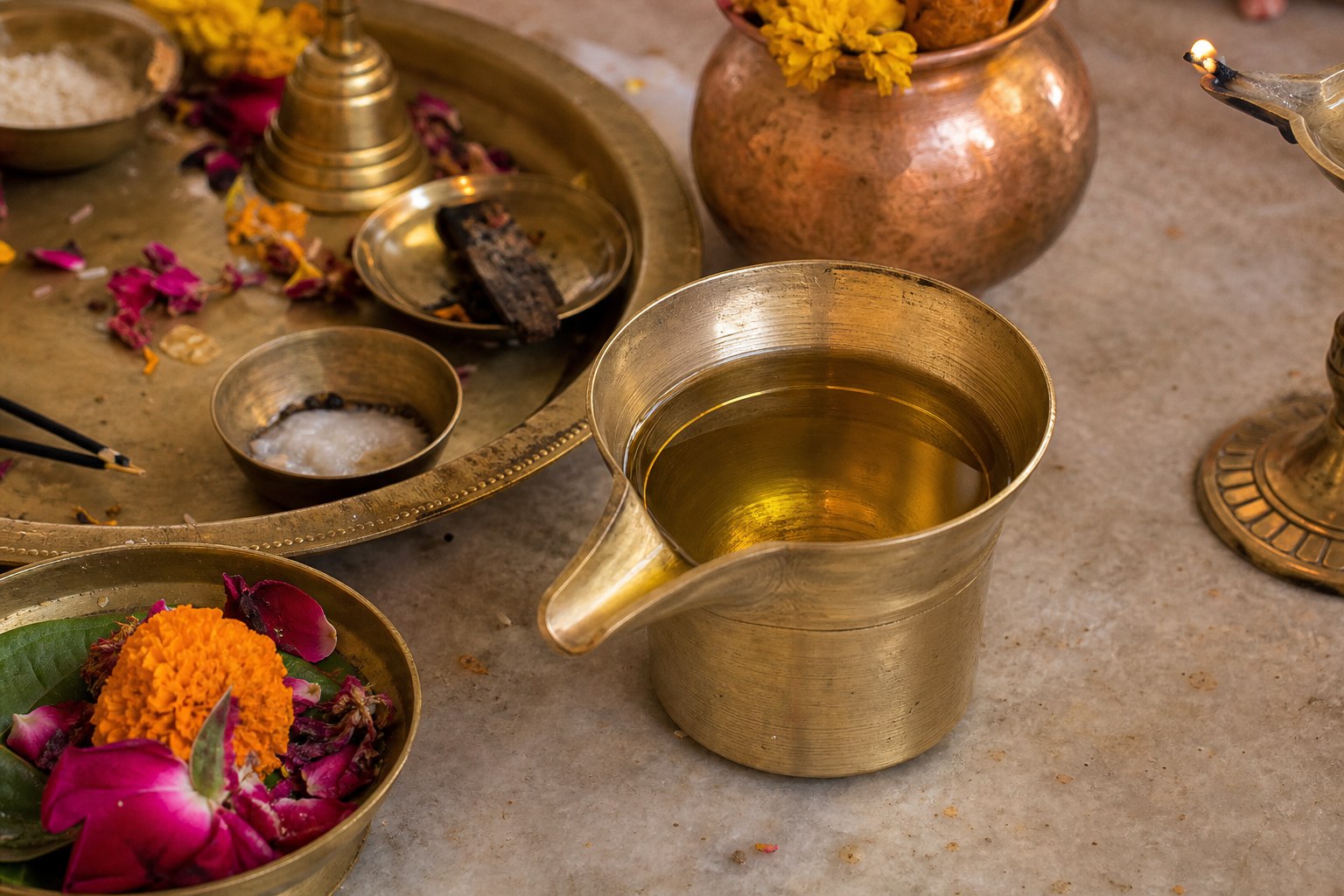
Five things show up in almost every regional version of Saturday Shani worship: oil, sesame, black cloth, iron, and donated food. Each has a distinct role rather than being interchangeable decoration.
| Offering | What It Represents | How It Is Typically Given |
|---|---|---|
| Mustard or sesame (til) oil | Cooling Shani's harsher influence, humility | Lit as a diya, or poured as abhishek over a Shani murti or Shivling |
| Black sesame seeds (kala til) | Clearing blockages, grounding energy | Offered dry at the altar, or mixed into oil before lighting the lamp |
| Black cloth | Shani's associated colour | Draped over the murti, or handed directly to someone in need |
| Iron items (a nail, a small tool, a horseshoe) | Shani's associated metal | Donated rather than kept in the home, usually on Saturday morning |
| Food (til, urad dal, black gram, a cooked meal) | Charity and shared sustenance | Given to the poor, or left out for cows, crows, and stray dogs |
According to Wikipedia's entry on Shani, the deity's traditional associations include the colour black or dark blue, the metal iron, sesame seeds or black gram as grain offerings, and Saturday as the preferred day of worship. That is why the same handful of items recur across regions even when the exact ritual steps differ. In Maharashtra, oil abhishek is often the centrepiece. In parts of North India, offering urad dal and feeding a black dog or crow carries equal weight. Neither version is more correct than the other.
The Diya and the Peepal Tree: Why Timing Matters
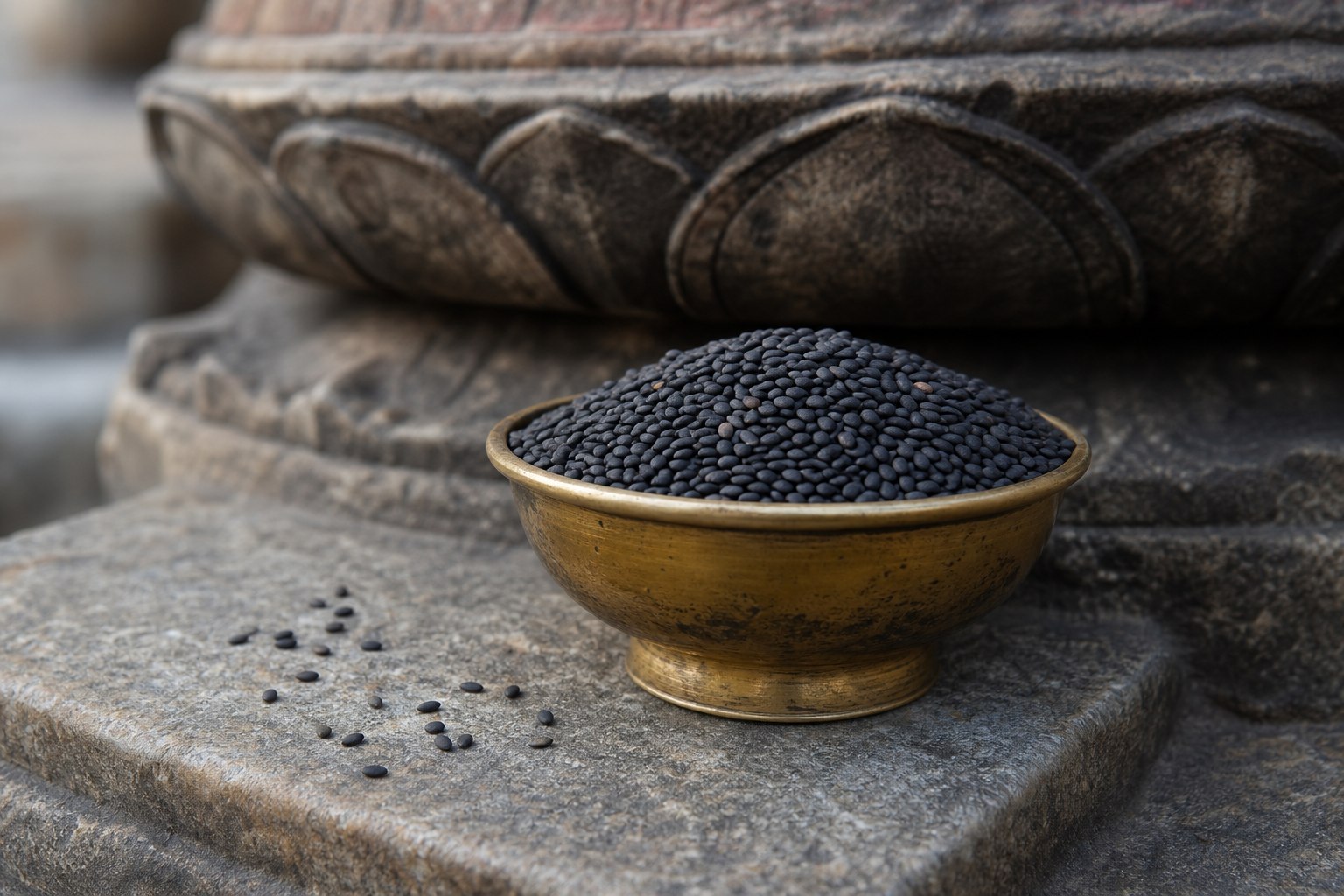
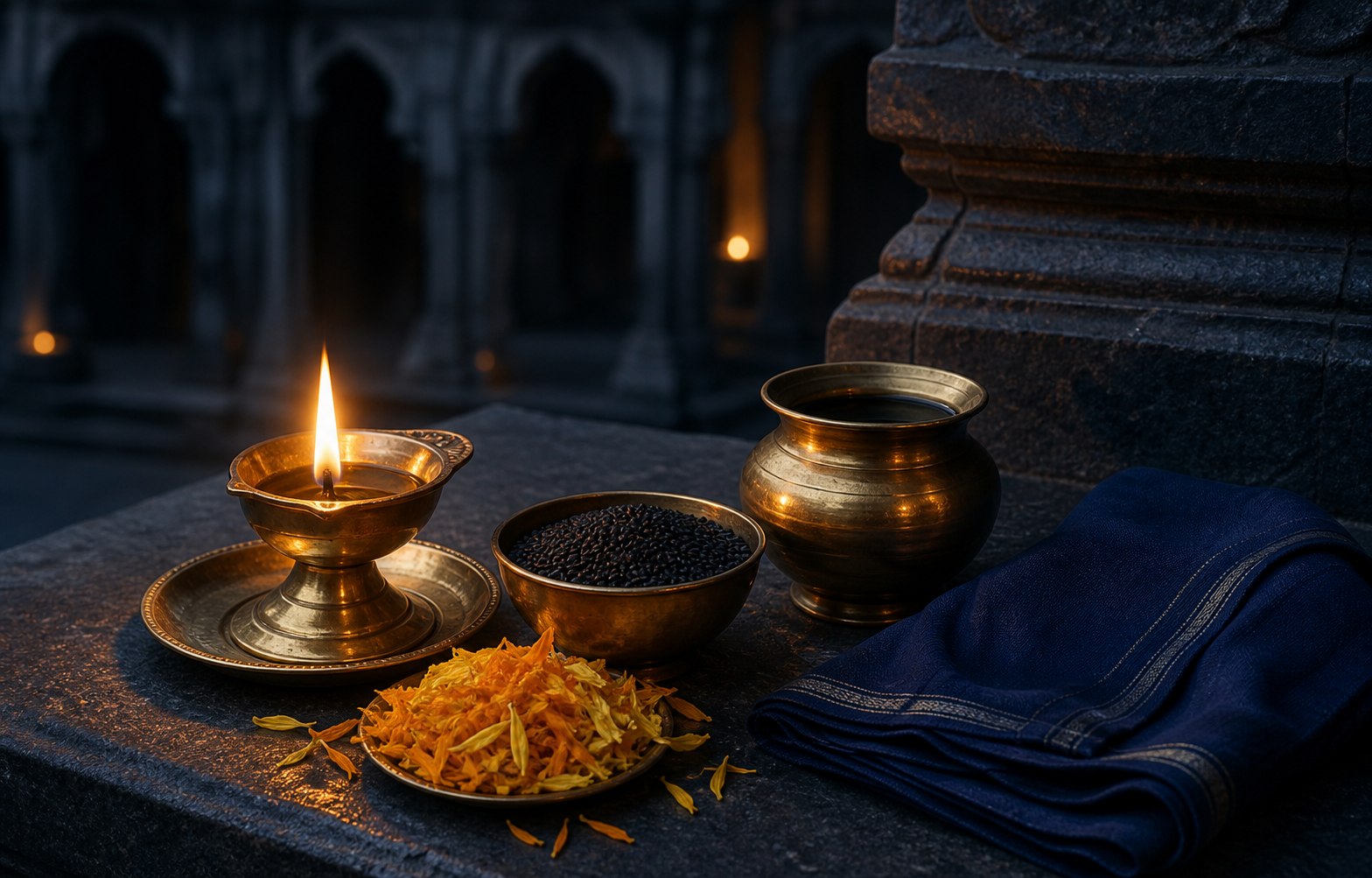
A Saturday diya is usually lit at dusk, not in the morning, and is often placed at the root of a peepal tree rather than only at a home altar. This timing is not arbitrary. Saturday itself is treated as sacred to Shani because it is his ruling day in the seven-day week, a point explained in detail by Chaardham's overview of Saturday worship, and dusk is considered the hour when Shani's energy is most approachable.
The practice itself is simple. Fill a small diya with mustard oil, add a pinch of black sesame and sometimes a coin, light the wick, and place it at the tree's base or your own altar. Some people walk away without looking back, a small act meant to represent letting go of the outcome rather than clinging to a request. If no peepal tree is nearby, lighting the same diya at home carries the same intention.
The Drik Panchang page on Shani Shanivara Vrat also describes a more elaborate version of the day: taking a sankalp, worship of Ganesha first to clear obstacles, a full Shodashopachara puja with sesame and urad dal, and feeding a cow before breaking one's own fast. Few households do all of this every week, and that is fine. The diya and a sincere sesame offering already cover the essentials.
Til Tel Abhishek: The Sesame Oil Ritual at the Centre of It All
Til Tel Abhishek, the anointing of Shani's murti with sesame oil, is considered by many pandits the single most direct offering in the entire Saturday practice. It is why sesame oil, rather than any flower or sweet, sits at the heart of temples built specifically for Shani worship. The oil is poured slowly over the murti while mantras are recited, and devotees often bring their own small quantity to add to the temple's supply rather than only observing.
Black Cloth, Iron, and the Objects People Get Wrong
Black cloth and small iron items are genuine Saturday offerings, but they are meant to be given away, not simply worn or displayed. A length of black cloth donated to someone who needs clothing, or an iron item such as a nail or a small tool left at a temple or given to a labourer, follows the same logic as the food offering: the point is the giving, not the possessing.
This is different from the separate question of whether a devotee should personally wear black on a Saturday, which has its own set of regional opinions and workplace considerations covered in a dedicated post on wearing black on Saturday. Offering black cloth to Shani and choosing what colour to wear yourself are two different practices that often get confused with each other.
Iron in particular gets treated with unnecessary caution by some newcomers, who worry that keeping an iron object at home after Saturday is unlucky. Tradition does not generally support that fear. The point of the iron offering is the act of donating it, not a punishment for owning iron the rest of the week.
Why Charity Is Often Considered the Most Meaningful Offering of All
Charity is repeatedly described in tradition as the offering that matters most to Shani, more than any single object placed at an altar. Shani is associated with the working class, the elderly, and those who are easily overlooked, so giving food, oil, or money directly to someone in that position is treated as a direct form of worship rather than a substitute for one.
What If You Cannot Visit a Temple or Gather Every Item
None of this requires a temple visit, a peepal tree, or a complete shopping list. Devotion to Shani is not limited by distance, income, or access to a particular place, and a sincere diya lit at home carries the same intention as one lit at a crowded temple. What matters more consistently across tradition is regularity and honesty of intent, not the size of the offering.
If a temple visit is not possible, the post on whether you need to visit a Shani temple goes into this in more depth, and the companion piece on performing Shani puja at home walks through a simplified home version step by step. Missing an item on a given week, or missing the day itself because of work or travel, is not treated in most traditions as a failure that needs correcting through a bigger offering later. It is simply picked up again the following Saturday.
A Simple Saturday Offering Sequence You Can Actually Follow
For anyone who wants a practical order to follow rather than a long list of options, this sequence covers the core of what tradition recommends without requiring a priest or a temple:
- Bathe and put on clean clothes, ideally in a dark blue or black shade, before starting.
- Light a mustard or sesame oil diya, adding a few grains of black sesame to the oil.
- Recite "Om Sham Shanicharaya Namah" as many times as feels sustainable, traditionally 108 times with a mala.
- Set aside black sesame, black cloth, or a small iron item, either to offer at a temple or to donate directly.
- Give food, oil, or a small amount of money to someone who needs it more than you do that day.
- Close by acknowledging intention rather than making a specific request, and let the diya burn down on its own.
This sequence is a simplified version of the fuller ritual explained in the dedicated Shani puja vidhi guide and the mantra explanation post. For the complete list of samagri used in a fuller puja, including items not covered here, see the Shani Puja samagri list.
Common Mistakes People Make With Saturday Offerings
The most common mistake is assuming a costlier item automatically works better than a modest one, a belief that tradition itself does not support. A mustard oil diya bought for a small amount and lit with sincerity is not described anywhere in scripture or established practice as inferior to an expensive alternative.
This matters because some sellers use fear to push far more expensive purchases, particularly gemstones, as the only real fix for Saturn-related hardship. Anyone encountering that kind of pressure should treat it with real caution. The posts on blue sapphire benefits and Shani ring benefits go into why these items are treated in tradition as optional supports at most, never as a mandatory purchase, and never as a guaranteed fix for a difficult period. A diya, some sesame, and an honest act of charity remain valid on their own.
Conclusion
Saturday offerings to Shani Dev come down to a short, affordable list: a mustard or sesame oil diya, black sesame seeds, black cloth, a small iron item, and food given away rather than kept. Tradition consistently treats charity, feeding the poor, cows, or crows, as the offering that matters most, ahead of any object bought for the occasion. Timing helps, dusk and the peepal tree carry symbolic weight, but neither is mandatory. What matters more is sincerity, repeated weekly, without fear or expensive substitutes standing in for genuine intent. Whether the ritual happens at home, at a temple, or through a pandit performing it on your behalf, the same handful of simple offerings covers what tradition asks for.