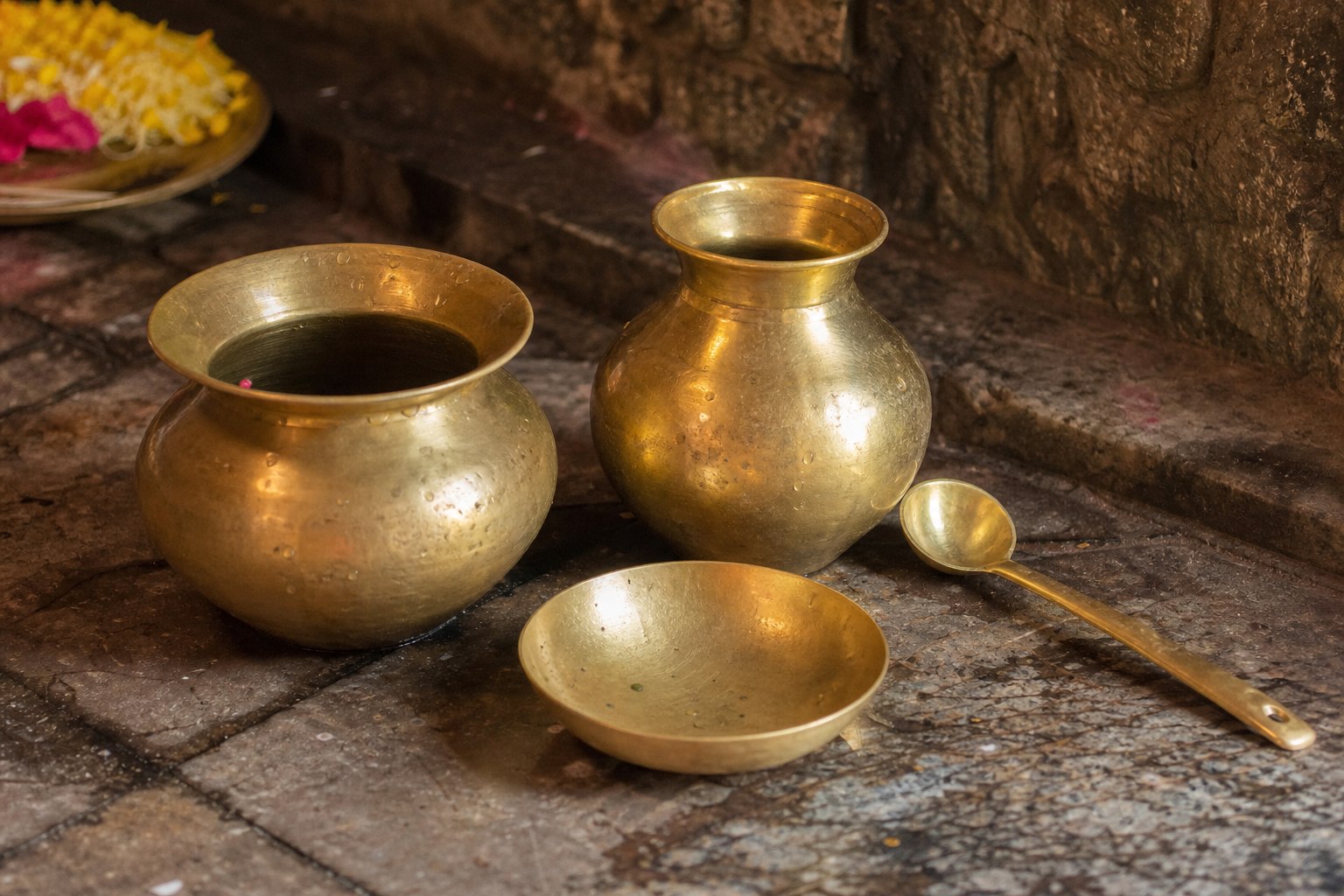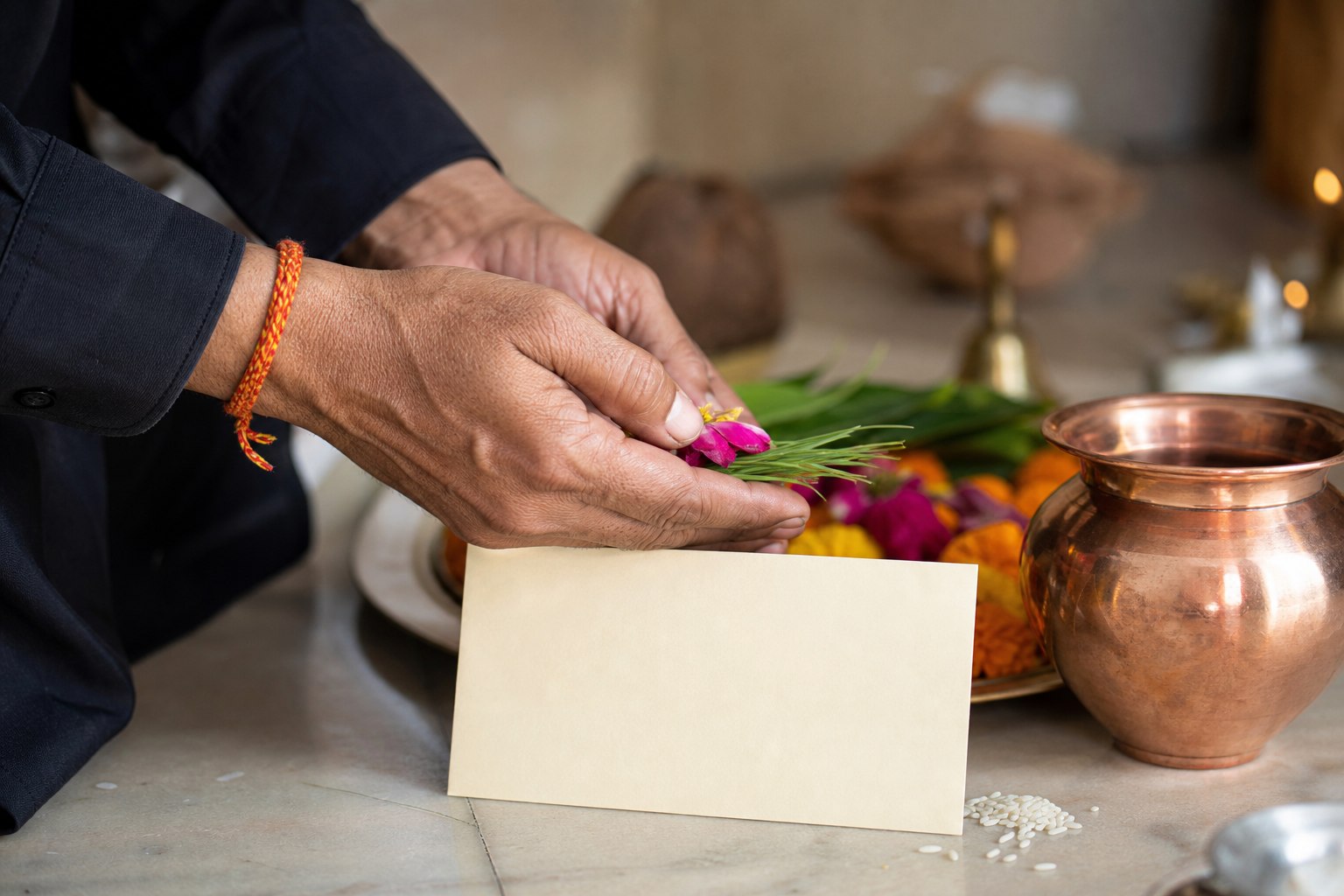
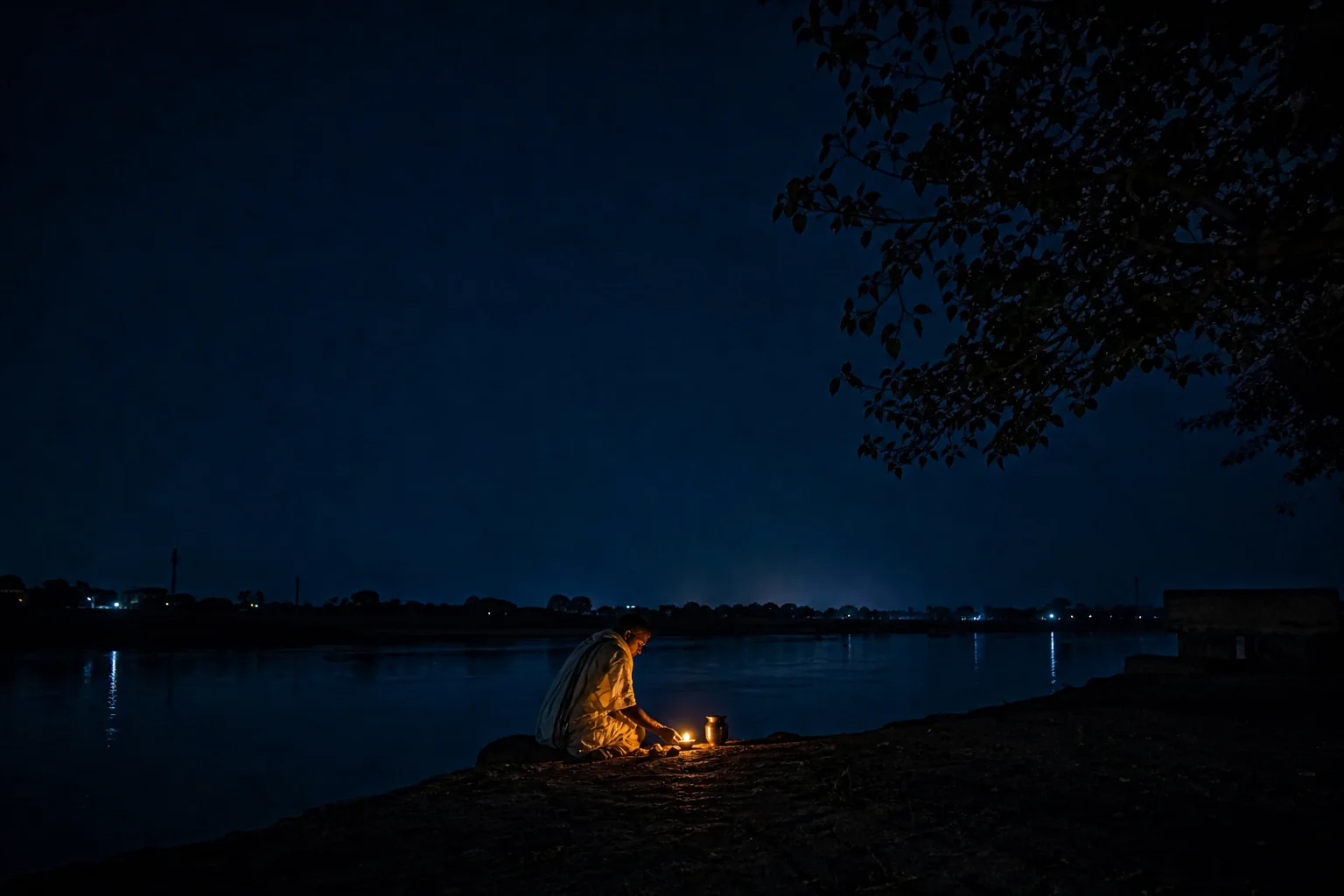
Shani Amavasya is the new moon falling on a Saturday. Amavasya is the no-moon night that closes each lunar month, and Saturday is Shanivar, the day of Shani. Because the lunar month runs to roughly 29.5 days and the week to seven, the two coincide only once or twice in a year, and the tradition marks that coincidence out from the twelve ordinary Amavasyas. It is treated as a day for remembrance of ancestors, for giving, and for the plain conduct the Shani texts ask for.
The night the moon does not come
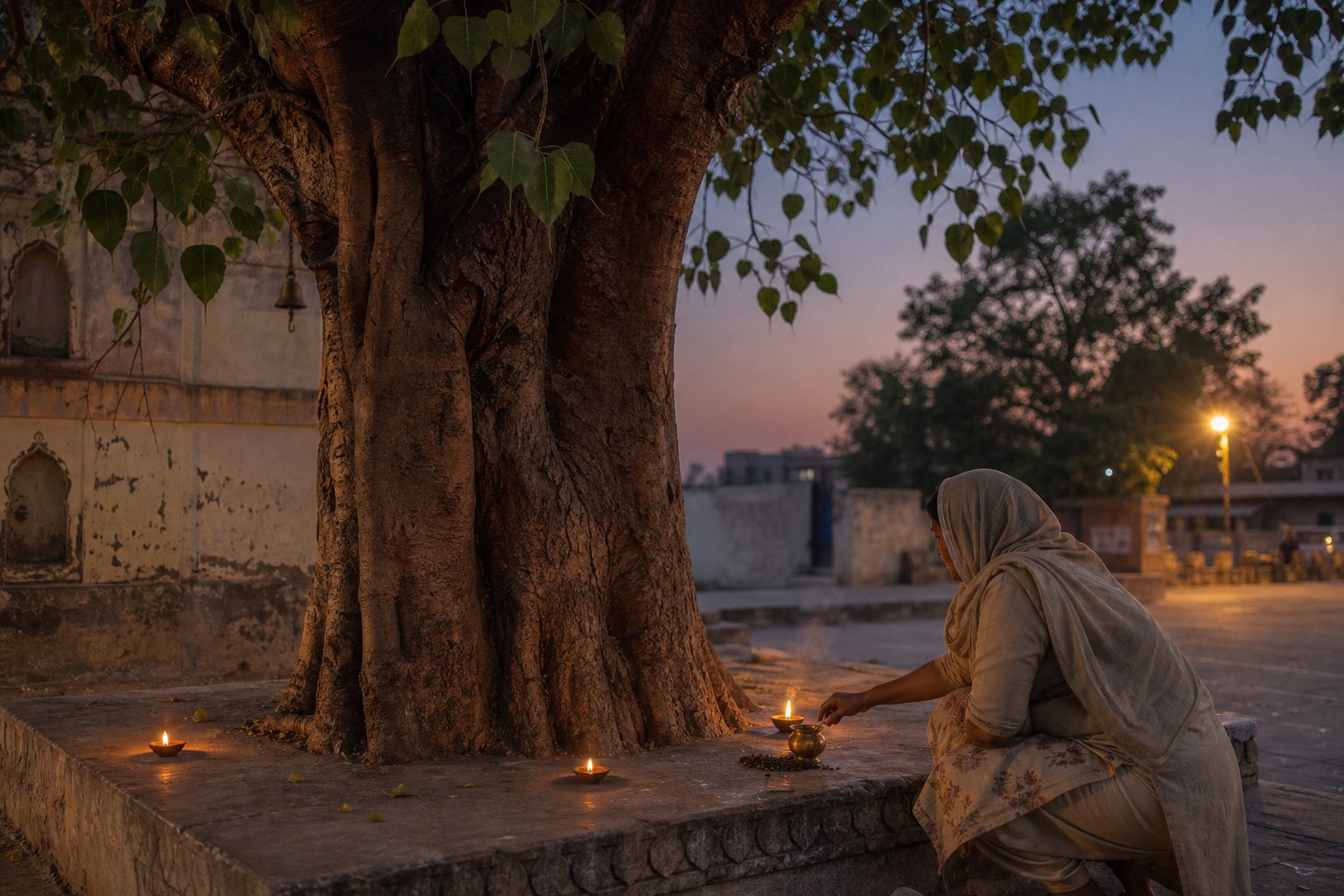
Every month the moon thins.
You can watch it happen if you go outside at the same hour for a fortnight. Full and heavy over the rooftops, then bitten at one edge, then halved, then a curve, then a thread. Then one night you look up and there is nothing there at all.
That is Amavasya. Not darkness as a mood. Darkness as a fact, the sky with the lamp taken out of it.
The old people said this was when the dead came closer. Not to frighten anyone. Simply that with the moon gone the distance between the living and those who went before them grew thin, and a bowl of water poured out with a name spoken over it would carry further on that night than on any other.
So Amavasya became the ancestors' night. Water for the fathers. Names said aloud in kitchens by people who had not said them in a long time.
Now put Saturday on top of it.
Saturday is his. Shanivar, the day of the slow dark one, the son of shade whose own father turned away from him, the one they trusted with the accounts because he had been refused himself and could not be flattered.
Once or twice a year, the moonless night and the shadow's day fall on each other.
Everything soft is gone from the sky. No moon, and the god whose whole nature is what remains when the light is withdrawn.
The tradition did not read that as a threat. It read it as an opening.
Because if there was ever a night to look honestly at what you owe, to the dead and to the living, it is the one with nothing overhead to look back at you kindly.
What Amavasya is
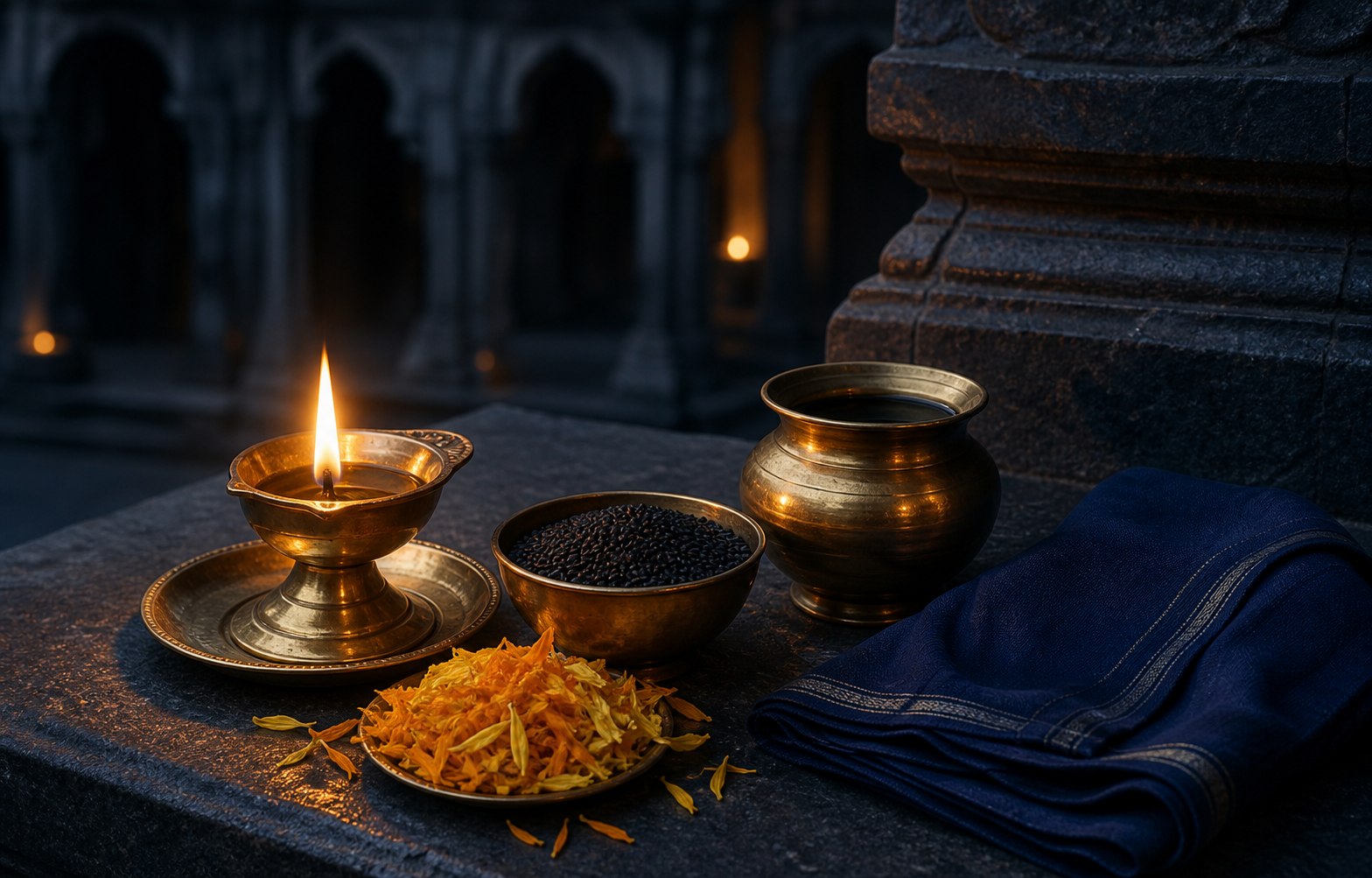
Amavasya is the moment the Moon and Sun share the same celestial longitude, so that the Moon's illuminated face is turned entirely away from Earth. It ends the dark fortnight, the krishna paksha, and begins a new lunar month.
In Hindu practice Amavasya has long been associated with the ancestors. The offering of tarpan, water given in remembrance of those who have died, is traditionally made on this day. Pitru Paksha, the fortnight given entirely to the ancestors, closes on an Amavasya.
Because Amavasya is an astronomical instant rather than a calendar date, the day it falls on shifts by time zone. A new moon at 23:40 in India may be the following day in Britain or Canada. Anyone observing from outside India should check a panchang computed for their own location, and observing Shani without a temple takes up that problem in detail.
Why Saturday changes it
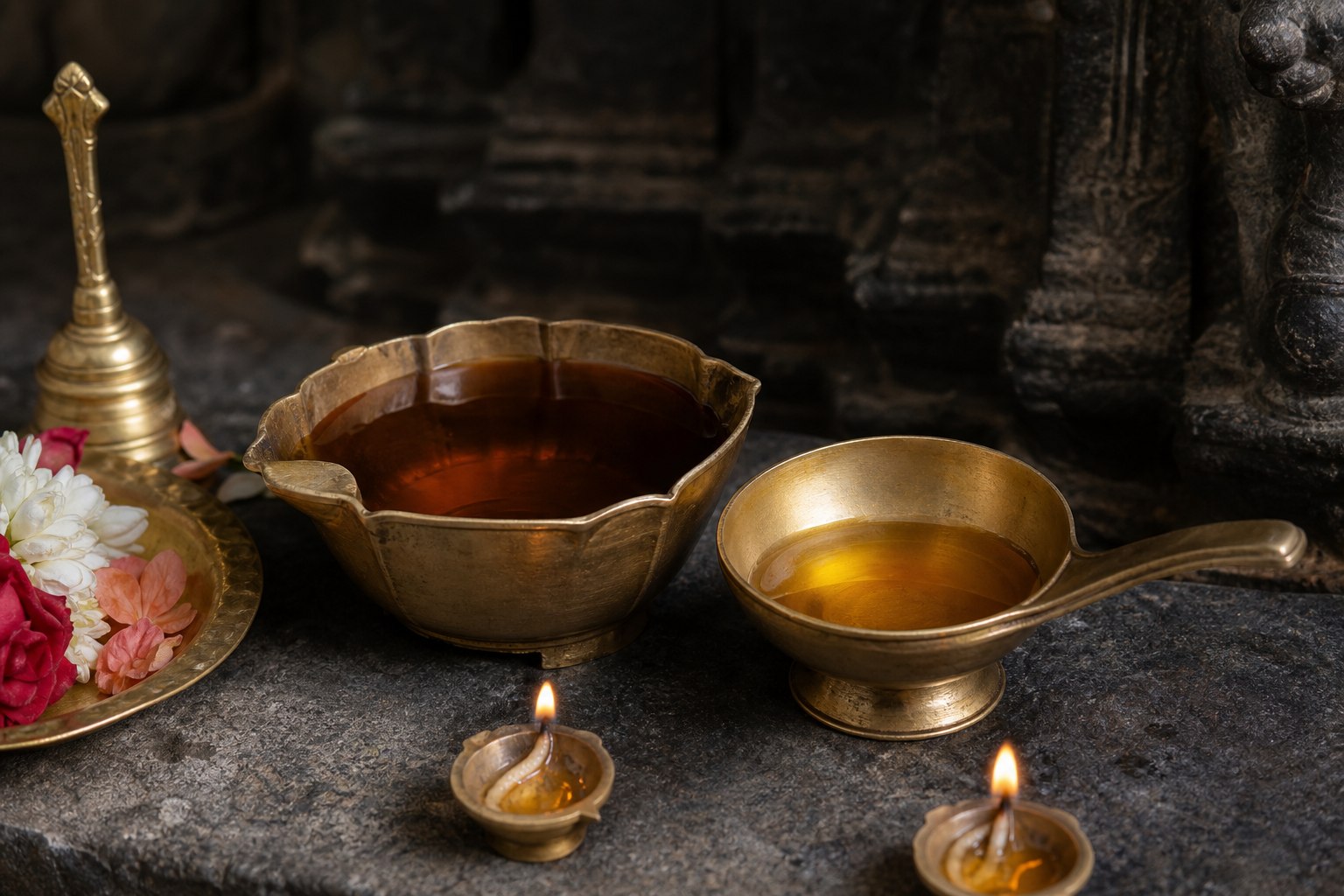
Saturday is Shanivar, and in the Vedic scheme of weekdays each day belongs to a graha. Saturday belongs to Shani, which is why the Shani observances are traditionally kept then.
When Amavasya and Shanivar fall together, two observances that would ordinarily be separate coincide. The ancestral remembrance of the new moon meets the day of the graha most associated with consequence, discipline and the long view.
There is no separate scriptural festival here. There is a coincidence of two established observances, and the tradition treats coincidences of this kind as worth attending to. What is a Saturn return tells the story of why Shani carries the weight he does.
Shani Amavasya and Shani Jayanti are different days
| Shani Amavasya | Shani Jayanti | |
|---|---|---|
| What it marks | New moon falling on a Saturday | The birth anniversary of Shani Dev |
| Frequency | Once or twice a year | Once a year |
| Fixed in the calendar? | No, wherever the two coincide | Yes, Amavasya in the month of Jyeshtha |
| Must it be a Saturday? | Yes, by definition | No |
Shani Jayanti is the fixed observance: the Amavasya of Jyeshtha, falling in May or June, and it can land on any weekday. When Shani Jayanti itself falls on a Saturday the two coincide, which is treated as particularly significant. Shani Jayanti 2026 and Shani Jayanti 2027 cover that observance.
Finding the 2026 dates for your location
Because Amavasya is an astronomical instant, the dates must be computed rather than looked up in a general list, and the answer differs by time zone. A panchang for your own city will give the exact moment the new moon occurs and the day it therefore falls on where you are.
This is the same reason our Sade Sati calculator and Saturn return calculator work from computed ephemeris positions rather than published tables. Precomputed lists silently assume a location, and for anyone outside India that assumption is usually wrong by a day. How we compute sets out the method.
What the tradition actually asks for
Considerably less than most online guidance suggests, and nothing that requires expenditure.
The Shani Chalisa prescribes two remedies and no more: water offered at the peepal tree on his day, and the giving of a lamp. A short list for a deity with a fearsome reputation, and the brevity is the point. What the Chalisa actually says sets out what it does and does not promise.
What the wider Shani literature returns to most often is giving, to the poor, to the aged, to those who labour, and to those with less than the giver. Sesame, mustard oil, black cloth and iron appear in the customary lists, but the texts are consistently clearer about the act of giving than about the objects given.
On an Amavasya the ancestral observance sits alongside this: tarpan, remembrance, and where the family keeps the practice, food offered in the name of those who have died.
Observing it from outside India
Nothing on the list requires a temple, a priest or a particular country. Giving is available anywhere. Remembrance is available anywhere. A lamp is available anywhere.
The peepal tree is the one item genuinely unavailable in most of Britain, Canada or Australia, and the practical tradition has always accommodated substitution where a specific plant or river is out of reach. What is asked for is the offering and the intention, not the botany.
Two adjustments are worth making. Check the date against a panchang for your own city rather than an Indian one. And if you are keeping the ancestral observance, the tradition permits it at the correct local time rather than requiring Indian hours.
If you would like a seva performed
For those who cannot reach a temple, whose family is far away, or who would like the observance carried out in their name on the day, a seva can be performed at our centre in India with your name and gotra spoken in the sankalp.
Deepdaan is the lamp. Anna Seva is the giving of food, which is what the ancestral night asks for most directly. Til Tel Abhishek is the sesame oil offering kept on Shani's day. Every seva is listed with what it involves, and how it works sets out each step.
None of it purchases an outcome. Shani is Karmaphaladata, the giver of the fruit of action, and the tradition does not hold that an observance can be traded for a result. Honest answers states that position plainly.
Conclusion
Shani Amavasya is the new moon on a Saturday, the ancestral night meeting Shani's day, once or twice a year. It is not Shani Jayanti, which is fixed to the month of Jyeshtha, and it asks for nothing elaborate: giving, remembrance, a lamp, and water at the peepal where there is one.
Check the date against a panchang for your own location, since the astronomical moment does not respect calendar days. For the weekly practice that surrounds the annual observances, what to offer Shani Dev on Saturday covers it.