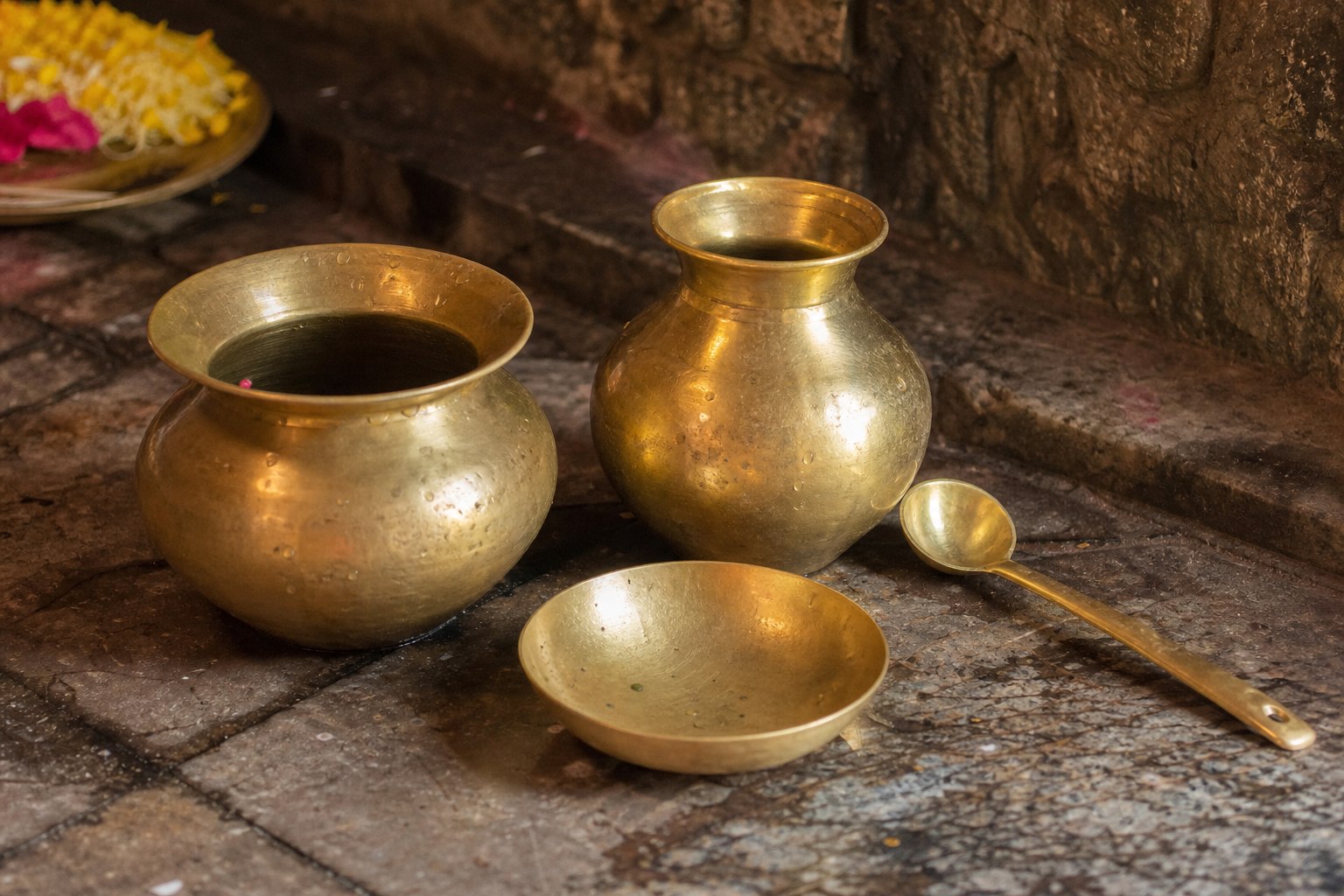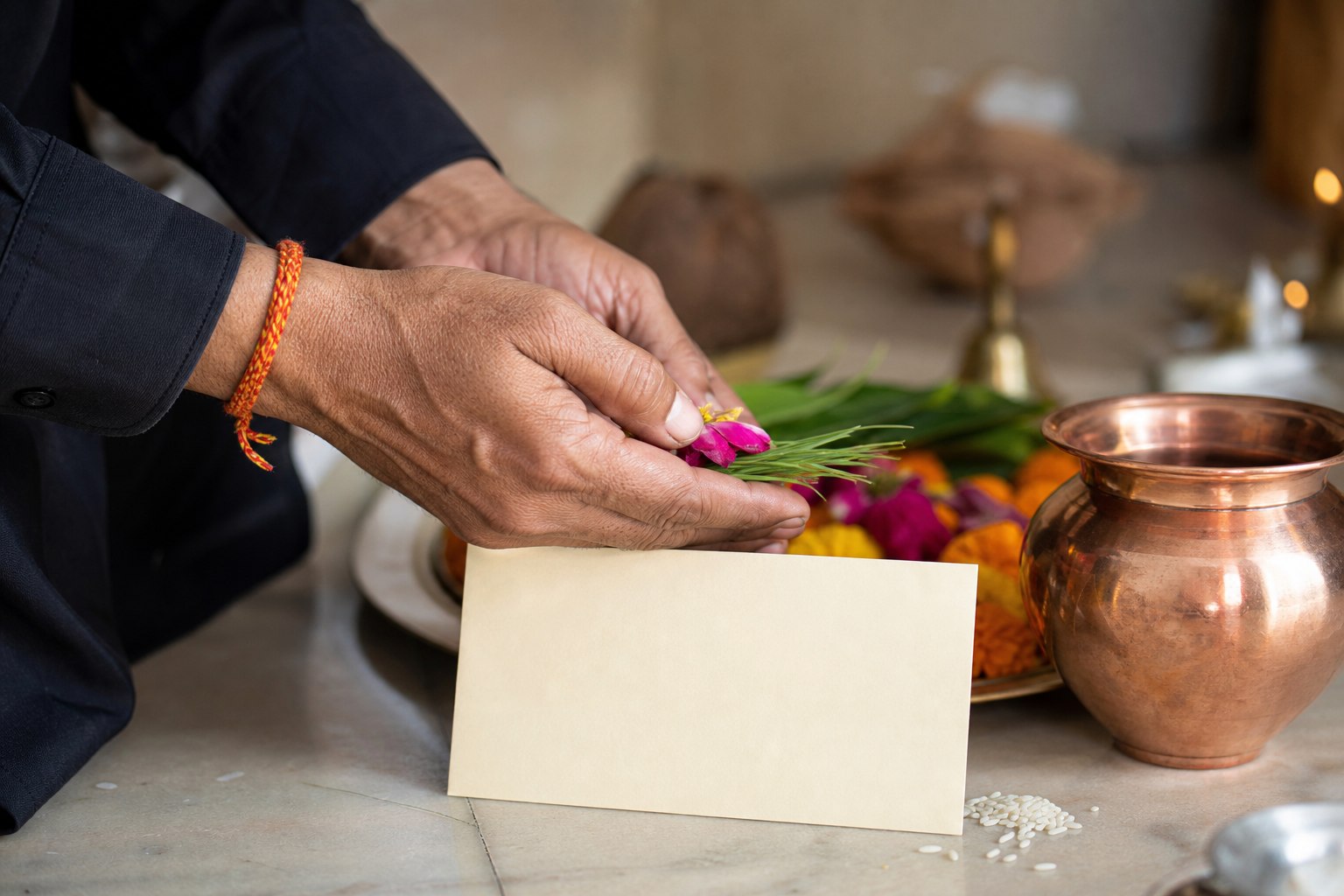
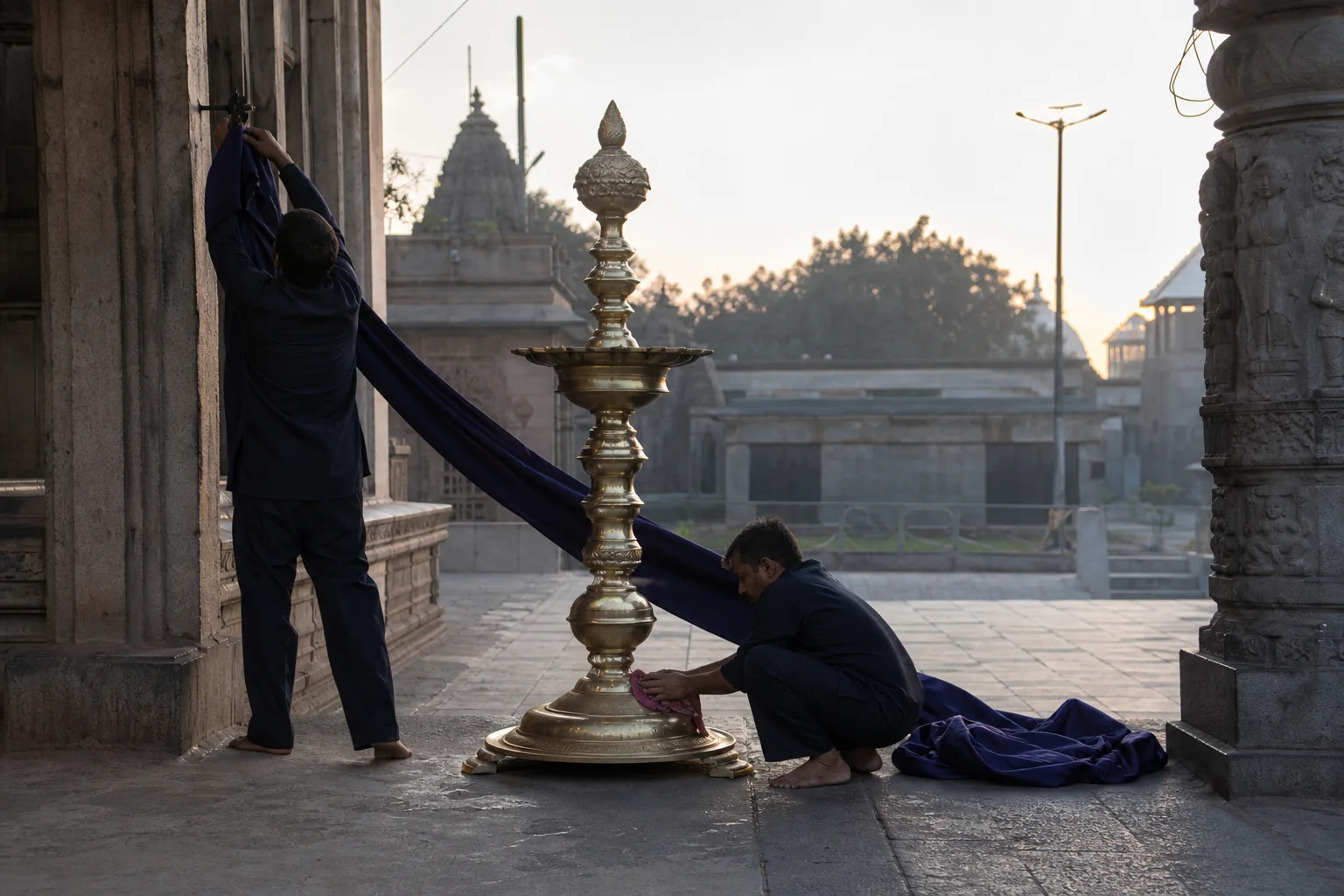
Shani Jayanti marks the birth of Shani Dev and falls on the Amavasya of the month of Jyeshtha, which places it in late May or June. It is the principal annual observance for Shani, fixed to that lunar date rather than to a weekday, so it can land on any day of the week. Because Amavasya is an astronomical moment rather than a calendar entry, the exact day shifts each year and differs by time zone.
What the mother did

Nobody tells this day from Chhaya's side.
She was not born. She was made, one afternoon, out of a woman's shadow on a burning floor, and handed a marriage and a name and told to stay. Be me. He will not know.
And she stayed. That is the part worth holding. She could have walked out of that house the same evening. Instead she stood in the furnace where the real wife could not stand, and she answered to a name that was not hers, and the sun lay down beside her night after night and never once looked closely enough to see that she cast nothing on the floor.
Then she found she was carrying a child.
They say she fasted through it. Sitting in that unbearable light, month after month, taking nothing, holding her mind on one thing so completely that the child inside her took the colour of what she was doing. Dark. Slow. Unmoving under pressure.
He came in Jyeshtha, on the night with no moon.
And the first thing he saw was a father who could not look back at him. The eclipse. The world going out at noon. Cattle folding their legs in the fields.
What the day remembers is not that.
Shani Jayanti remembers that a boy was born out of shade and endurance to a mother who was herself made of shade and endurance, and that this is exactly the god you would want holding the accounts. He was not born into comfort and asked to judge the uncomfortable. He came out of it. His mother sat in a furnace to make him.
That is whose birthday it is.
Not a birthday to be frightened of. The birthday of the one who does not flinch, because of a woman who did not flinch first.
What the day marks
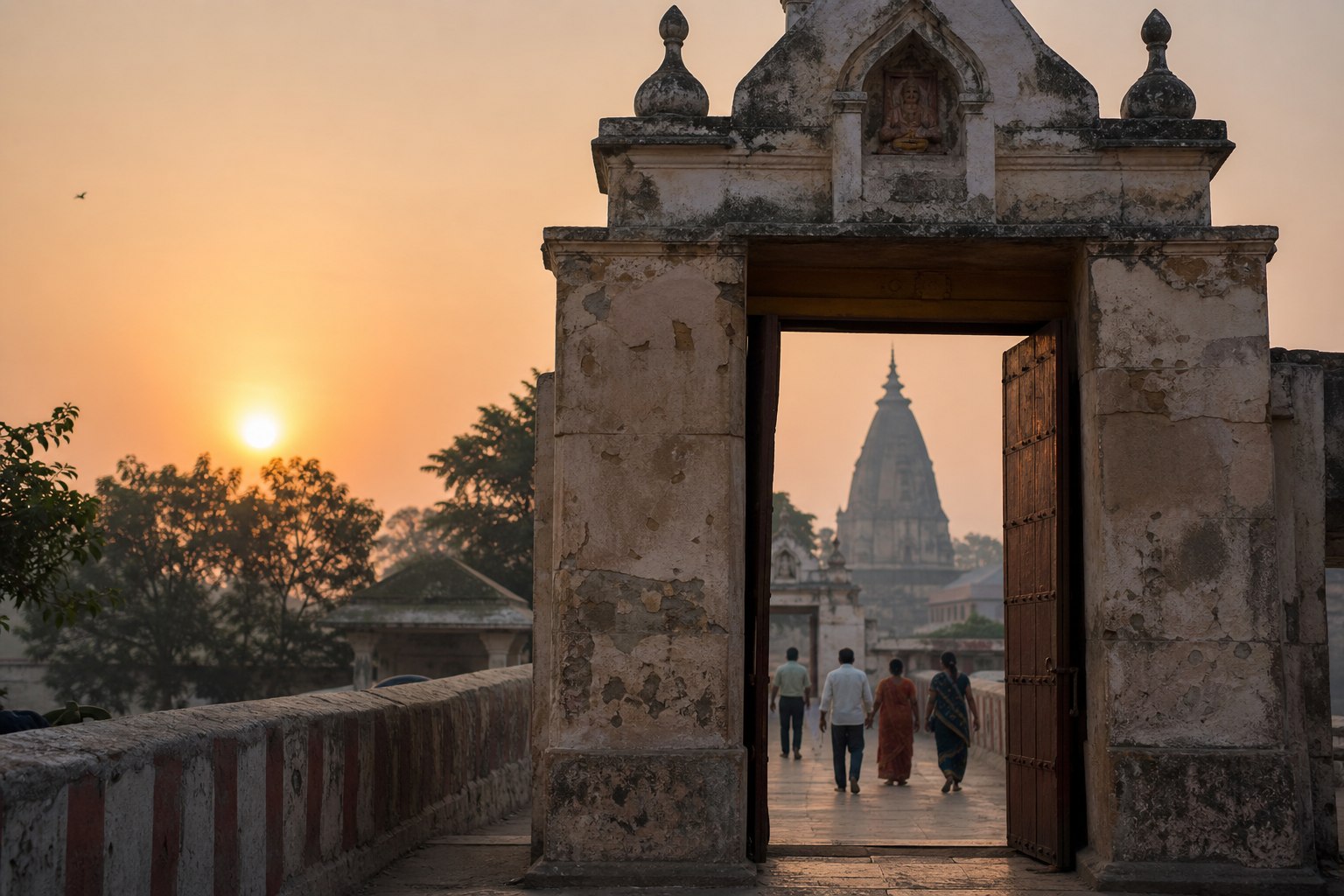
Shani is the son of Surya, the sun, and Chhaya, the shadow. The classical account of his birth turns on that parentage: the child of the brightest thing in the sky and of shade.
The story is not decoration. It is the tradition's way of stating what Shani is understood to be. Not a malevolent force, but the graha of consequence, of what falls in the light's absence, of the accounting that follows action. Shani is Karmaphaladata, the giver of the fruit of what has already been done. He is held not to invent a fate and impose it, but to bring what was set in motion to its result.
That is the doctrinal basis for the whole of Shani practice, and it is why the classical remedies are conduct rather than transaction. What is a Saturn return tells the story of the birth at greater length.
Finding the date for your location
Amavasya is the instant at which the Moon and Sun share the same celestial longitude. It is a moment, not a day, and the calendar day it falls on depends on where you are standing.
A new moon at 23:40 Indian time is the previous day in Britain and earlier still in Canada. Published lists of Hindu festival dates almost always assume Indian time without saying so, which is how a family in Toronto ends up observing on the wrong day.
Check a panchang computed for your own city. This is the same principle behind our Sade Sati calculator and Saturn return calculator, both of which compute from NASA JPL DE440s ephemeris positions rather than reproducing a table that has quietly assumed a location. How we compute sets it out.
Shani Jayanti and Shani Amavasya are not the same
| Shani Jayanti | Shani Amavasya | |
|---|---|---|
| Definition | Amavasya of the month of Jyeshtha | Any Amavasya falling on a Saturday |
| Frequency | Once a year | Once or twice a year |
| Weekday | Any | Saturday, by definition |
| Marks | The birth of Shani Dev | A coincidence of two observances |
Shani Amavasya 2026 covers the other observance in full.
What the tradition asks for
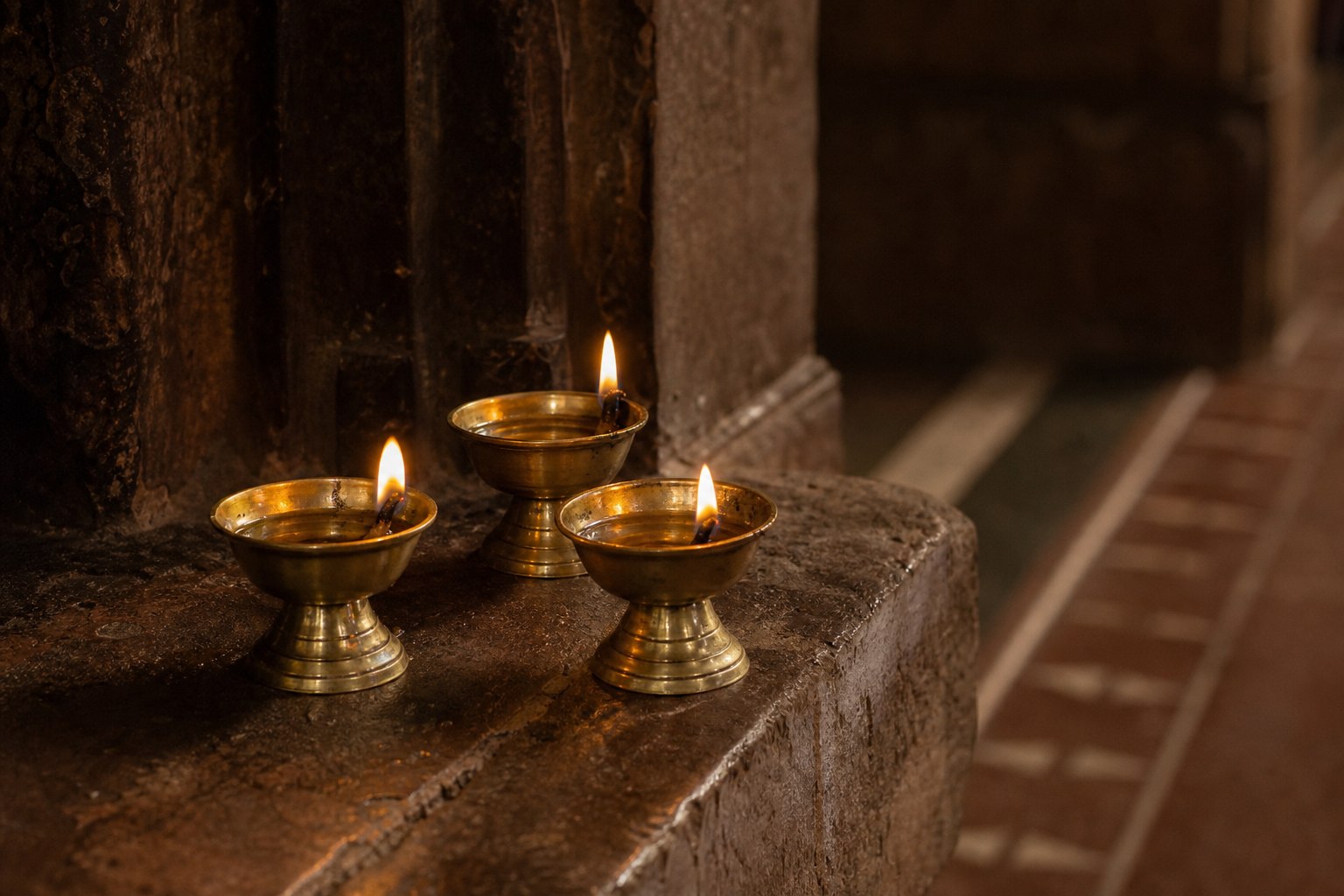
Less than most online guidance suggests. The Shani Chalisa prescribes two remedies and no more: water offered at the peepal tree on his day, and the giving of a lamp.
Beyond that, the Shani literature returns most consistently to giving, to the poor, to the aged, to those who labour, and to anyone with less than the giver. Sesame, mustard oil, black cloth and iron appear in the customary lists, and a lamp lit with sesame oil is the common practice of the day itself. Some keep a fast, breaking it after sunset.
What is asked for is conduct sustained over time rather than an elaborate single day, which makes the observance unusually portable. What the Chalisa actually says takes up what it does and does not promise.
Observing it from abroad
Almost nothing on the list requires India. Giving, remembrance and a lamp travel anywhere.
The peepal is the one genuine exception, absent from most of Britain, Canada, Australia and the Gulf. The practical tradition has always permitted substitution where a specific tree or river is out of reach. Observing Shani without a temple takes that question up properly.
The second adjustment is the date, as above: use a panchang for your own city rather than an Indian one.
Looking back, and forward
The observance is annual and the dates move each year with the lunar calendar. For the previous year's account, Shani Jayanti 2026 covers the same ground with that year's context, and Shani transit 2027 sets out where Saturn stands across the year.
If you are trying to work out whether you are currently in a significant Saturn period rather than simply marking the annual day, the Sade Sati calculator answers the Moon-based reckoning and the Saturn return calculator the Saturn-based one. Every Sade Sati period from 1950 to 2050 is published in full if you would rather check the table than trust a tool.
If you would like a seva performed
For those who cannot reach a temple on the day, whose family is in another country, or who would like the observance carried out in their name, a seva can be performed at our centre in India with your name and gotra spoken in the sankalp.
Deepdaan is the lamp the Chalisa asks for. Til Tel Abhishek is the sesame oil offering kept on his day. Anna Seva is the giving. Every seva is listed with what it involves, and how it works sets out each step.
It does not purchase an outcome and we will not tell you it does. The doctrine that Shani gives the fruit of action is precise, and it rules out the idea that an observance can be traded for a result. Honest answers states the position plainly.
Conclusion
Shani Jayanti falls on the Amavasya of Jyeshtha, marks the birth of Shani Dev, and asks for giving, a lamp and remembrance rather than anything elaborate. It is distinct from Shani Amavasya, which is defined by the weekday.
Check the date against a panchang for your own location, because the astronomical moment does not respect calendar days or time zones. For the weekly practice that surrounds the annual observance, what to offer Shani Dev on Saturday covers it.