
Shani Dosha is the umbrella term in Vedic astrology for a group of Saturn transits, each measured from your natal Moon sign, that tradition treats as testing periods in a life. The four recognised forms are Sade Sati (7.5 years, moving through the 12th, 1st and 2nd houses from the Moon), Kantaka Shani (about 2.5 years, the 4th house from the Moon), Ashtama Shani (about 2.5 years, the 8th house from the Moon), and Dhaiyya, the general name for those shorter 2.5-year periods. Sade Sati gets all the attention because it is the longest and touches three signs in sequence, but it is only one of four ways Shani Dosha shows up in a chart.
Most articles online use "Shani Dosha" and "Sade Sati" as if they were interchangeable, and that is exactly where the confusion starts. Someone is told their Sade Sati has ended and relaxes, only to run into an Ashtama Shani a few years later and wonder what changed. Knowing the full landscape, not just the one famous transit, is what actually helps make sense of a run of hard years.
What Shani Dosha Really Means

Shani Dosha simply means a chart-specific window where Saturn's transit position, measured from your Moon, is considered to press on a particular house of life. Vedic astrology reads Saturn's transits primarily against the Janma Rashi, the sign your Moon occupied at birth, rather than the Sun sign used in Western astrology. Saturn takes roughly 29.5 years to complete one circuit of the zodiac, spending close to 2.5 years in each of the twelve signs, and that single number is the arithmetic behind every version of Shani Dosha.
Because the Moon moves fast (about 2.25 days per sign) and Saturn moves slowly, a person's Moon sign stays fixed while Saturn crawls past it house by house over decades. Different schools of Jyotish name a difficult passage depending on which house from the Moon Saturn happens to be occupying at the time. Some traditions also check Saturn's position from the Lagna (ascendant) or the Arudha Lagna for extra confirmation, but the version most commonly used, and the one this article and its companion pieces work from, counts from the natal Moon.
Sade Sati: The Most Talked-About Type
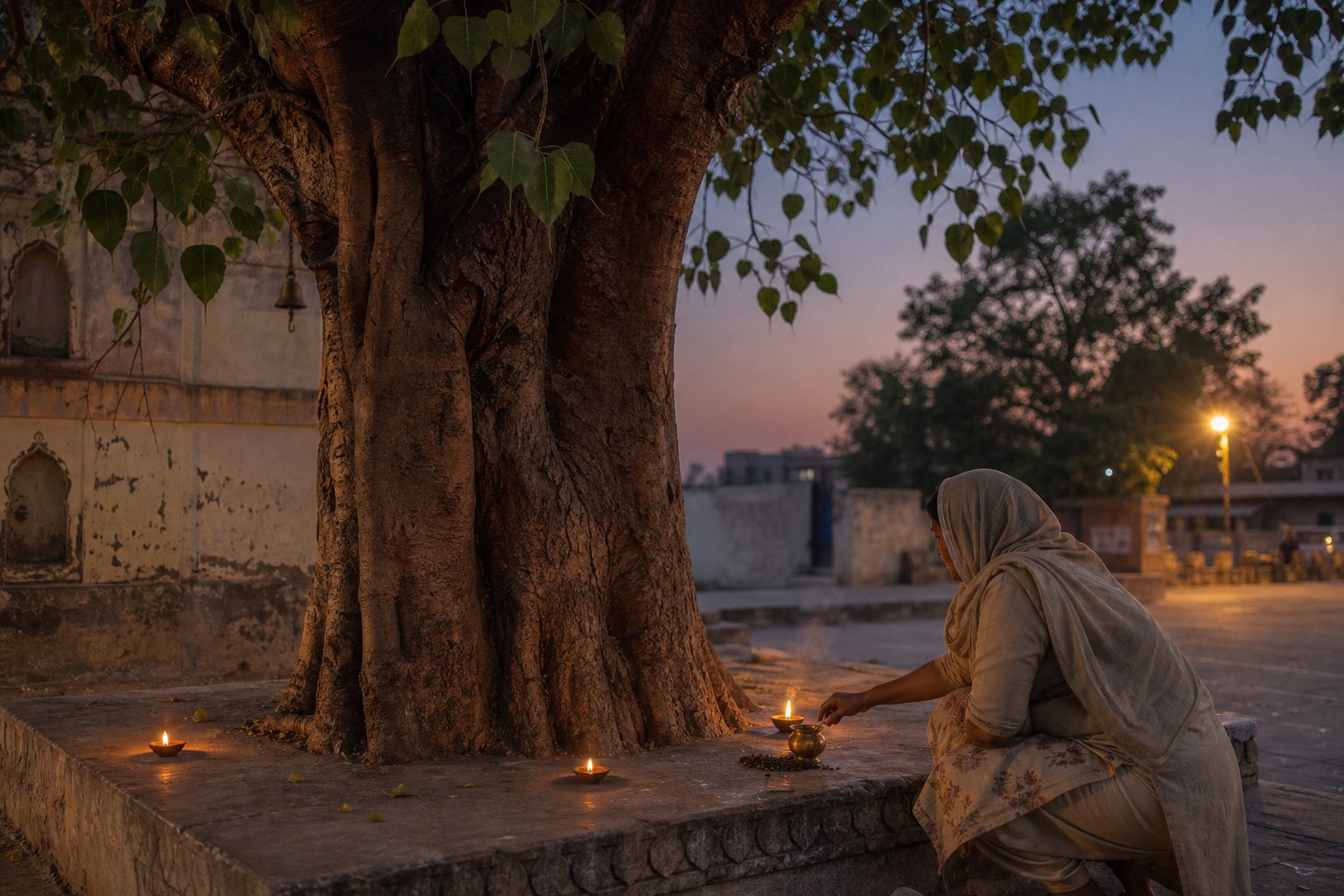
Sade Sati is the 7.5-year transit of Saturn through the 12th, 1st and 2nd houses counted from the natal Moon, and it is what most people mean when they say "Shani ki dasha" in everyday conversation. Wikipedia's entry on Sade Sati describes it as a period traditionally associated with "many challenges, but also a time of great achievements and recognition," divided into three phases often called Rising, Peak and Setting, each lasting about 2.5 years as Saturn moves through one of the three signs.
Because Saturn's cycle is close to 29.5 years and an average lifespan runs well past that, most people go through a full Sade Sati two or sometimes three times, with the middle phase (Saturn crossing the Moon sign itself) usually described as the most demanding of the three. This article deliberately does not repeat that phase-by-phase walkthrough. If you want your own exact Sade Sati window worked out date by date, the Sade Sati Calculator does that maths, and Sade Sati Meaning goes deep on what each of the three phases is traditionally said to touch. This piece stays at the wider level, showing where Sade Sati sits among the other three types.
How a Remote Shani Puja Fits Into the Picture

Many families choose to mark a difficult Shani period, whichever of the four types it is, with a Shani puja rather than simply waiting it out, and increasingly that puja does not require travelling anywhere. Shani Seva's remote seva is booked entirely online: you pick a tier (for one person, for two, or for the family of up to six), and pandits at the company's own centre in India perform the ritual on your behalf, reciting your name and gotra aloud as part of the Sankalp.
Kantaka Shani: Saturn in the 4th House from the Moon
Kantaka Shani is the name given to Saturn's roughly 2.5-year transit through the 4th house counted from the natal Moon, a placement traditionally linked to strain on home life, a mother's health, property matters, and general inner peace. According to Jagannath Hora's guide to Dhaiya transits, the 4th house from the Moon governs "the emotional foundation, the subjective experience of home, not just as a physical place but as a psychological state," which is why this transit is felt less as a single dramatic event and more as a low, persistent pressure.
The word Kantaka literally means thorn, and that image is used deliberately in the tradition. It is not usually described as a crisis but as something that keeps snagging ordinary plans: a delayed house move, a recurring vehicle problem, tension at home that will not quite resolve, a restlessness that makes settling down harder than it should be. Because it lasts one Saturn sign transit, about 2.5 years, it is shorter than Sade Sati but, according to the same source, can feel disproportionately wearing because the pressure is concentrated rather than spread across 7.5 years.
Ashtama Shani and Ardhashtama Shani: Saturn in the 8th House
Ashtama Shani is Saturn's roughly 2.5-year transit through the 8th house from the natal Moon, and it is the one many traditional astrologers rate as more intense, house for house, than any single phase of Sade Sati. The 8th house in Jyotish governs sudden events, transformation, longevity, hidden matters, other people's resources, inheritance and insurance, so a Saturn transit there is traditionally read as a period where change arrives abruptly rather than gradually.
The same Jagannath Hora guide notes that "experienced astrologers... often report that Dhaiya, particularly Ashtama Shani, can produce more concentrated, more sudden, and more disorienting effects than any single phase of Sade Sati," even though it lasts a third as long. Some regional traditions use the term Ardhashtama Shani for a related configuration, Saturn's transit through the 8th house counted from the Lagna (ascendant) rather than the Moon, which can run alongside or independently of Ashtama Shani depending on the chart. Where the two labels are used interchangeably, it is worth asking a practitioner which reference point (Moon or Lagna) they are actually using, since the timing can differ.
Dhaiyya: The Small Panoti
Dhaiyya, sometimes spelled Dhaiya, is simply the general name for any 2.5-year Saturn transit counted from the Moon, which means Kantaka Shani and Ashtama Shani are technically both a Dhaiyya. The word comes from "dhai," meaning two and a half, a direct reference to the roughly 2.5 years Saturn spends passing through one sign of the zodiac before moving to the next.
In everyday astrological conversation in North India, Dhaiyya is also called Panoti, meaning a spell of trouble, with Sade Sati sometimes nicknamed the Badi Panoti (the big one) and Dhaiyya the Laghu Panoti (the small one). That naming convention is a useful shorthand: if someone tells you they are in their "chhoti panoti" or "small panoti," they almost certainly mean either Kantaka Shani or Ashtama Shani, not Sade Sati. The practical difference is duration and intensity, not the underlying mechanism, since all of it comes down to which house from the Moon Saturn currently occupies.
Comparing the Four Types of Shani Dosha
Laid out side by side, the four types differ mainly in how long they last and which house from the Moon Saturn is transiting, not in what kind of astrology governs them.
| Type | House from the Moon | Duration | Also Known As |
|---|---|---|---|
| Sade Sati | 12th, 1st and 2nd (in sequence) | 7.5 years total, about 2.5 years per phase | Badi Panoti |
| Kantaka Shani | 4th | About 2.5 years | A form of Dhaiyya / Laghu Panoti |
| Ashtama Shani | 8th | About 2.5 years | Ardhashtama Shani in some traditions, a form of Dhaiyya |
| Dhaiyya (general term) | 4th or 8th | About 2.5 years | Small Panoti / Laghu Panoti |
Read the table as a severity ladder rather than a strict ranking. Sade Sati is traditionally considered the most far-reaching simply because it lasts three times as long and touches three separate houses in turn, while Ashtama Shani is often described as the sharpest single hit because the 8th house itself is associated with sudden change. Kantaka Shani sits closer to a background hum, persistent rather than acute. None of the four is treated by serious practitioners as evidence of a cursed chart. Every Moon sign passes through all of them repeatedly across a lifetime, since Saturn keeps circling regardless of whose chart it is crossing.
What Shani Dosha Is Traditionally Believed to Bring
Across all four types, traditional astrology links Shani Dosha to themes of delay, responsibility and enforced discipline rather than to random misfortune, and it frames the discomfort as instructive rather than punishing. Wikipedia's page on Shani describes the deity as "the god of karma, time and retribution," governing "longevity, misery, sorrow, old age, discipline, restriction, responsibility, delays and wisdom," and notes that Shani "tests individuals through delays and hard work to build resilience and guide them toward spiritual growth."
In practice, that belief translates into a handful of recurring themes people report during a Shani Dosha period: decisions that keep getting postponed, a career move that takes longer than expected to land, a stretch where money needs closer attention than usual, or a general emotional heaviness that lifts only slowly. These are described in tradition as tendencies, not guarantees, and two people with the same transit can have very different years depending on the rest of their chart and, just as importantly, their own choices. It is worth being honest about that limit rather than dressing it up as certainty.
This is also where the site's own position is worth stating plainly. Devotion and traditional remedy are not, and should not be, tied to how much money someone can spend. A costly gemstone is not treated here as a shortcut past Shani, and anyone selling fear about an unremedied dosha alongside one expensive "only cure" deserves scepticism rather than trust. If you are curious what a considered, non-alarmist take on gemstones looks like, see Neelam and Blue Sapphire Benefits. For the fuller list of traditional remedies people turn to, from mantra to charity to ritual, Shani Dosha Remedies covers that ground, and Shani Dosha Calculator will tell you which of the four transits, if any, applies to your chart right now.
Conclusion
Shani Dosha is not one thing. It is four related but distinct Saturn transits measured from your Moon sign: Sade Sati at 7.5 years across the 12th, 1st and 2nd houses, Kantaka Shani at about 2.5 years in the 4th house, Ashtama Shani at about 2.5 years in the 8th house, and Dhaiyya as the general name covering those shorter transits. Sade Sati is the longest and best known, Ashtama Shani is often felt as the sharpest, and Kantaka Shani sits as a steadier background pressure. Tradition frames all four around delay, responsibility and discipline rather than fixed misfortune, and no amount of spending changes that a chart cannot be outrun, only lived through with patience and steady effort.