The Shani puja mantra most people start with is Om Sham Shanaishcharaya Namah, the short invocation named directly in the Garuda Purana (1.39.15), traditionally chanted 108 times on a mala on Saturdays. A longer version widely taught today, Om Praam Preem Proum Sah Shanaischaraya Namah, is also in common use, though that exact wording is not traced to a specific Puranic verse, so it is best treated as living practice rather than a scriptural quotation. Alongside these, many households use longer forms too: the eleven-verse Dashrath Krit Shani Stotra, the Shani Ashtottara Shatanamavali of 108 names, or the Shani Chalisa. Hanuman Chalisa is often recited as a companion prayer, not because it is a Shani mantra itself, but because of a widely told story about Hanuman freeing Shani Dev from captivity. Each of these has a distinct traditional purpose, and none of them requires perfect Sanskrit to be meaningful.
The real question most people are actually asking is not which mantra to pick. It is whether they are allowed to get it wrong. A lot of anxious chanting comes from having read somewhere that a mispronounced syllable invites more trouble rather than less, and that fear is worth setting down before going any further, because it is not what the tradition itself teaches.
The Shani beej mantra: meaning and when it's used
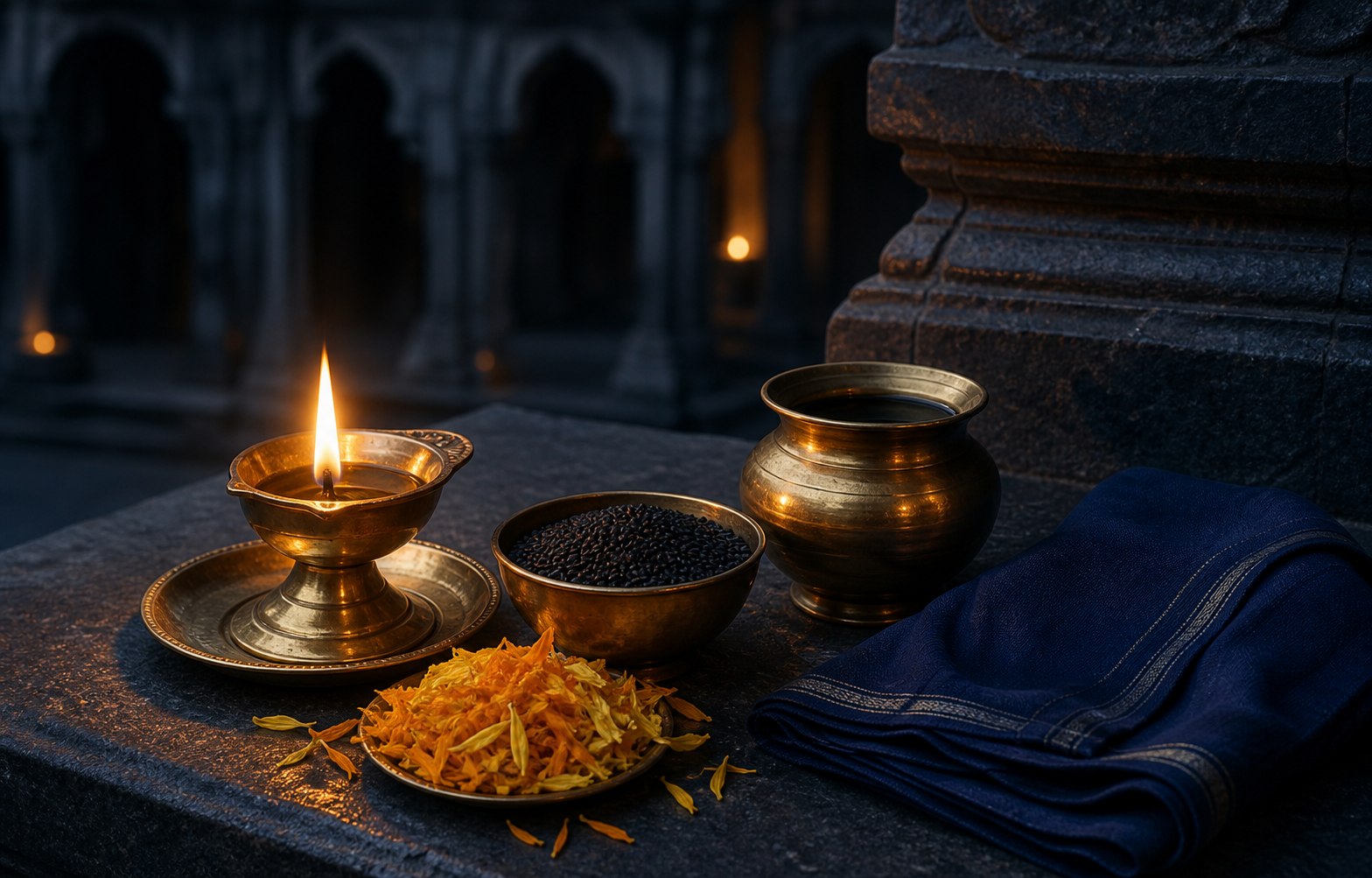
The most textually grounded Shani mantra is short: Om Sham Shanaishcharaya Namah, verbatim from the Garuda Purana (1.39.15) and repeated at 1.23.12 and in the Agni Purana (73.14). Sham is the seed syllable (bija) assigned to Shani, and Shanaishcharaya Namah translates roughly to salutations to Shanaishchara, the one who moves slowly, a name that reflects Saturn's own near thirty-year orbit around the sun, according to Wikipedia's overview of Shani. Because it is short, exact, and has a real citation behind it, this is the version worth learning first if having a scripturally traceable mantra matters to you.
The longer version many people learn instead, Om Praam Preem Proum Sah Shanaischaraya Namah, is genuinely widespread in temples and books today, and its pa-varga seed syllables do follow a documented pattern (the Narada Purana assigns Shani the pa-varga sounds, and a similar three-syllable seed structure is attested for Surya in the Agni and Garuda Puranas). But the exact string is not traceable as a direct citation in the major Puranas, so it is best understood as an established living practice rather than a scriptural quotation, according to Drik Panchang's list of Shani mantras, which is where most people encounter it today. Either mantra is a genuine invocation asking Shani Dev for steadiness, fairness and patience rather than harshness; the difference is only which one you can point to a specific verse for.
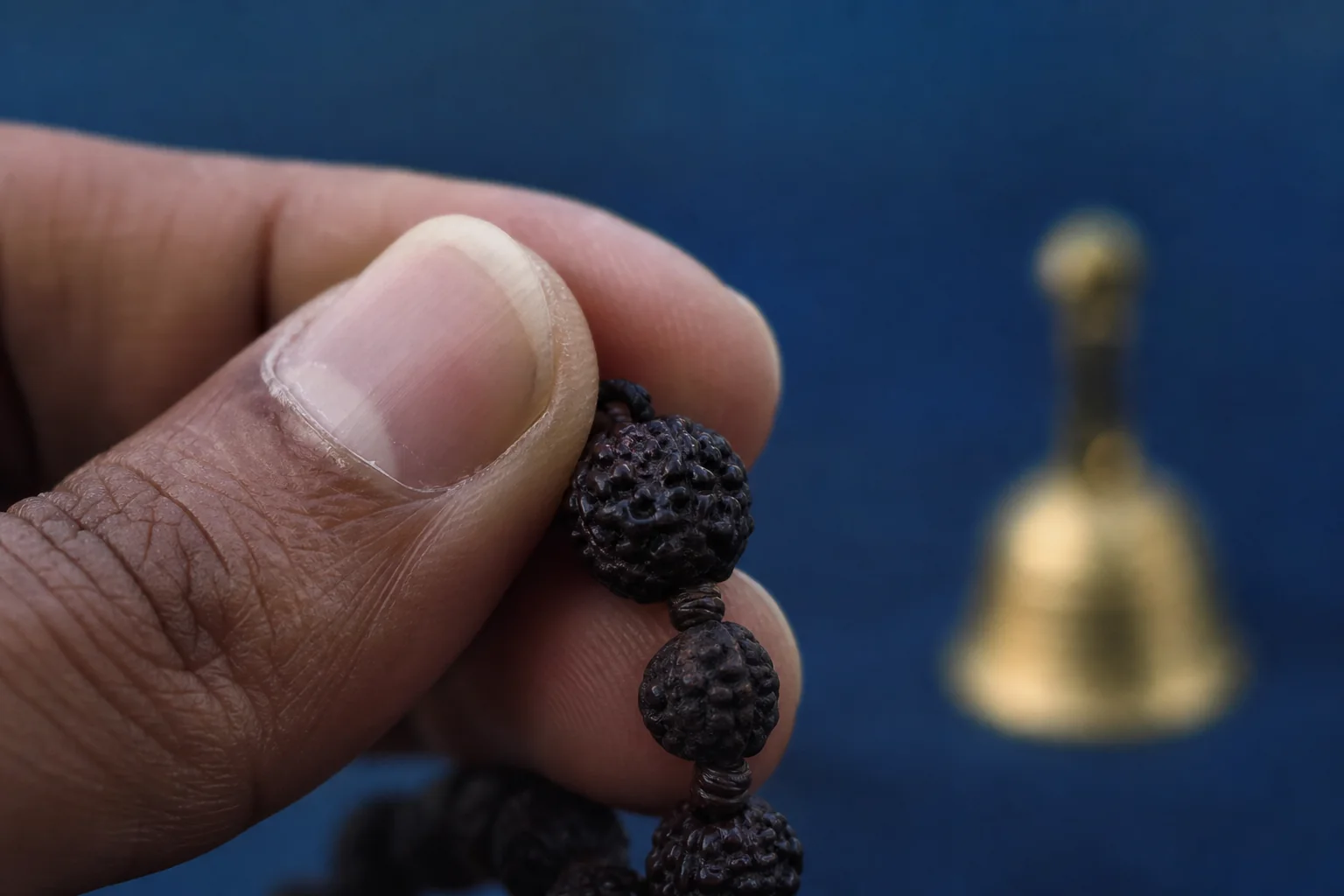
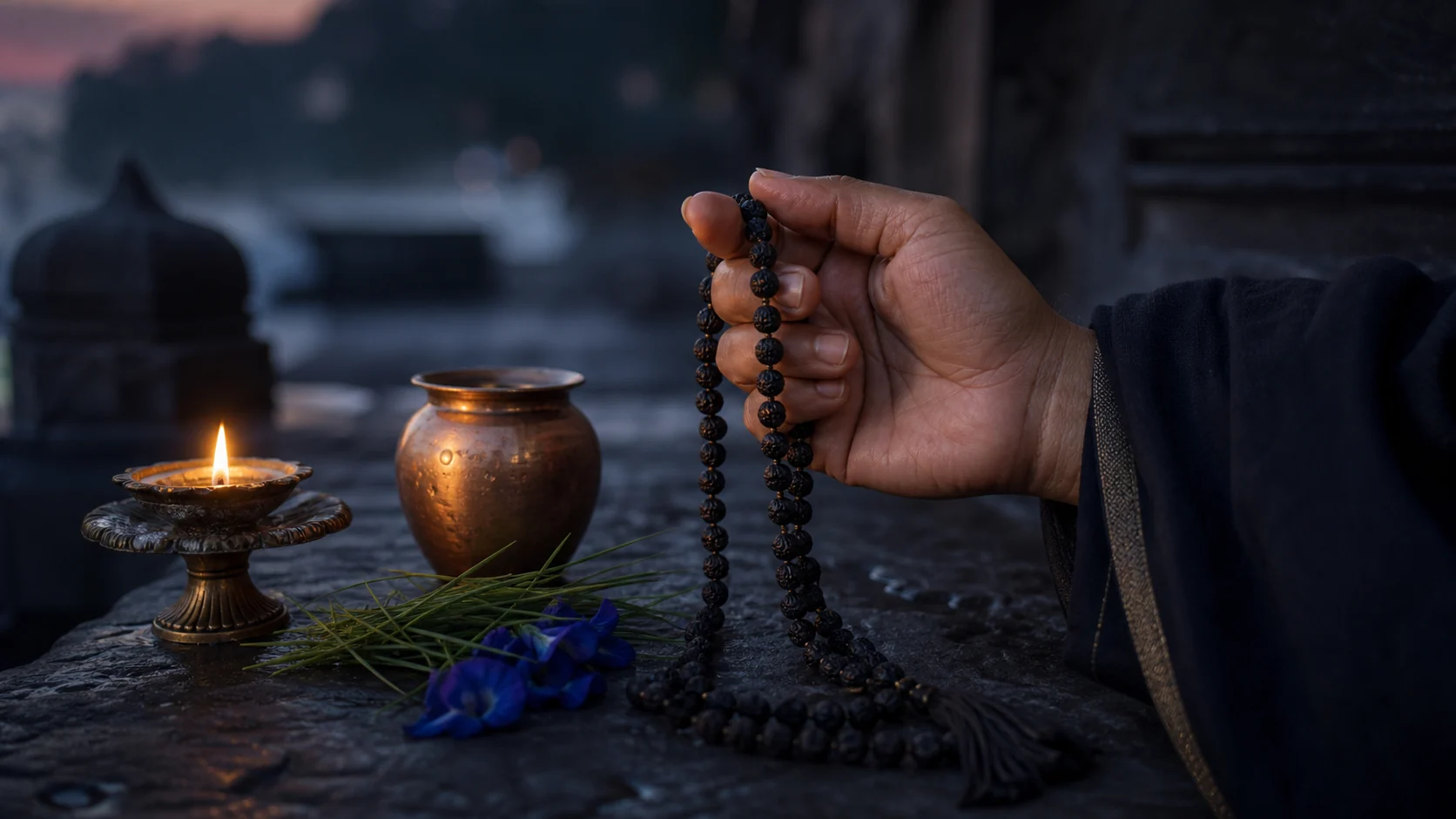
Most people chant either mantra on Saturday, Shani's own day of the week, counting on a mala of 108 beads so they are not watching a clock. Both are short enough to fit into a commute or a few quiet minutes before sleep, which is likely why one of them has remained the most commonly used Shani mantra across households that cannot manage a full puja every week. Some pandits suggest a dark-coloured mala, rudraksha in particular, though the bead material matters far less than chanting with attention rather than on autopilot.
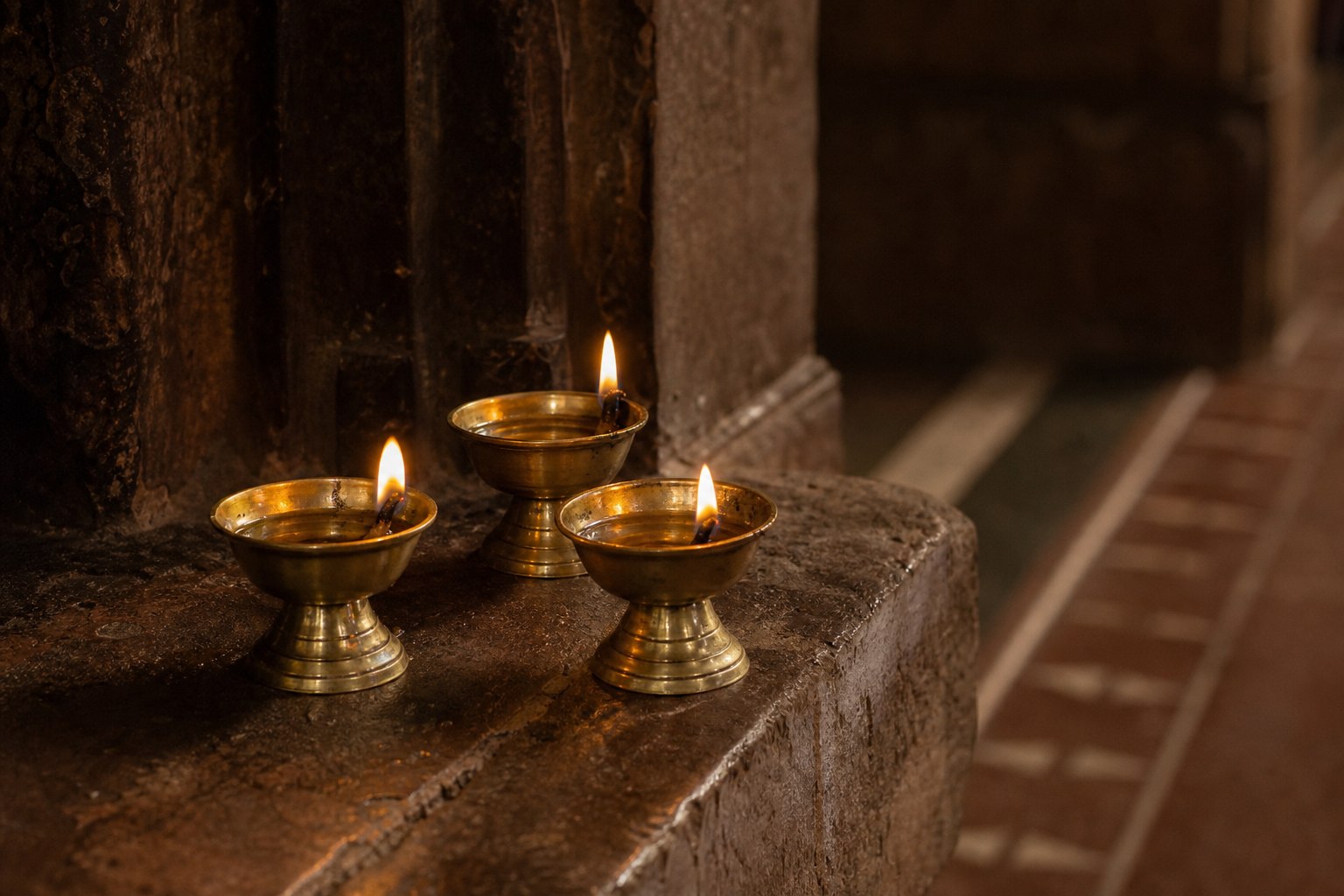
Saturday evening, after sunset, is widely followed as a suitable time for this practice, since lighting an oil lamp as the day fades and reciting the mantra alongside it is a common pairing in many households. Morning repetition works just as well, and either can be shifted earlier or later in the day to suit your own routine. The one thing usually avoided is Rahu Kaal, a period considered unsuitable for starting anything auspicious; a local panchang or pandit can confirm the exact window for your city and date if you want to plan around it.
The longer stotras: Dashrath Krit Shani Stotra and the 108 names
Where the beej mantra is a short daily habit, the Dashrath Krit Shani Stotra and the Shani Ashtottara Shatanamavali are longer prayers usually reserved for a fuller puja sitting. The Dashrath Krit Shani Stotra is eleven verses traditionally composed by King Dasharatha, Rama's father, said to have gone before Shani directly to ask forgiveness rather than let a feared planetary event unfold. It is recited eleven times, often daily through a Sade Sati or Shani Dhaiya period, when someone wants a more deliberate practice than the beej mantra alone.
The Shani Ashtottara Shatanamavali, commonly called the 108 names of Shani, moves through Shani's many forms and roles one name at a time, according to Drik Panchang's list of the 108 names of Lord Shani Dev. A careful, unhurried recitation takes roughly fifteen to twenty minutes, which is why it tends to appear during a formal ceremony rather than a quick morning routine. If you want to see where a stotra like this typically sits within the wider sequence of a ceremony, our Shani puja vidhi guide walks through the order step by step.
Who actually recites these mantras during a Shani puja
During a traditional Shani puja, it is usually the presiding pandit who recites the mantras aloud on the devotee's behalf, while the devotee's role is to stay present, attentive and sincere throughout. This is not a shortcut; a pandit trained in the correct Sanskrit cadence performs the recitation as a service, the way a more experienced singer might lead a bhajan for a group that cannot manage the tune alone.
Hanuman Chalisa as a companion practice, and why
Hanuman Chalisa is not itself a Shani mantra, but it is one of the most commonly recited companion prayers during Sade Sati, Shani Dhaiya or any stretch of Saturnine hardship. The reason goes back to a well-known story: when Hanuman was searching for Sita in Lanka, he found Shani Dev imprisoned by Ravana, freed him, and Shani is said to have promised in gratitude that he would never trouble Hanuman's devotees.
Because of that story, many people recite the Hanuman Chalisa on Tuesdays as well as chanting Shani mantras on Saturdays, treating the two as complementary rather than interchangeable. Tuesday is traditionally regarded as Hanuman's own day, much as Saturday belongs to Shani, so keeping both days is the fuller version of the practice. For anyone who cannot manage two separate days of prayer each week, reciting the Hanuman Chalisa on Saturday itself, either before or after the Shani mantra, is a commonly accepted adjustment rather than a lesser version of the practice.
If you are trying to work out whether your current stretch of difficulty is actually Sade Sati at all, our sade sati remedies guide covers that ground in more depth than we can here. The Hanuman Chalisa itself is forty verses, usually recited once per sitting, and does not require a mala or a fixed repetition count the way the beej mantra does.
Getting the pronunciation right, without getting anxious about it
Correct Sanskrit pronunciation helps the words carry their intended sound, but it is not a pass-or-fail test that decides whether Shani Dev hears you. A few general habits matter more than others: holding the long vowels properly, the nasalised "m" at the end of Sham or Praam is held a touch longer than a plain vowel, pronouncing the softer "sha" sound in Shanaischaraya rather than collapsing it into a plain "sa", and chanting at an even, unhurried pace instead of racing to finish a count.
If you are learning from a transliteration rather than someone chanting it live, listening to a slow recording once or twice before you start is more useful than reading the Roman letters silently and guessing at the sounds. It also helps to know that pronunciation varies a little by region without either version being wrong; a pandit trained in a South Indian tradition may soften certain consonants differently to one trained in North India, and both are reciting the same mantra faithfully.
Beyond that, do not let pronunciation anxiety stop you from praying at all; the tradition itself does not describe a mispronounced word as an offence, only a distracted or fearful mind as the real obstacle. Be wary, too, of anyone who insists that getting a word wrong will make your situation worse, especially if they are also trying to sell you an expensive fix for it.
If Sanskrit feels unfamiliar, praying in your own language works
A sincere prayer in English, Hindi, Tamil, or any language you actually understand is equally valid if Sanskrit pronunciation is not something you have learned. What matters in the tradition is the intention behind the words, the Sankalp or resolve you set at the start, and the attention you bring while praying, not the specific language the words arrive in.
This is worth saying plainly because devotion should not depend on money, location, or which language you grew up praying in. Just as our piece on visiting a Shani temple argues that a temple visit is not required for sincere worship, the same logic applies to Sanskrit fluency. You can translate the beej mantra's meaning into your own words, something like "Shani Dev, please be steady and fair with me," and repeat that with full attention instead.
How often and when these mantras are typically chanted
How often to chant depends on which mantra you are using and what you are chanting it for, and the table below sets out the common pattern for each. As a general rule, the beej mantra suits daily or Saturday repetition, the Dashrath Krit stotra suits a difficult transit specifically, and the 108 names suit a slower, occasional sitting rather than a daily one.
| Mantra / Stotra | Traditional purpose | Typical length / repetition |
|---|---|---|
| Shani Beej Mantra - Om Sham Shanaishcharaya Namah (Garuda Purana 1.39.15), or the longer Om Praam Preem Proum Sah Shanaischaraya Namah in common use today | Short daily invocation asking Shani Dev for steadiness and fairness | One line; traditionally chanted 108 times on a mala, especially on Saturdays |
| Dashrath Krit Shani Stotra | Composed by King Dasharatha to ask forgiveness and ease hardship; recited during Sade Sati or Shani Dhaiya | 11 verses; traditionally recited 11 times, often daily through a difficult transit |
| Shani Ashtottara Shatanamavali (108 names) | Detailed praise naming Shani's many forms, used for a fuller, unhurried worship session | 108 names; one careful recitation takes roughly 15 to 20 minutes |
| Shani Chalisa | Devotional hymn for routine Saturday worship at home or temple | 40 verses; usually recited once per sitting |
| Hanuman Chalisa (companion practice) | Not a Shani mantra itself, but chanted alongside Shani prayers in the belief that Hanuman softens Shani's harsher effects | 40 verses; commonly recited on Tuesdays and Saturdays |
None of these counts are fixed rules with penalties attached for falling short. They are traditional guidelines that give a practice some structure, which is often what people are actually looking for when they ask how many times to chant. If you want to know what else typically goes into a full puja beyond the mantras themselves, from oil and lamps to specific offerings, our Shani puja samagri list covers the materials in detail.
Conclusion
A Shani puja mantra does not have to be complicated to be meaningful. The short beej mantra suits daily Saturday practice, the Dashrath Krit Shani Stotra suits a harder transit like Sade Sati, the 108 names suit a slower and fuller sitting, and Hanuman Chalisa sits alongside all three as a companion rather than a substitute. Correct pronunciation helps, but sincerity and attention matter more than getting every Sanskrit vowel exact, and praying in your own language is just as valid when Sanskrit is unfamiliar. Whether the mantra is chanted at home, at a temple, or by a pandit reciting your name and gotra on your behalf, what carries the prayer is the intention behind it, not the price paid or the accent used.