A complete Shani puja vidhi has five moving parts: bathing and preparing a clean space, a sankalp naming yourself and your gotra, til tel abhishek (anointing with sesame or mustard oil), Shani mantra jaap, and deep daan, the offering of a lit lamp. Saturday, or Shanivar, is the traditional day for it. The single biggest date in the North Indian calendar is Shanishchari Amavasya, a new moon that happens to fall on a Saturday, which occurs roughly twice a year.
There is no muhurat that every Pandit Ji agrees on, and that is not a gap in the tradition, it is the tradition. The classical instruction is to worship whichever graha is troubling you, with sincerity, not to hit an exact minute on a chart.
The real complication in a Shani puja vidhi is not pronunciation or a shopping list. It is that Shani Dev worship genuinely differs by region, and most guides online quietly flatten that difference into one universal version. What a family does at home in Lucknow on a Saturday evening is not what happens at Tirunallar in Tamil Nadu, and neither one is the wrong version.
What you need before you begin
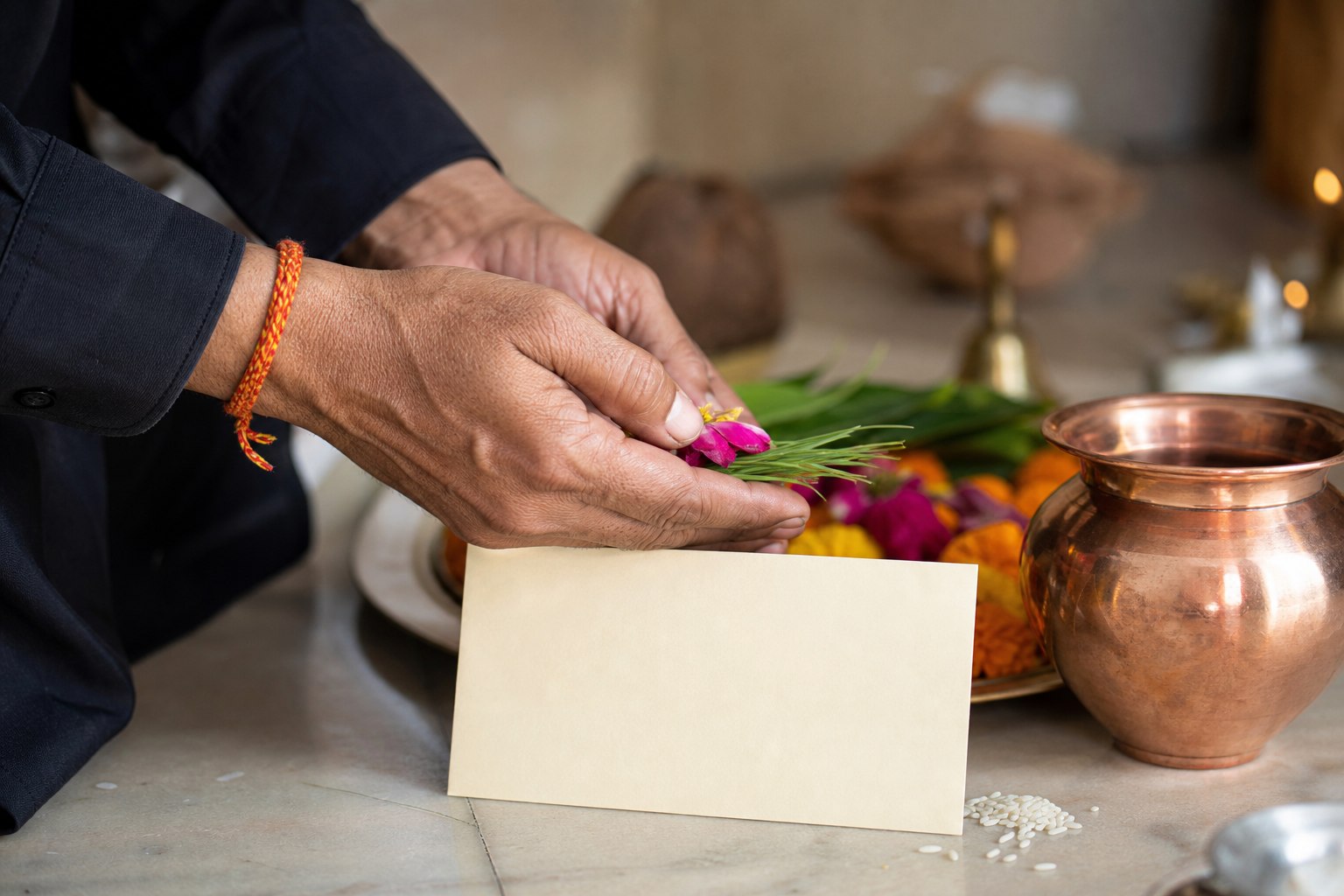
Wash or bathe before you start. This is the opening instruction in almost every Hindu puja tradition, not something unique to Shani Dev, and it marks the shift from ordinary time into worship.
Choose a clean corner of the house and, if you can manage it, face west while you pray. West is traditionally Shani Dev's direction, in the same way east belongs to the rising sun. It is a small detail, nobody is going to check it, but it is worth knowing rather than guessing.
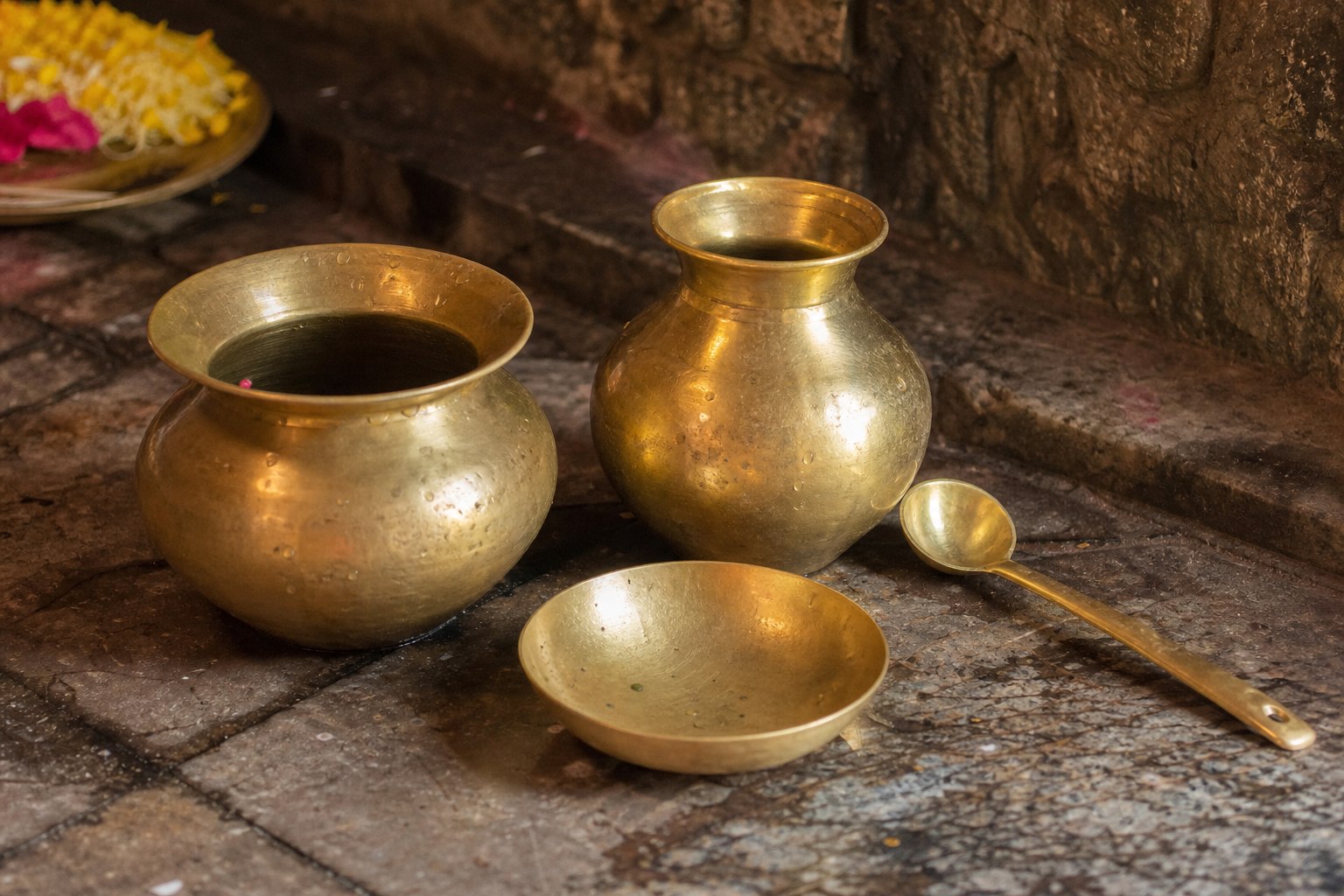
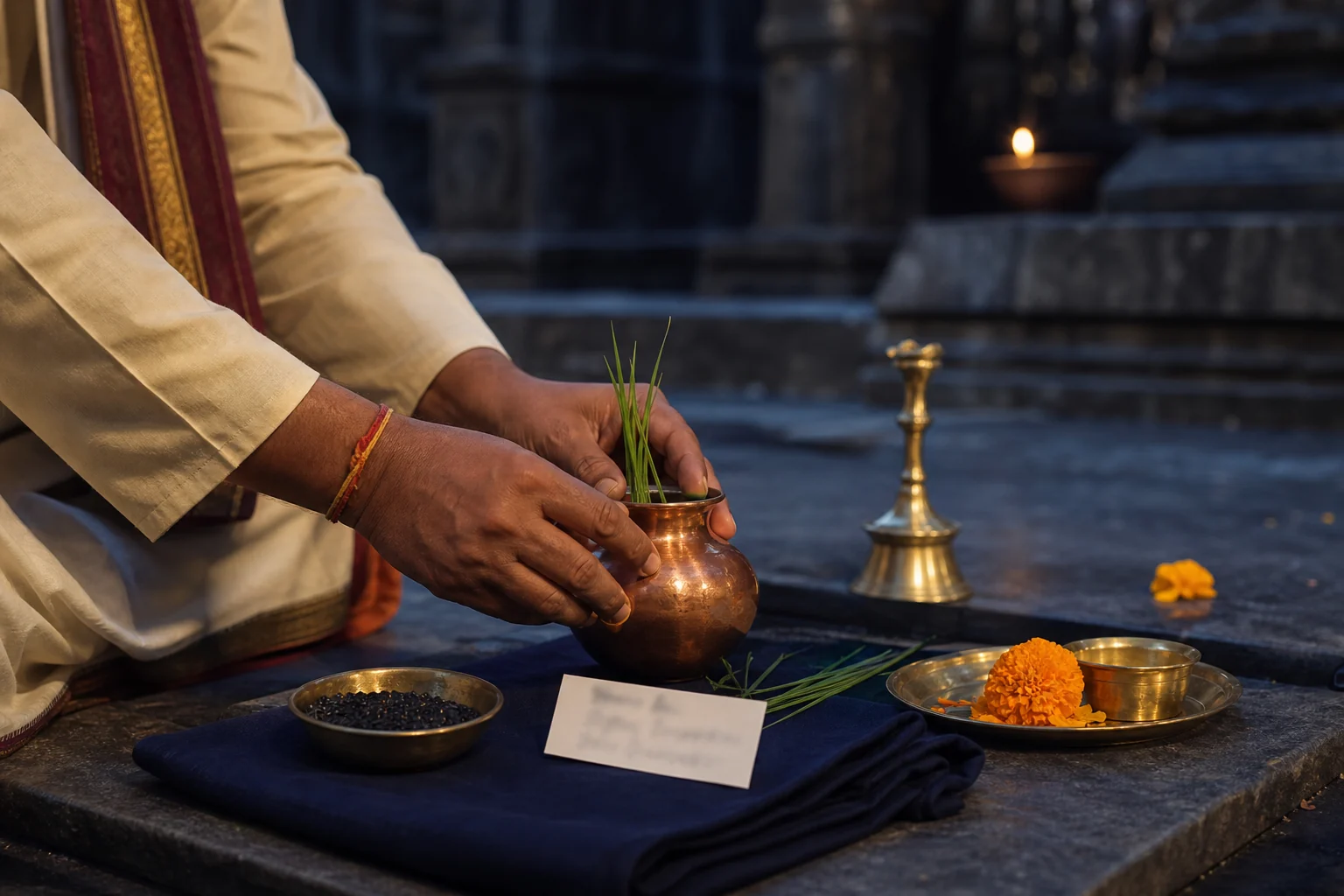
Wear dark clothing if you have it. Black or dark blue is the customary colour associated with Shani Dev, though nothing terrible happens if all you own is grey. Keep the samagri modest and specific rather than elaborate:
- Oil for the abhishek: mustard oil (sarson ka tel) is the everyday North Indian choice, while sesame oil (til tel, called nallennai in Tamil Nadu) is the norm across the South.
- A diya, ideally one you can keep burning through the mantra jaap.
- Black til (sesame seeds), a scrap of black cloth, and dark flowers if you want them.
- An iron vessel or lamp if you have one, since iron is Shani Dev's traditional metal, though brass or steel works perfectly well.
None of this needs to cost much. For a fuller list with quantities and substitutes, see our Shani puja samagri list. A single mustard-oil diya and a sincerely spoken prayer is a complete puja in its own right, not a smaller version of a "real" one; see can you do Shani puja at home for why that is not a compromise.
The Shani puja procedure, step by step
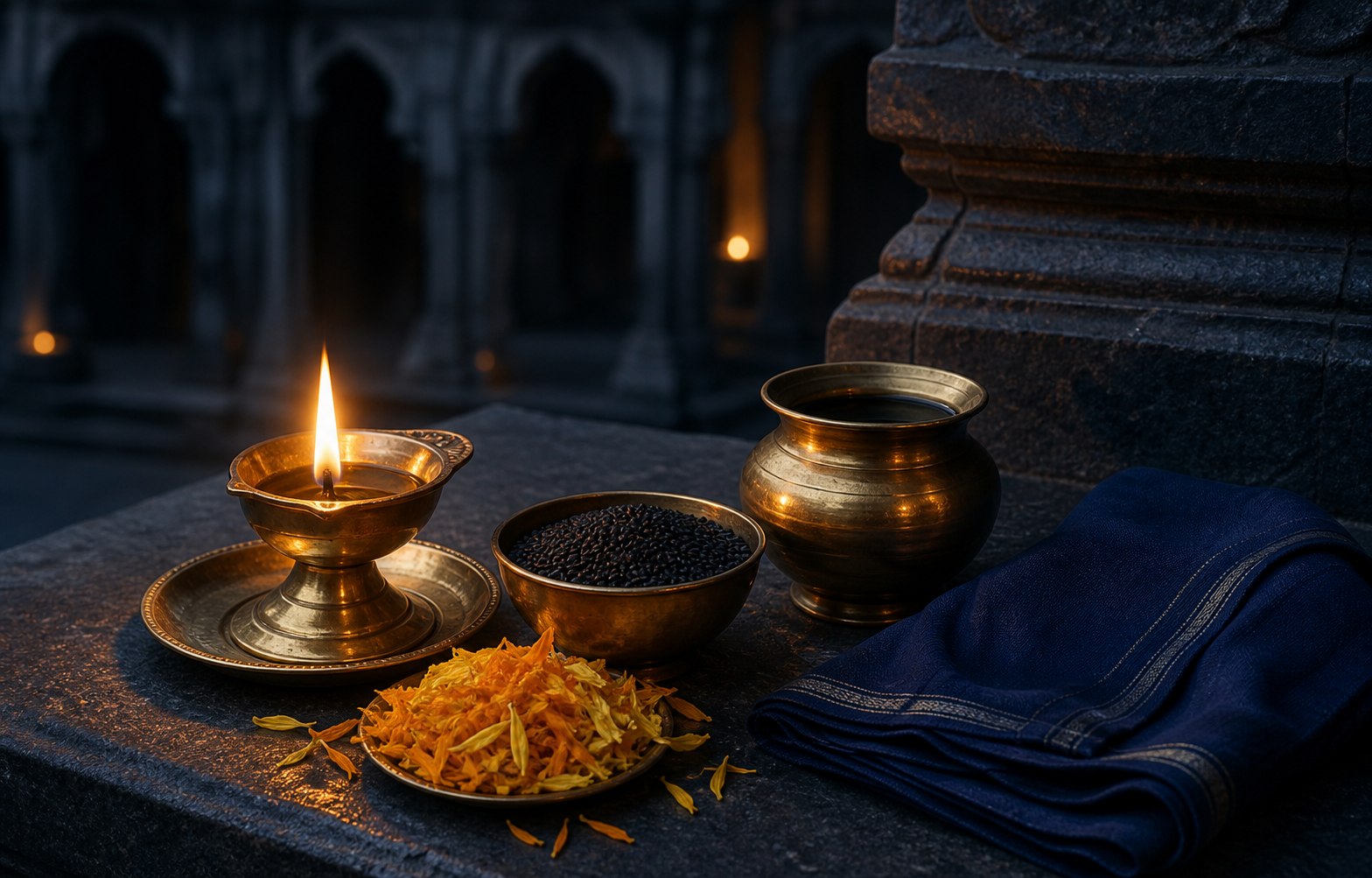
A full Shani puja vidhi runs through nine steps, from the opening bath to the closing resolution, and most households complete the whole sequence in twenty to thirty minutes.
- Bathe and dress in clean clothing, dark-coloured if you have it.
- Clean the prayer space and set up facing west, with an image or murti of Shani Dev if you have one. It is not required.
- Begin with Ganesh Ji. Light a small diya and offer a short prayer to Ganesh Ji first, as is customary before most Hindu pujas, Shani puja included.
- Take sankalp. State your name, your gotra, your place, and the date and reason for the puja, either aloud or silently. If you do not know your gotra, that is common and not a barrier; the long-standing convention is to use Kashyap gotra rather than invent one.
- Perform til tel abhishek. Anoint the murti or image with mustard or sesame oil, poured slowly rather than all at once.
- Offer black til, black cloth and dark flowers at the feet of the image, not at eye level.
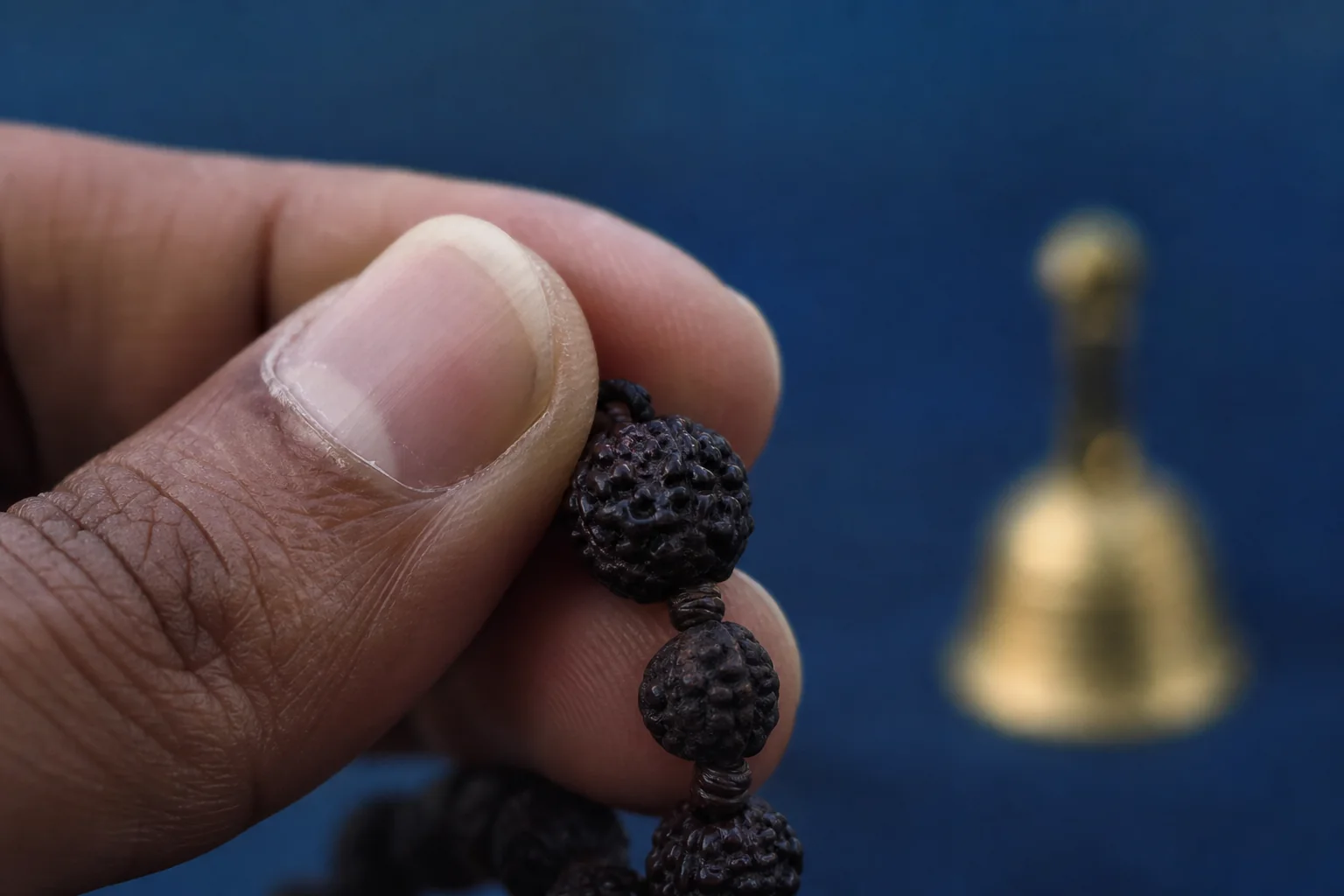
- Recite the Shani mantra. The mantra with a genuine textual home is short: Om Sham Shanaishcharaya Namah, recorded in the Garuda Purana. Chant it 108 times if you can, or 28 if you are short of time; both counts have classical backing, and neither requires the tens of thousands some sites recommend.
- Complete deep daan. Let the lamp burn through, or place it carefully where it can keep burning, and close with an aarti if that is part of your practice.
- Close with a resolution and daan. State one practical thing you intend to do differently, and if you can, give something away: black til, urad dal, or a coin, to someone who needs it.
Many households add to this rather than stop there. A mustard-oil lamp lit at the root of a peepal tree after sunset is genuinely widespread, though it is worth saying plainly that this is tradition, not scripture; no text actually links the peepal to Shani Dev. Feeding a crow, a black dog, or on a quieter note a buffalo, is also common on a Saturday. See what to offer Shani Dev on Saturday for the fuller, honestly sourced list of what people actually give, and to whom.
If you cannot be there yourself
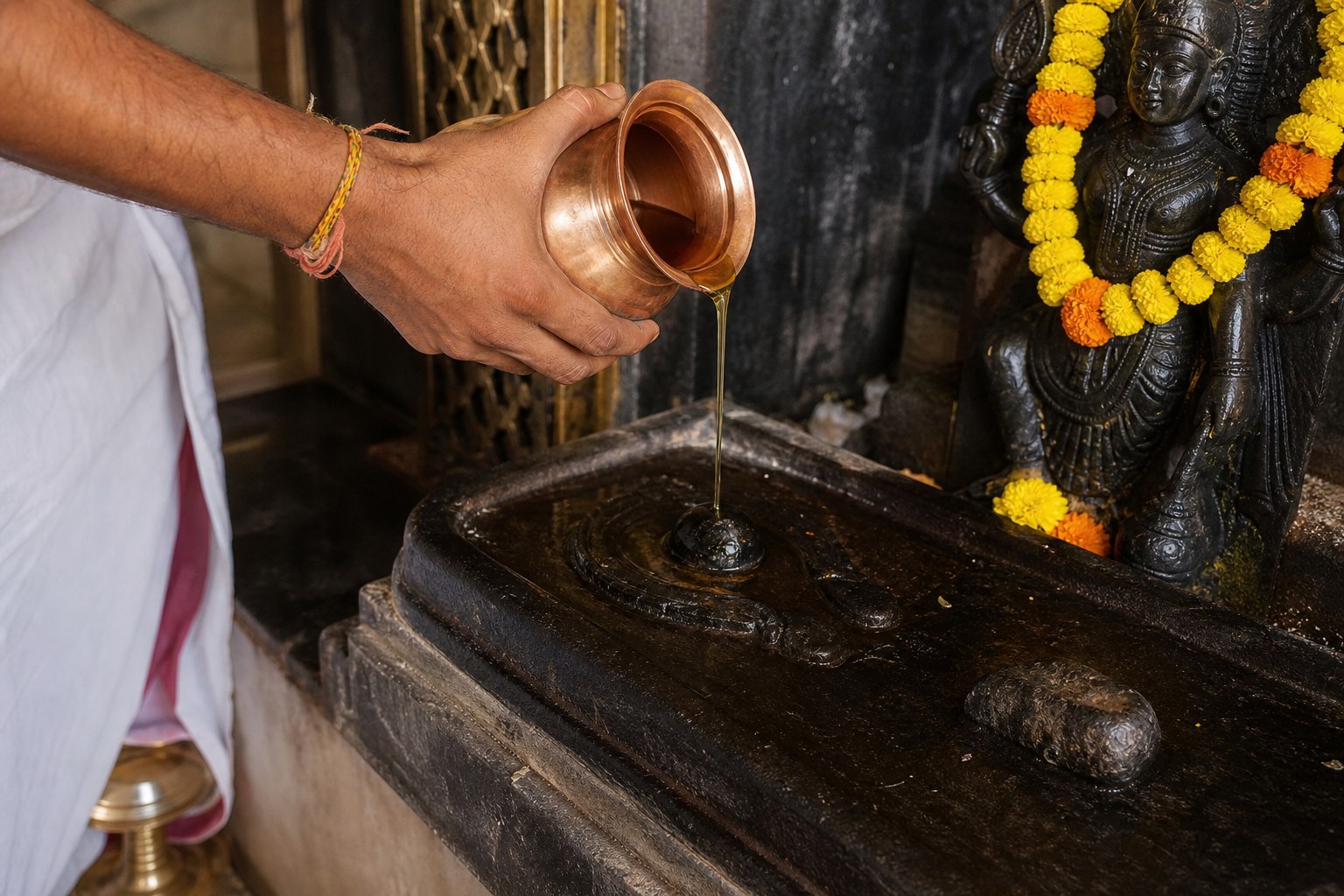
Performing a puja in someone else's name, with a priest standing in for a person who cannot attend, is not a modern shortcut invented for convenience. It is an old and orthodox structure. In Vedic ritual the person who benefits, the yajamana, and the person who performs the rite were already distinct roles; kings engaged priests as their ritvij to conduct yajnas on their behalf, and the tradition explicitly treats the act performed by proxy as an act performed by the client who commissioned it (Vedic priesthood, Wikipedia).
The mechanism that ties a rite to an absent person is the sankalp itself. A proper sankalp names the yajamana, the gotra, the place and the specific intention, out loud, before the puja proper begins. That is not paperwork bolted on for a customer's benefit. It is what makes the rite theirs.
This is the basis of a remote or proxy Shani puja: a Pandit Ji performs it at a real location, and your name and gotra are spoken in the sankalp exactly as they would be if you were sitting there in person.
None of this claims to be better than attending in person. It is what the tradition itself has always treated as the accommodation for someone who genuinely cannot be there, not a replacement for presence when presence is actually possible for you.
When to perform it: Saturday, Shanishchari Amavasya and muhurat
Saturday is Shani Dev's day in the Hindu week, and that alone is reason enough to perform this puja. You do not need to wait for a rarer date. Weekday lordship in the Hindu calendar is old, dating from at least the fifth century CE, and Saturday worship of Shani Dev specifically has its own textual mention, in the Skanda Purana, distinct from most of the popular remedy list that has no such backing.
If you want a bigger occasion, look for Shanishchari Amavasya, a new moon that lands on a Saturday. It happens roughly twice a year and is treated as the most significant Shani observance in the North Indian calendar, marked at places like Haridwar and Prayagraj with mass river bathing followed by til-daan and oil donation on the ghat. Shani Jayanti, the separate observance marking Shani Dev's traditional birth on Jyeshtha Amavasya, is a different date again; see our Shani Jayanti 2026 guide for when it falls and how it is kept.
On an ordinary Saturday, evening is favoured for the lamp specifically, roughly the hour after sunset. The Drik Panchang guide to Shanivara Vrat describes one fuller version of the vrat, beginning on the first Saturday of Shravan, with bathing, dark clothing and sankalp before the puja proper. That is one living tradition among several, not the single correct start date.
Do not let the hunt for a perfect muhurat become a reason to delay. If Sade Sati, Dhaiya, or a particular dasha period is the reason you are doing this puja in the first place, our Sade Sati meaning and Shani Dosha meaning and effects pieces explain those terms properly, including where the popular version overstates what any chart reading can honestly promise.
How the vidhi changes by region
The steps above describe the common North Indian home version, and a family in Tamil Nadu or coastal Andhra Pradesh would recognise a noticeably different sequence.
| Region | Oil used | Setting | Distinctive step |
|---|---|---|---|
| North India | Mustard oil (sarson ka tel) | Home shrine, or a standalone Shani mandir | Devotees commonly avoid meeting the murti's eyes directly, looking instead at the feet or at the oil pooled at its base |
| Maharashtra | Sesame and mustard oil | Often a paired Shani-Maruti (Hanuman) temple under one roof | Shravan Shanivar is observed as its own, larger occasion |
| Tirunallar, Tamil Nadu | Gingelly (sesame) oil only | A Shiva temple that houses a Shani shrine | Devotees bathe in the Nala Theertham tank first, and the shrine order is reversed: Shani Dev is worshipped before the temple's own Shiva |
| Mandapalli, Andhra Pradesh | Gingelly oil | Poured over a Shiva linga said to have been installed by Shani Dev himself | Called Thailabhishekam, on Shani Trayodasi |
At Tirunallar, Shani Dev is shown in abhaya, a blessing gesture, because this is where he is said to have released the mythical king Nala from affliction; devotees seek his darshan directly, the opposite of the North Indian instinct to look away. At Shani Shingnapur in Maharashtra, the murti is a faceless stone slab on an open plinth, so the question of meeting his eyes does not even arise there.
Neither tradition contradicts the other. Treating one region's practice as the single correct Shani puja vidhi, usually whichever version a website's own writer happens to know, is one of the more obvious tells that a page was written without much familiarity with the country it is describing. See do you need to visit a Shani temple if you are weighing a temple visit against a home puja; neither is the only valid path, and which one suits you can genuinely depend on where you live.
Common mistakes people make
The most damaging mistake is treating Shani puja vidhi as a transaction, an expensive item bought to make Shani Dev let someone off. That misreads the whole relationship. Shani Dev is traditionally described as one who delivers the results of a person's own past actions rather than acting on whim, so worship is better understood as voluntarily taking up patience and discipline, not paying a fee to avoid them. If a source pairs a frightening prediction with an expensive "only" remedy, that pairing is itself the warning sign, not the puja.
A second, smaller mistake is the mantra. Many pages circulate "Om Praam Preem Praum Sah Shanaishcharaya Namah" as an ancient beej mantra; it does not appear in that form in the Puranas. The mantra with a real textual home is the shorter one given above, and reciting a long or unfamiliar Sanskrit string with poor understanding is not more powerful than a shorter one said with attention.
A third mistake is presenting one region's rule as universal, most often the instruction never to look Shani Dev in the eye, which is a genuine North Indian practice directly reversed at Tirunallar. A fourth is skipping the sankalp altogether, treating it as a few names read out before the "real" puja starts, when the naming of yourself, your gotra and your intention is in fact what dedicates the rite to you at all.
A fifth is assuming a costlier puja, more priests, more oil, a bought gemstone, is automatically more effective. The classical dana texts explicitly scale the offering to what a person can afford, down to a trifle if that is all that is possible; nothing in the tradition says a bigger bill buys a stronger result. An honest Shani Shanti Puja cost breakdown should show you exactly what you are paying for and why, not lean on fear to justify the figure.
What actually happens after the puja
A Shani puja is not meant to end the moment the lamp goes out. Shani Dev is traditionally associated with discipline, patience and fair conduct, and the remedies that sit alongside puja, feeding the hungry, giving to labourers and the elderly, keeping your word, are treated as part of the same practice rather than a separate act of charity tacked on afterward.
If you want to extend the puja itself rather than only repeat it weekly, Gau Seva, Deep Seva and Anna Seva are common, concrete additions rather than symbolic upgrades in name only; see Shani puja benefits for what devotees traditionally describe getting out of a sustained practice, framed as belief rather than promise. Shani Dosha remedies covers the wider remedy landscape if puja alone does not feel like enough for what you are dealing with.
Nobody honest can tell you that a single puja removes a Sade Sati transit or guarantees a particular outcome. What devotees describe, generation after generation, is something more modest and considerably more durable: a weekly discipline that makes a hard stretch easier to sit through, and a habit of giving that outlasts whatever specific worry started it.
Conclusion
Shani puja vidhi is not complicated once the sales pitch is stripped away. Bathe, prepare a clean space, take sankalp with your name and gotra, perform til tel abhishek, chant Om Sham Shanaishcharaya Namah, offer a lamp, and close with a practical resolution and some daan. Saturday is the natural day, Shanishchari Amavasya the bigger one, and no single muhurat is compulsory.
The vidhi genuinely differs between a home in Uttar Pradesh and a temple in Tirunallar, and both are legitimate. If you cannot be present yourself, a transparent proxy puja, with your name and gotra spoken aloud and proof sent back to you afterward, rests on the same orthodox logic as a king sending a priest to perform a yajna on his behalf. What you do once the lamp goes out, patience, honesty, and something given to a person who needs it, matters just as much as the ritual itself.