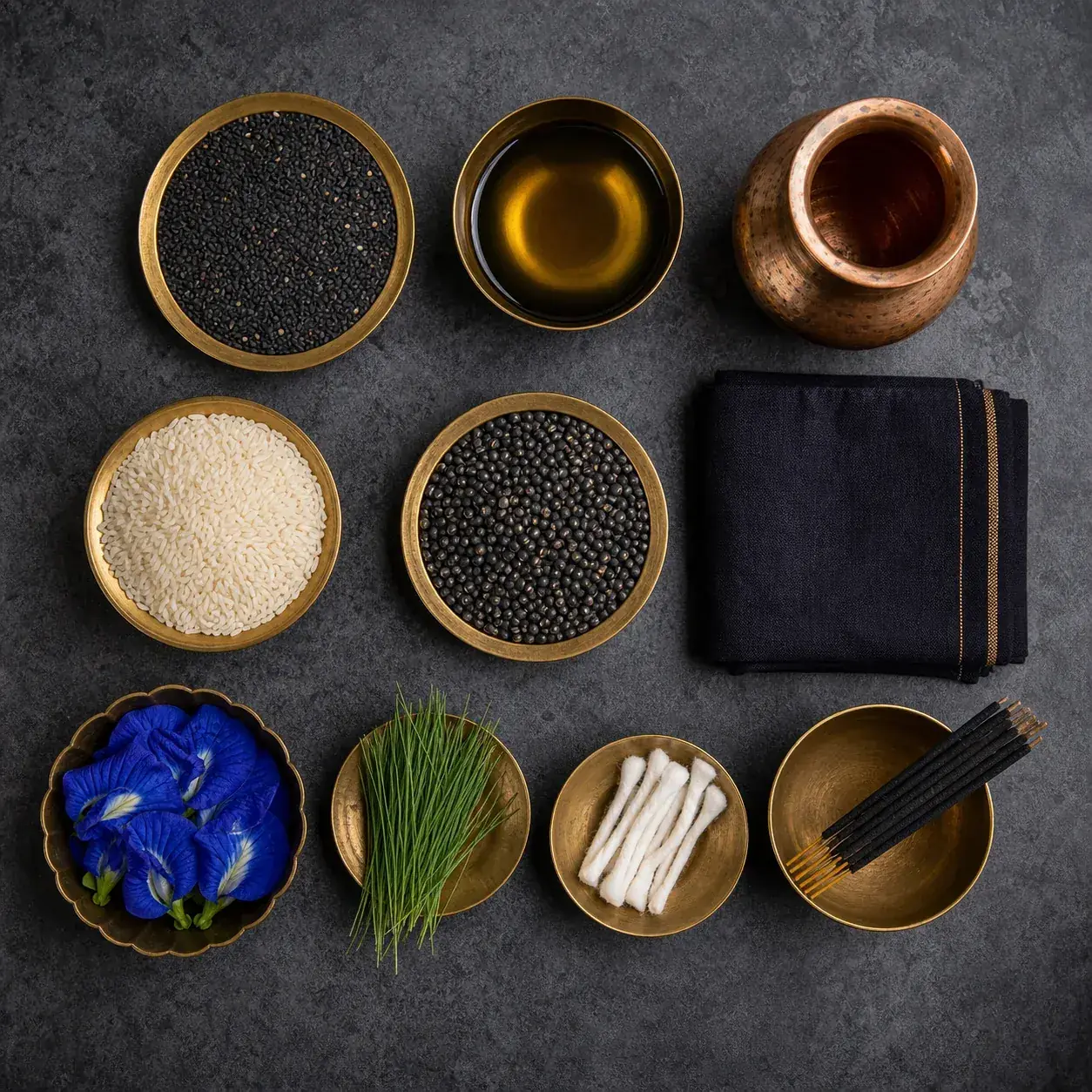
A basic Shani Puja samagri list needs eight things you can gather in about fifteen minutes: an image or idol of Shani Dev, black sesame seeds (kala til), sesame or mustard oil, a small diya with a cotton wick, black cloth, incense sticks, flowers (blue, black or purple where you can find them), and a bowl of water. Add some jaggery and a few loose coins if you want to set aside charity afterward, and that covers what most pandits actually ask for. Nothing here needs a special shop; sesame oil and black til already sit in most Indian kitchens, and a plain diya from any general store does the job as well as an ornamental one.
The real tension is elsewhere. Samagri sellers online often list twenty-five items, iron rings, coral, blue sapphire, and elaborate kits running into thousands of rupees, and imply the puja doesn't "work" without them. It does. Priests at Shani Shingnapur, one of Maharashtra's busiest Shani temples, perform tailabhishekam with little more than oil, til and a diya for enormous crowds every Saturday, and nobody at the gate is asked to buy a gemstone first.
What You Actually Need for a Basic Shani Puja
A basic Shani Puja samagri list has eight items, and each one does a specific job rather than sitting there for decoration. Start with a photo, print, or small idol of Shani Dev. It doesn't need to be brass or antique; a printed picture from a calendar or even a phone screen propped against a wall works fine, because the point is to have something to direct your attention toward during sankalp and mantra jaap.
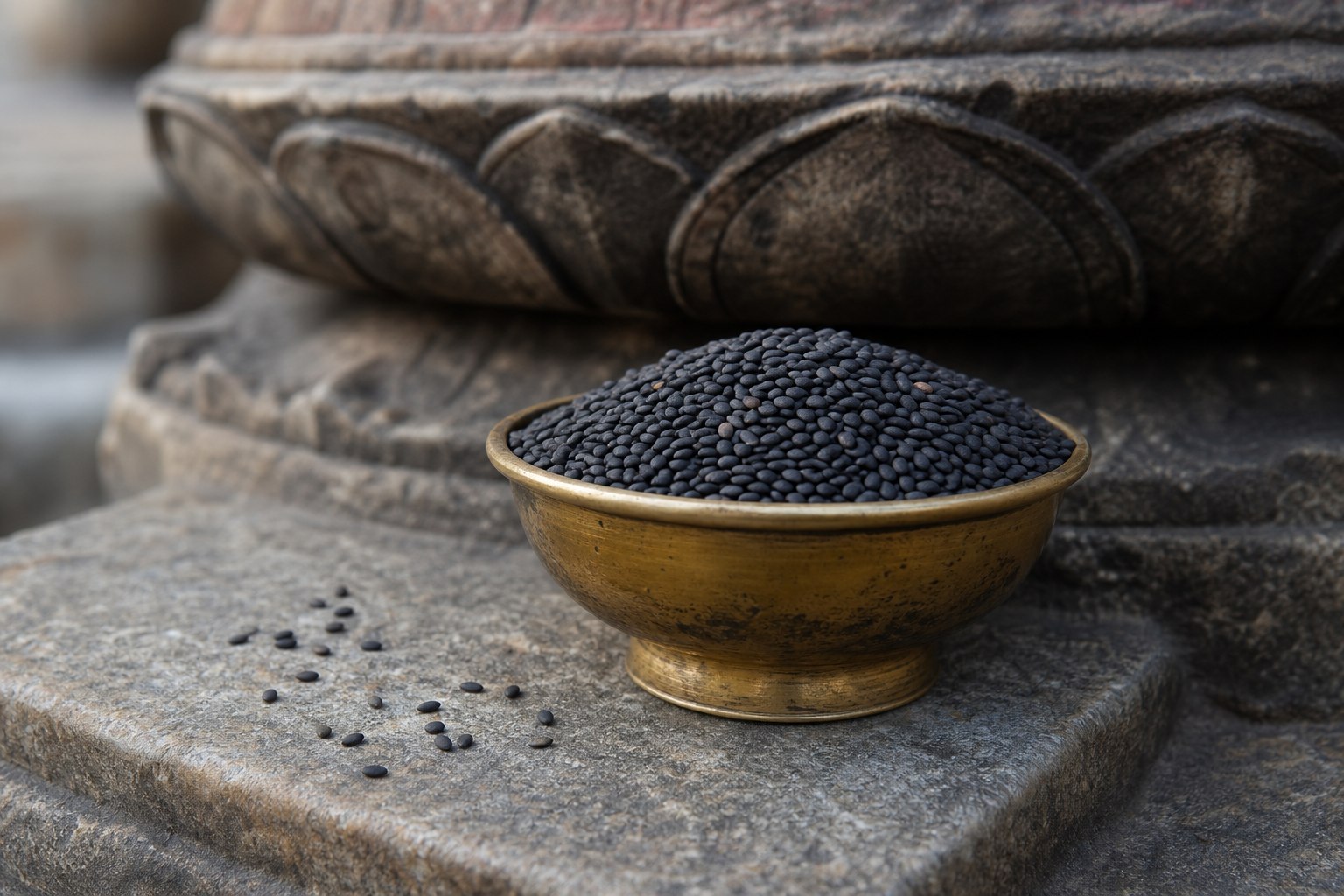
Next comes black sesame seeds, called kala til, the primary naivedya, the food offering placed before Shani Dev. Alongside it you need sesame oil or mustard oil, because til tel abhishek, pouring oil over an idol or a small stone, is the single most recognisable act of Shani worship. The official Shani Shingnapur temple's own list of puja items names sesame oil and black til as the two items that matter most, ahead of anything decorative or optional.
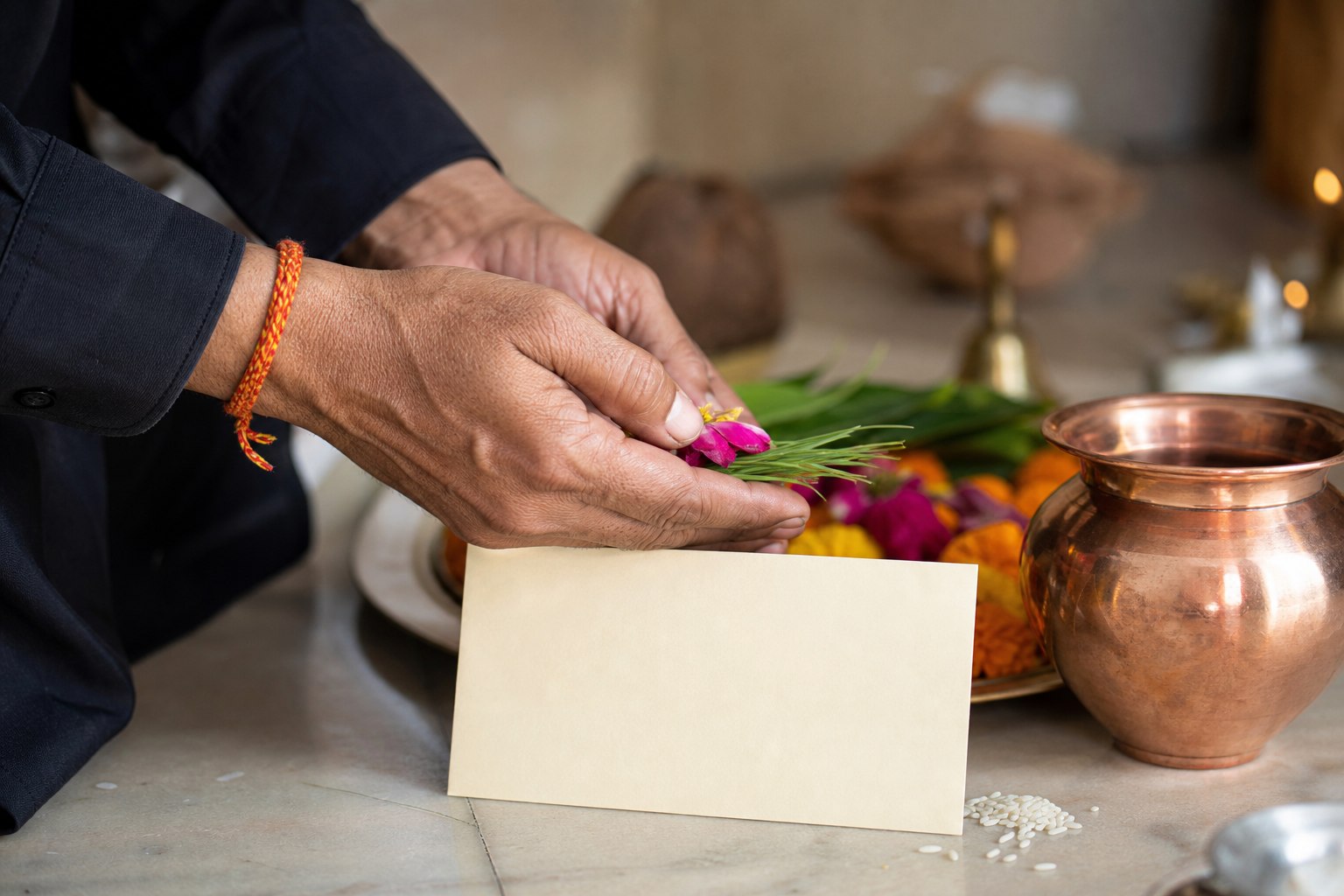
A diya with a cotton wick, lit using sesame or mustard oil rather than ghee, is offered as deepdaan, the lamp offering that sits alongside the abhishek, mantra jaap and sankalp as one of the four core elements of the ritual. A length of black cloth, even an old scarf, is draped near the murti or set aside to give away afterward, since black and dark blue are considered Shani's colours. Incense sticks provide the dhoop offered during aarti, and flowers, blue or black ones where available, otherwise any fresh flower, complete the visual offering. Finish with a small vessel of water for achaman, the ritual sipping and sprinkling that opens and closes most Hindu worship.
That's the complete list. You don't need brass vessels, silver plates, or a trained priest standing over your shoulder to tick these boxes. A working diya, a spoon of oil, a pinch of til, and ten quiet minutes on a Saturday evening cover what the ritual actually asks for.
Til Tel Abhishek: Why Sesame Oil Sits at the Centre
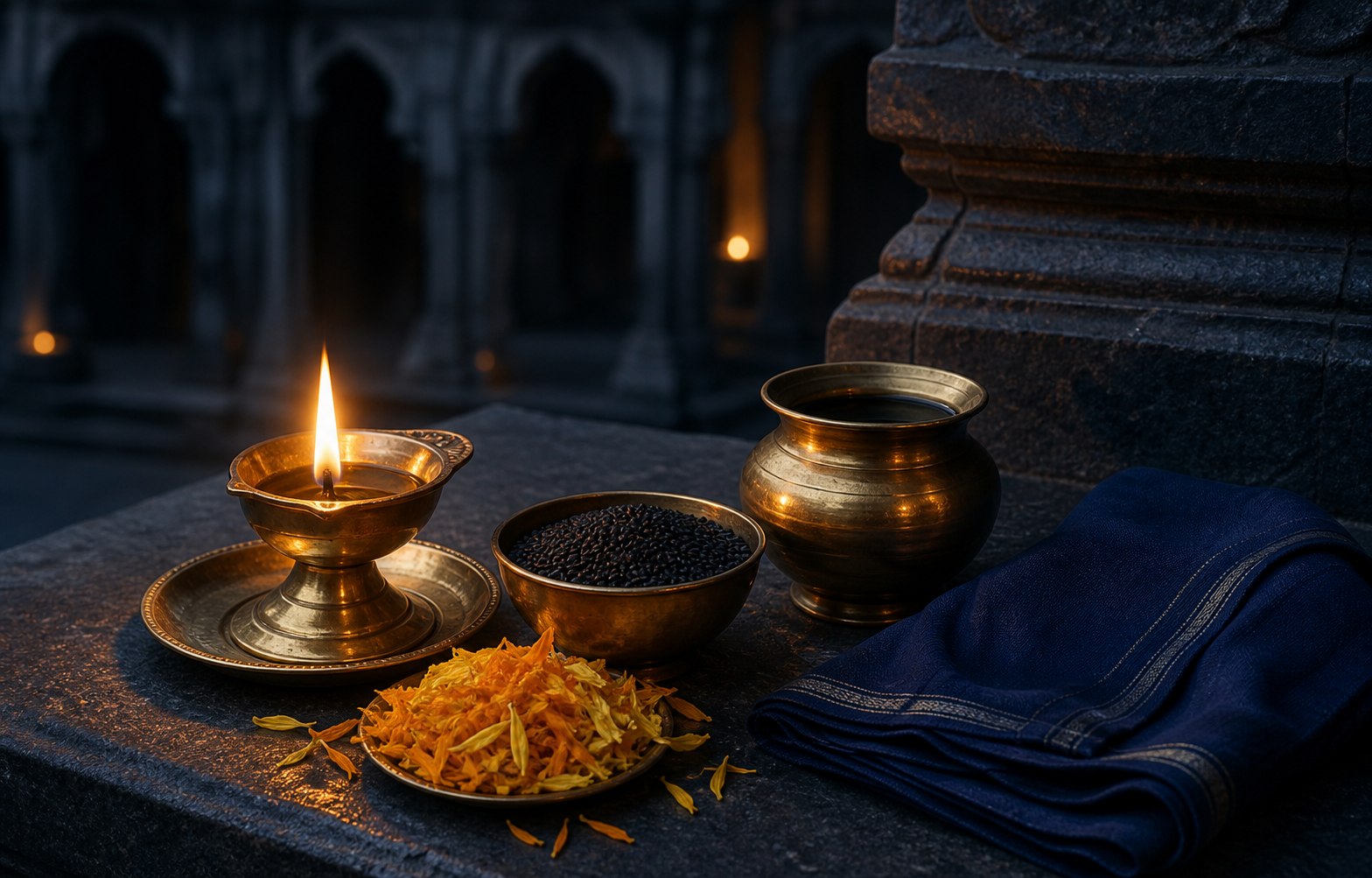
Til tel abhishek, pouring sesame oil over Shani Dev's image or an iron or stone representation, is the one act that separates Shani worship from most other Navagraha puja. Saturn is associated with the colour black and with substances that are dark, heavy and slow-burning, and sesame oil fits all three, which is likely why it became the standard offering rather than, say, ghee or coconut oil.
Practically, the abhishek is simple. Oil is poured slowly in a thin stream while a mantra is recited, and it's allowed to run off rather than collected and reused. Some households add a few black sesame seeds to the oil before pouring, combining both offerings into a single act. Mustard oil is an accepted substitute in several regions, particularly north India, where it's what most kitchens stock rather than sesame oil.
According to Drik Panchang's overview of Lord Shani, the tailabhishekam is typically followed by recitation of Shani mantras and prayers for discipline and fair judgement. The full step-by-step sequence is covered in our guide to Shani Puja vidhi if you'd rather perform the whole ritual yourself instead of booking it done on your behalf. The oil offering doesn't need to be large. A tablespoon poured with attention counts for as much as a full bottle poured without any.
If Something Is Missing: Reasonable Substitutes That Work
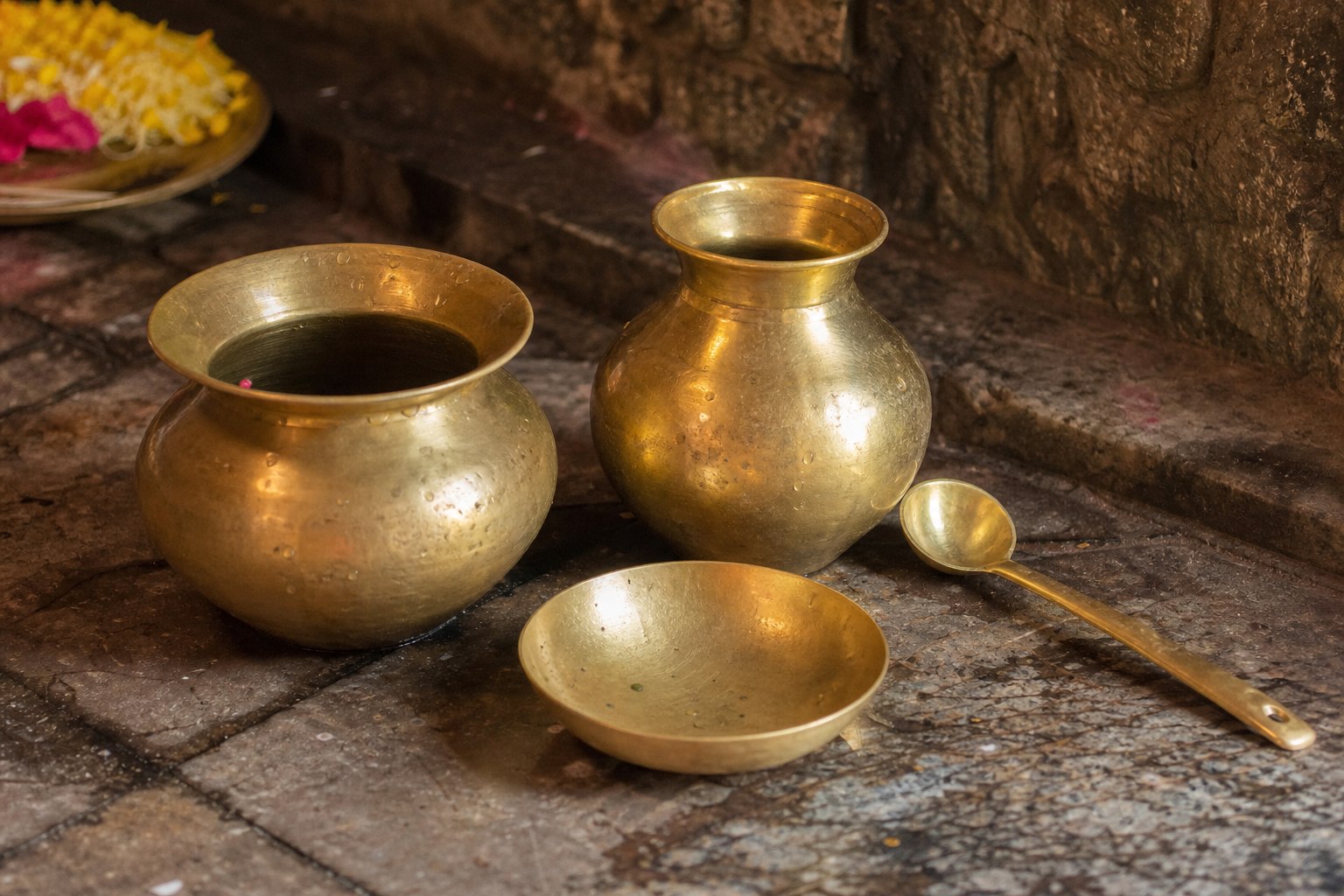
Every item on the samagri list has a substitute that tradition already accepts, because these rituals were built for ordinary households, not specialist shops. If you don't have sesame oil, mustard oil works, and if you have neither, a plain vegetable oil lamp lit with intention is accepted by most pandits over an elaborate ritual performed without any sincerity behind it.
No black cloth at home? Any dark blue or navy fabric substitutes, and if that's not available either, setting aside a small cash amount as daan (charity) in place of the cloth is a recognised alternative, since the underlying idea is charity connected to Shani, not the fabric itself. No idol or picture of Shani Dev? A plain black or dark grey stone, even a smooth pebble, has traditionally stood in for a murti in homes that don't keep a dedicated one, since Shani is one of the deities most commonly worshipped in aniconic, or formless, representation.
If you can't get black sesame seeds specifically, any sesame seeds work, and in a genuine pinch, black gram (urad dal) is an accepted stand-in because it shares the dark colour associated with Saturn. Worth saying plainly here: you do not need to visit a Shani temple or own a complete samagri kit to worship sincerely. A diya, a little oil, and a few quiet minutes of attention are the actual requirements. Everything else is helpful, not mandatory.
How a Remote Shani Puja Handles Samagri
When a puja is performed on your behalf rather than by your own hands, the samagri question shifts from "what do I need to buy" to "what is actually being used at the other end." At Shani Seva, the samagri for a Shani Puja, including the sesame oil for til tel abhishek, the black til, and the items for deepdaan, is arranged and used by pandits at the company's own centre in India, so there's nothing for you to source yourself.
This isn't a substitute for doing your own puja at home if that's what you'd rather do; plenty of people perform Shani Puja at home with nothing more than the list above. It's an option for people who can't get to a temple, don't have the specific items on hand that week, or simply want a pandit trained in the vidhi to perform it with the gotra sankalp intact.
Shani Puja Samagri List at a Glance
Here is the same list laid out with what each item is for and a substitute that works when the original isn't available.
| Samagri Item | Traditional Purpose | Reasonable Substitute |
|---|---|---|
| Shani Dev image or idol | Focal point for sankalp and mantra jaap | Plain black stone or smooth dark pebble |
| Black sesame seeds (kala til) | Naivedya, the primary food offering | Any sesame seeds, or black gram (urad dal) |
| Sesame oil (til tel) | Poured during tailabhishekam, the central ritual act | Mustard oil, or plain vegetable oil in a pinch |
| Diya and cotton wick | Deepdaan, the lamp offering | Any small oil lamp, or a wick set in a steel bowl |
| Black or dark blue cloth | Draped near the murti, matching Shani's colour | Any navy or dark fabric, or cash daan instead |
| Incense sticks | Dhoop offered during aarti | Any incense, or a small camphor flame |
| Flowers (blue, black, or purple) | Visual offering placed before the deity | Any fresh flowers available locally |
| Water in a copper or steel vessel | Achaman, ritual sipping and sprinkling | Clean drinking water in a metal or glass vessel |
| Jaggery and loose coins (optional) | Set aside for charity after the puja | Any small food item or coin amount you can spare |
Regional Variations You'll See Across India
The core list above holds across most of India, but the details shift by region and household tradition, and it's worth knowing what actually changes rather than treating every variation as interchangeable. In Maharashtra, particularly around Shani Shingnapur, iron plays a bigger role than elsewhere, with devotees offering small iron items or coins alongside the oil, since the temple's own murti is a black stone associated with iron-like weight.
In parts of north India, mustard oil is used more often than sesame oil simply because it's the more common cooking oil in Punjabi and Uttar Pradesh households, and pandits there rarely insist on sesame specifically. South Indian households sometimes add a small quantity of raw rice and turmeric to the base list, items that aren't central to Shani worship elsewhere but are standard across most Tamil and Telugu puja traditions regardless of which deity is being honoured that day.
Saturday-specific practices vary too. Some families combine the samagri list above with wearing dark clothing that day, a habit covered in more detail in our piece on wearing black on Saturday, while others focus purely on the items and skip anything to do with dress. Neither approach is more correct than the other; both are documented regional habits rather than fixed rules. If you're looking for what specifically to place before Shani Dev on a Saturday beyond the core samagri, our guide to what to offer Shani Dev on Saturday goes through the day-specific additions separately.
Why a Modest Puja Is Not a Lesser Puja
A puja performed with the eight core items above, done with attention, is not an incomplete or lesser version of one performed with twenty-five items and a full priest-led ceremony. The sankalp, the mantra, and the intention behind the offering are what a puja actually consists of; the samagri is the vessel for that intention, not the substance of it.
This matters because a fair amount of what circulates online about Shani worship leans on fear: warnings that skipping an item will anger Shani Dev, or that only an expensive gemstone or elaborate kit will genuinely help during a hard period. Be wary of anyone selling a remedy alongside a warning like that. Shani, in most traditional accounts including the background given on Wikipedia's page on Shani Jayanti, is described as a planet-deity that rewards discipline, patience and fair conduct rather than one that can be bought off with an expensive object. If you're dealing with a genuinely difficult astrological period, understanding what Sade Sati actually means and what remedies are actually recommended is more useful than buying whatever a samagri seller insists is mandatory this week.
A person doing a five-minute puja with a diya and a spoon of oil, gotra recited with sincerity, is not worshipping less than someone with a table full of items in front of them. Both are offering attention and discipline, which by tradition is what Shani actually responds to.
Conclusion
A Shani Puja samagri list, at its core, needs eight things: an image of Shani Dev, black sesame seeds, sesame or mustard oil for til tel abhishek, a diya for deepdaan, black cloth, incense, flowers, and water, with jaggery or coins set aside for charity if you choose. Every item has an accepted substitute, mustard oil standing in for sesame oil, a plain black stone standing in for an idol, because the ritual was built for ordinary households rather than specialist shops. Regional habits shift some details, more iron near Shingnapur, mustard oil in the north, rice and turmeric in the south, but the essentials stay the same everywhere. Whether performed at home with a handful of items or booked as a remote puja with a full samagri set and a recited gotra, what actually matters is the sankalp and the attention behind it, not the size of the list.