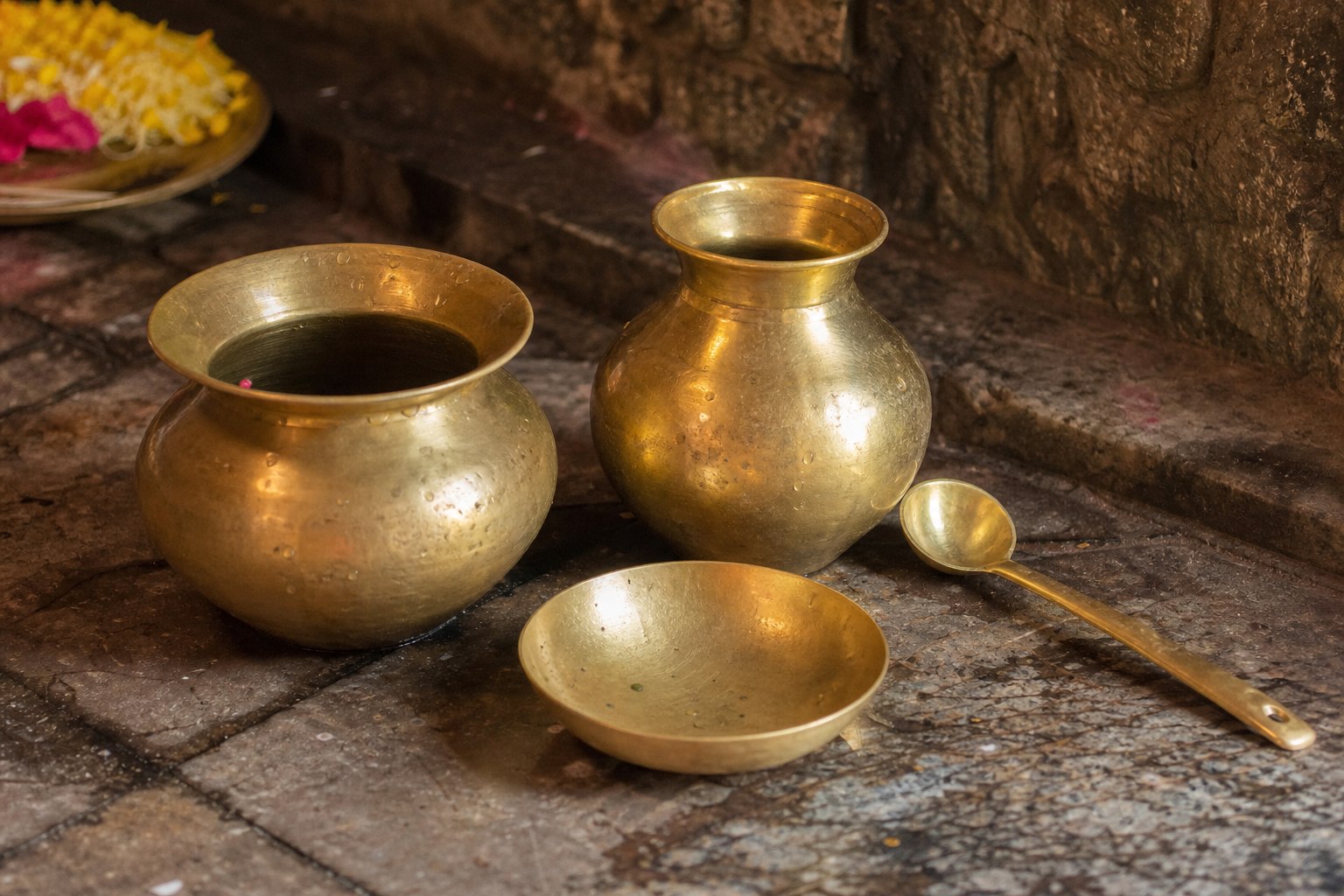
Yes, you can perform Shani puja at home, and for most devotees a home puja done with sincerity is enough. All you truly need is a diya lit with mustard or til (sesame) oil, a few black sesame seeds and a little water for a simple abhishek, a picture or small murti of Shani Dev, and a Saturday morning when you can sit quietly for ten minutes. No priest, no marble hall and no fluent Sanskrit are required to worship Shani Dev sincerely at home.
The real question people are actually asking is narrower than "can I." It is "am I missing something that only a trained pandit can supply." The honest answer is one specific thing: the formal sankalp, the Sanskrit declaration that states your name and gotra aloud before the main prayer begins. That single detail is why some families who worship at home every week still book a priest-led puja once a year, not because their own prayer was invalid, but because that one part is hard to get right alone.
What a Simple, Sincere Home Shani Puja Actually Looks Like
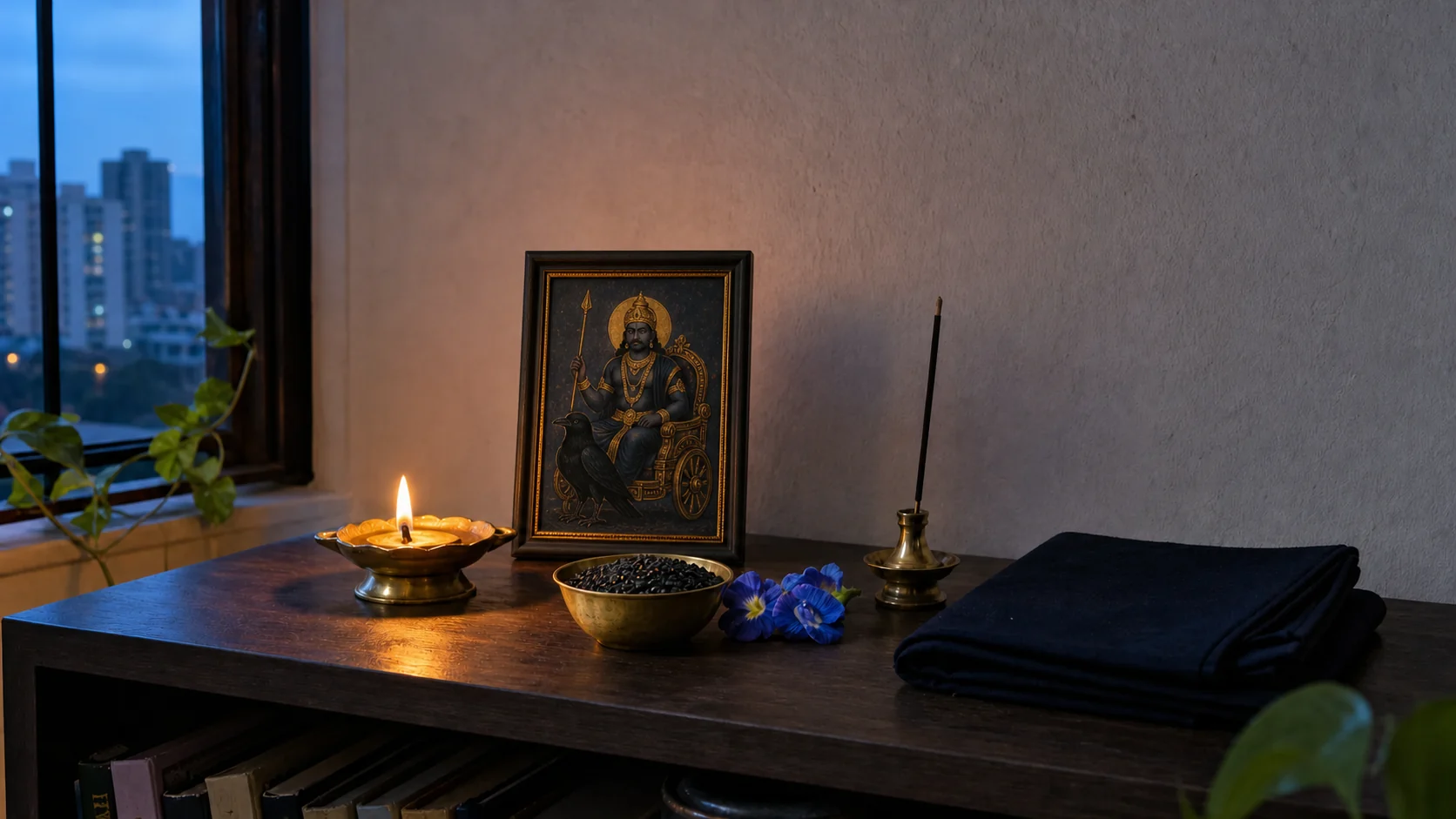
A home Shani puja on a Saturday follows four steps in order: bathing and dressing simply, lighting a mustard or sesame oil lamp before an image of Shani Dev, offering black sesame and water while chanting quietly, and sitting for a few minutes before you go on with your day.
Most households that keep this up every week follow roughly the same sequence, and none of it requires training, as step-by-step home guides confirm:
- Wake before sunrise if you can manage it, and bathe. Saturday is Shani's day (Shanivar), and an early start is traditional rather than compulsory.
- Wear something simple, and if you like, a darker colour such as blue or black.
- Clean a small corner of the home and set a picture or small murti of Shani Dev on a plain cloth, facing west if that's practical for your room.
- Light a lamp using mustard oil or til (sesame) oil rather than ghee. This is considered the single most important offering in Shani worship.
- Offer a few black sesame seeds with water. If you keep a small iron object, such as a nail or ring, you can place it near the lamp too.
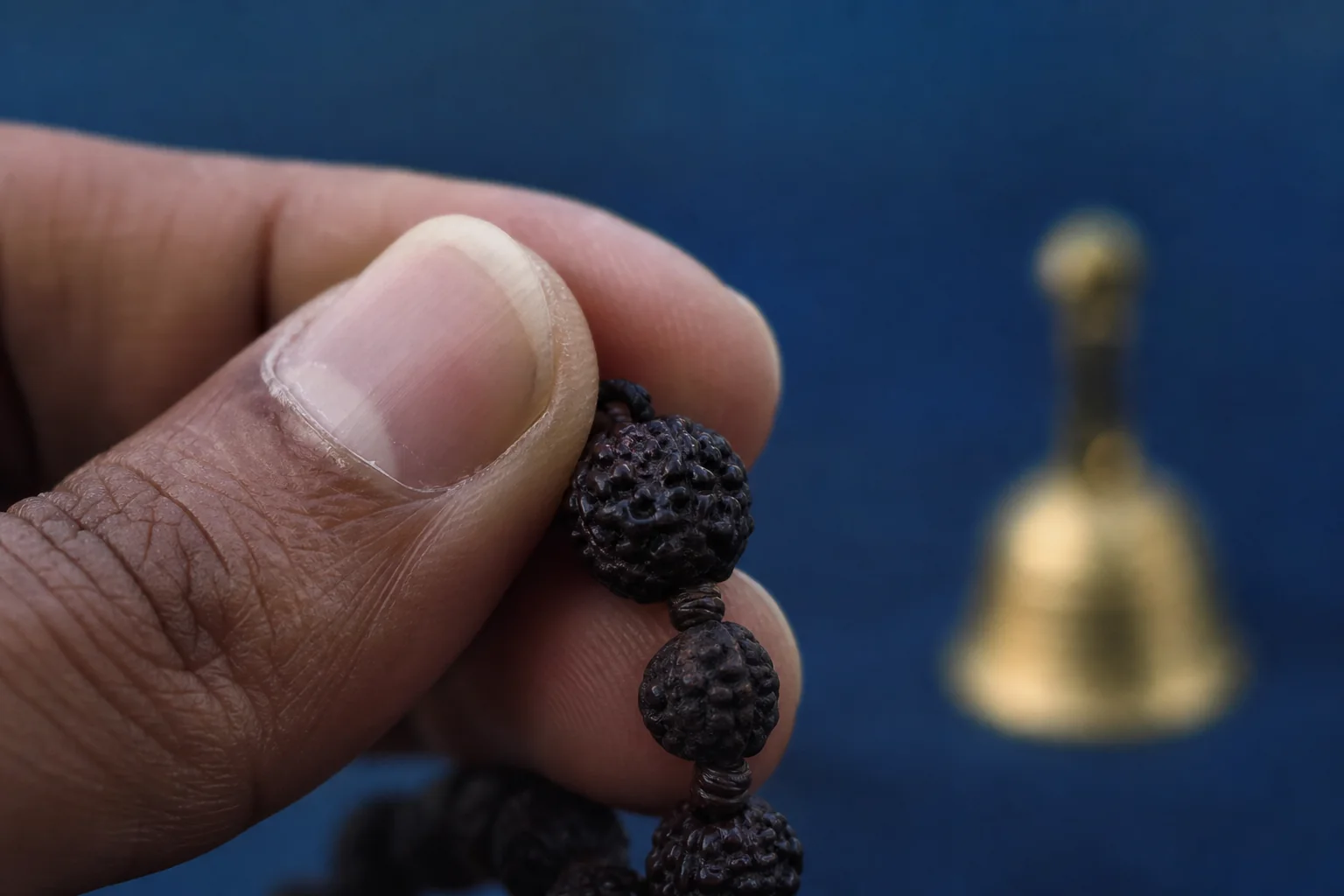
- Chant "Om Sham Shanicharaya Namah" quietly, as many times as feels natural. Many people aim for 108 repetitions on a mala, but there is no set count that makes the prayer valid or invalid.
- Sit in silence for a minute before standing up, then give something away that day: oil, food, or a coin to someone who needs it more than you do.
That is the entire ritual. People who add more to it, elaborate havans, printed yantras, a dozen extra items, are not doing it more correctly. They are doing it differently, and different is fine as long as it doesn't become the actual point of the morning.
What You Genuinely Need, Versus What's Optional
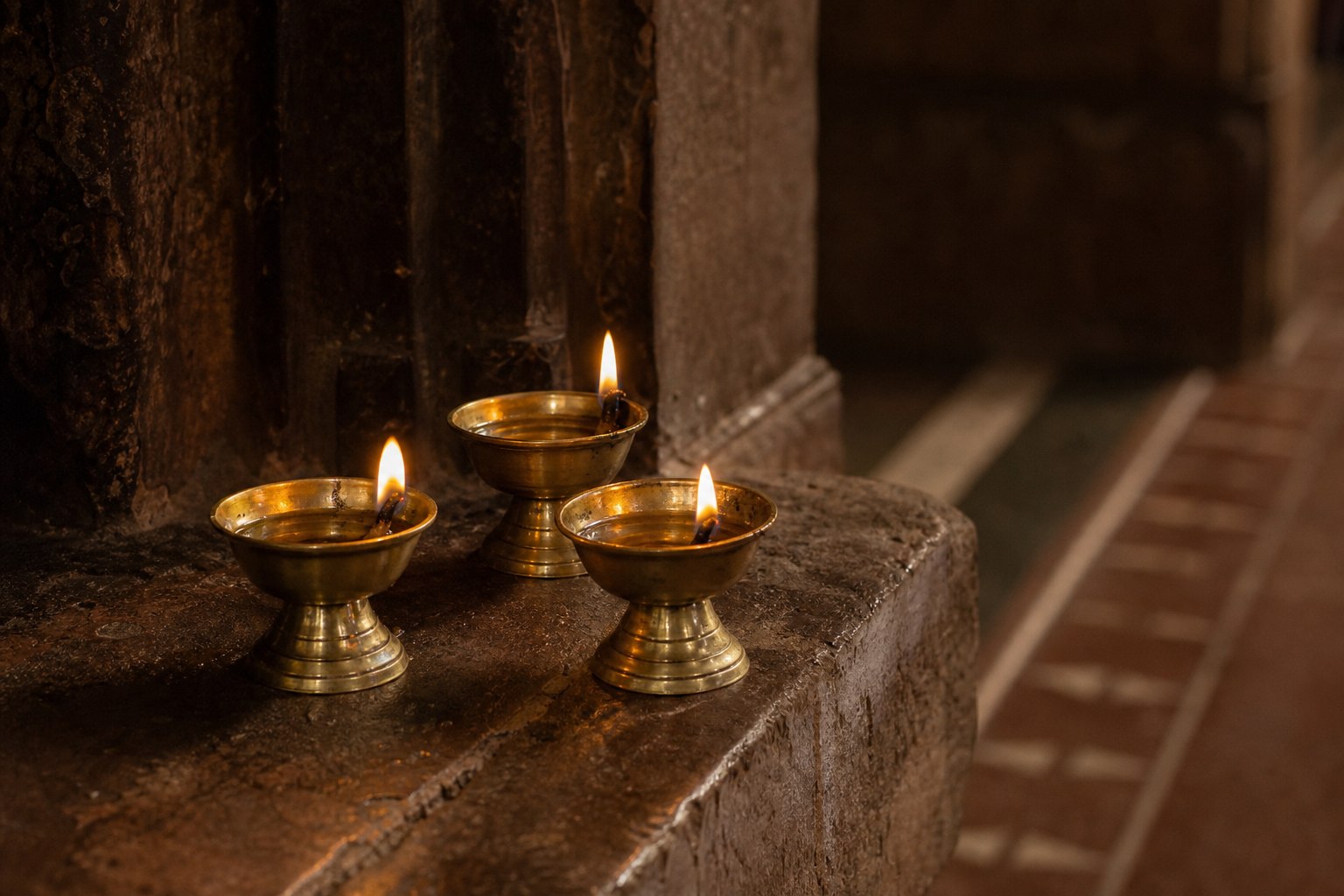
You need exactly four things for a Shani puja at home: an oil lamp, black sesame seeds, water, and an act of giving afterward. Nearly everything else recommended online, iron rings, blue flowers, printed yantras, specific malas, is regional custom or personal preference, not requirement.
| Item | Needed or optional | Why it's used |
|---|---|---|
| Mustard or til oil lamp | Needed | The core offering in Shani worship, oil rather than ghee, tied to Shani's association with iron and discipline |
| Black sesame seeds (til) | Needed | Offered with water as the simplest form of abhishek, also given away afterward |
| Water for abhishek | Needed | Poured over the lamp base or image while chanting |
| An act of charity that day | Needed in spirit | Feeding someone, donating oil or food, treated as inseparable from the prayer itself |
| Small iron object (nail, ring) | Optional | A common regional custom symbolising Shani's rulership over iron, not compulsory |
| Blue or black flowers | Optional | Some households use them, many simply offer whatever flower is on hand |
| Shani idol or picture | Helpful, not mandatory | Facing west with a clear intention is enough if you own no image at all |
| Formal Sanskrit sankalp with gotra | Optional at home | Traditionally done by a trained pandit, most households skip or shorten it |
Tradition describes Shani as dark-complexioned, seated on a buffalo or crow, and understood as the deity who administers the results of one's own actions rather than random misfortune (Wikipedia). Karma, not curse. That framing is worth remembering before you buy anything beyond what's in the table above. If you want the complete traditional samagri list with quantities laid out item by item, we've written that up separately in our Shani puja samagri guide.
Saturdays, Fasting and Getting the Timing Right
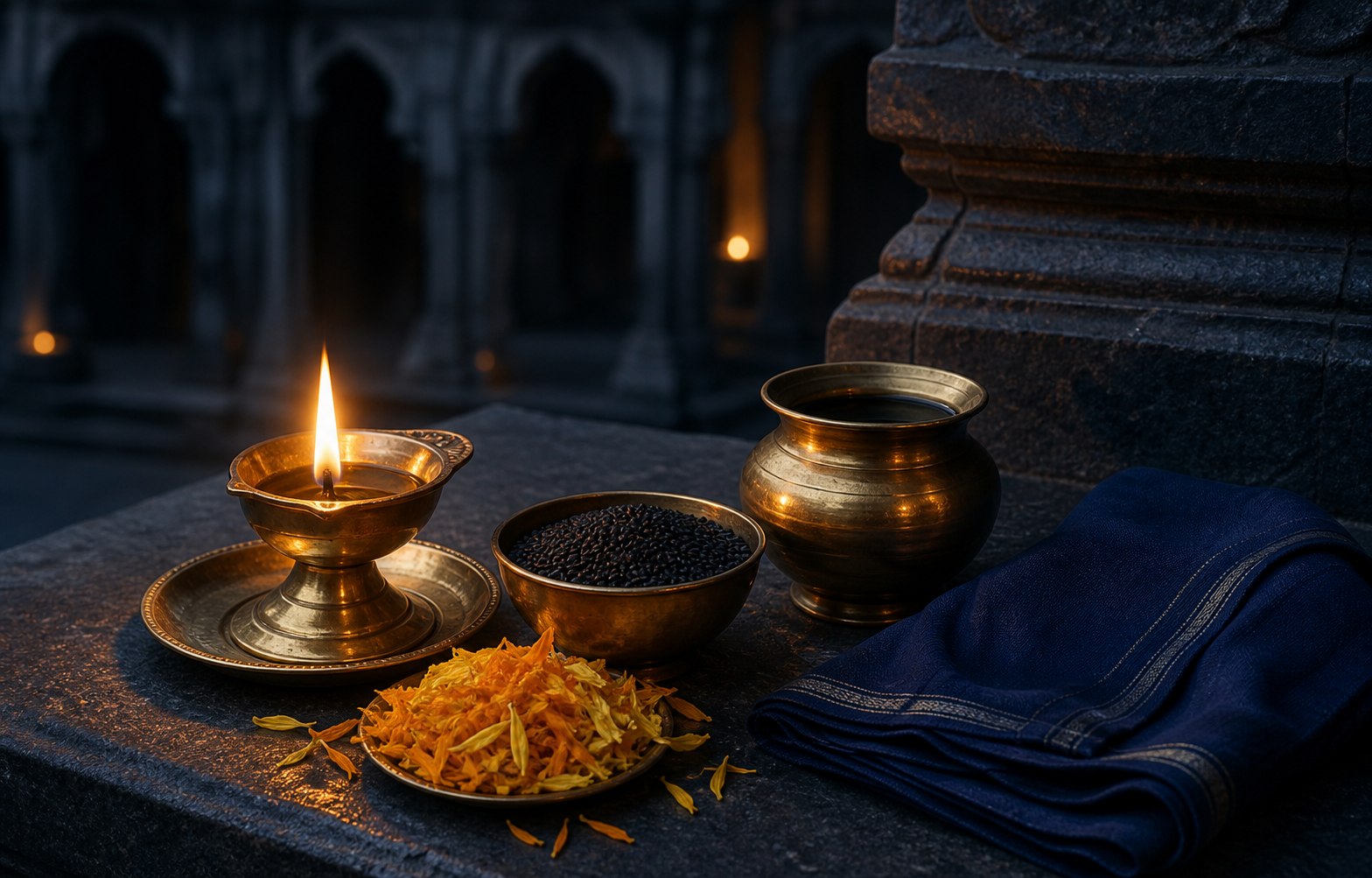
Saturday (Shanivar) is the day associated with Shani, and early morning or dusk are the traditionally preferred times, but missing sunrise does not undo a puja performed sincerely in the evening after work.
Fasting from sunrise to sunset is something many devotees add on Saturdays, but it sits outside the puja itself rather than as a condition for it. If you have a health condition, are pregnant, or simply cannot manage a full-day fast, the lamp, the offering and the mantra still stand on their own.
Two occasions call for a slightly more deliberate version of the same ritual rather than a different one. Shani Jayanti, the day marking Shani's appearance, is treated as an especially significant date for this exact home puja, done with a little more attention than usual. The years when Shani is transiting a sign relevant to your own chart are another such moment, when people who otherwise pray occasionally choose to do it every single Saturday for a stretch. Neither occasion changes what you do, only how consistently you do it.
Mantras, Sankalp and Why the Words Actually Matter
The mantra almost every household uses is short: "Om Sham Shanicharaya Namah," and reciting it with attention matters more than reciting it in a particular order or a particular count.
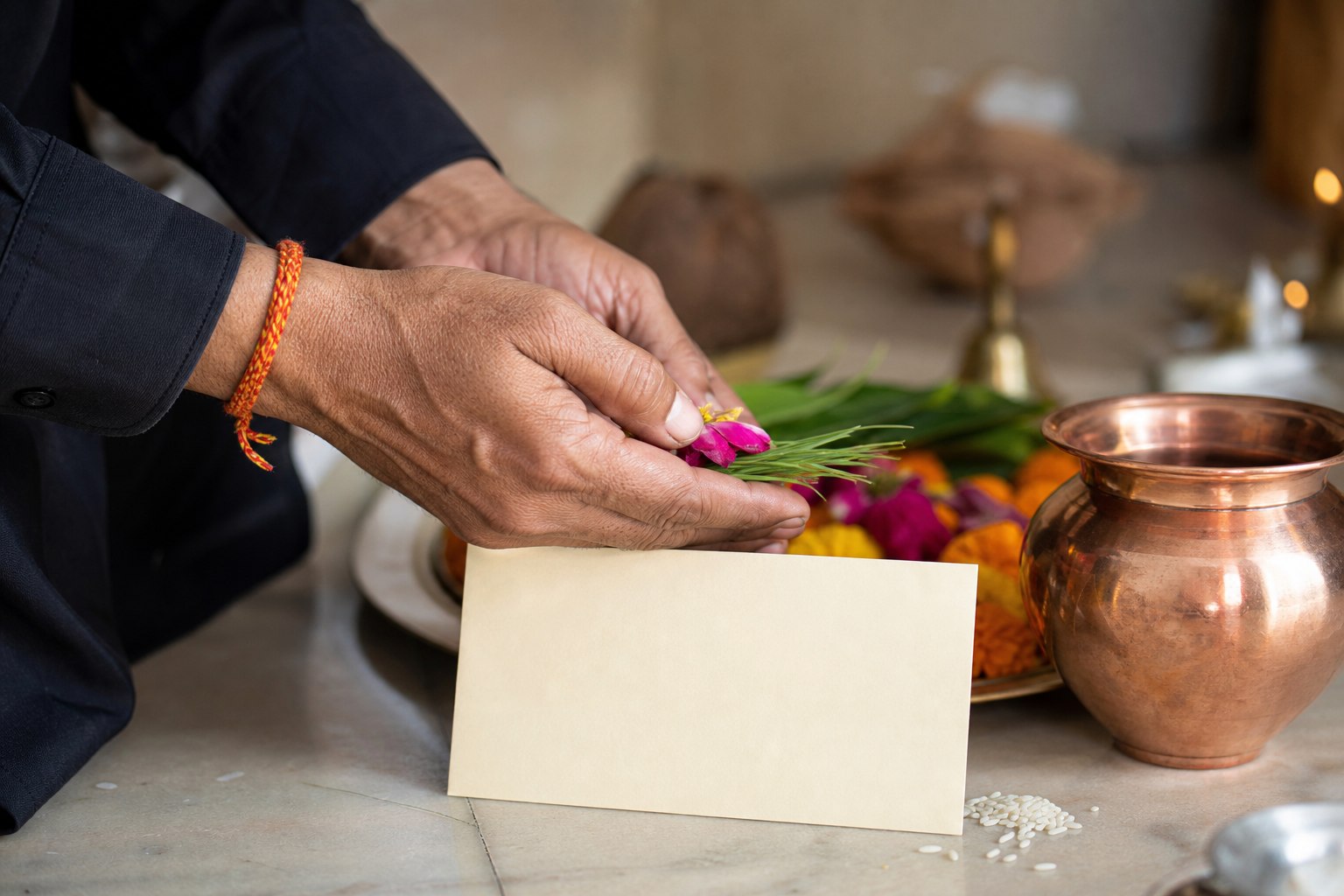
The part that genuinely trips people up is the sankalp, the opening declaration where a devotee's name and gotra (paternal lineage) are stated in Sanskrit before the main prayer. Most urban families no longer know their gotra with confidence, or the correct phrasing to use, and that is not a small gap for people who take the wording seriously. Skipping the formal sankalp at home is common and does not make the prayer meaningless. For those who want the fuller version, with the mantras explained in order and the traditional step sequence written out, we cover that separately in our guide to the Shani puja mantra and in the full Shani puja vidhi.
When a Priest-Led or Remote Seva Might Still Be Worth Choosing
A priest-led puja is worth choosing over a home one when you want the Sanskrit sankalp spoken correctly with your name and gotra, when your Saturdays are too unpredictable to guarantee a consistent home practice, or when you want a specific, dated record that the ritual actually happened.
Some devotees would rather travel to a physical Shani temple than book a remote one, and that instinct deserves respect too. At Shani Shingnapur, for instance, the murti sits in the open under the sky and devotees perform oil abhishek directly, a practice the temple's own procedure describes in detail (Shri Shaneshwar Devta Mandir). But a temple visit is not the only valid path to Shani Dev, and we've written elsewhere about why you do not need to visit a Shani temple to worship him sincerely.
Keeping a Home Puja Respectful, Without Turning It Into a Shopping List
A home Shani puja stays respectful, not a shopping list, when the ritual stays simple and honesty does the work, not the price of what's on the tray.
Shani worship attracts more fear-based selling than most Hindu rituals, largely because Shani himself is popularly (and unfairly) associated with hardship. Gemstones such as blue sapphire are marketed heavily around this fear, and while the stone does carry real traditional significance, it also carries real financial and physical risk if worn on a mismatched chart, which is worth reading about properly before buying rather than after a frightening prediction (see our honest look at blue sapphire). The same caution applies to Shani rings sold as guaranteed fixes. Be wary of anyone who pairs a frightening prediction with a single expensive solution. Fear plus one costly cure is a sales pattern to notice, not a sign of spiritual seriousness. A modest lamp lit with real attention outweighs a stone bought out of anxiety, every time.
If You're Doing This Because of Sade Sati or a Shani Dosha
If your actual reason for starting a home Shani puja is a belief that you're currently in Sade Sati or carrying a Shani dosha in your birth chart, the ritual itself does not change. Only how often you return to it might.
Sade Sati is a seven-and-a-half-year period built around Saturn's transit relative to your moon sign, and it's worth checking whether you're genuinely in it before assuming you are (our guide to what Sade Sati actually means and a Sade Sati calculator can settle that in a minute). A Shani dosha in the chart is a related but separate reading, and we've explained what it means and how it's understood to show up in daily life. In every case, treat this as belief and tradition rather than a fixed sentence. The puja is not a switch that reverses a difficult period on contact. It is a discipline, practiced with humility, that many people find steadies them through one.
Conclusion
A Shani puja at home comes down to very little: an oil lamp, a few black sesame seeds, water, a short mantra, and something given away afterward. That is enough for a devotee sitting in a rented flat with no idol, no priest and no Sanskrit training. What a home puja doesn't easily replicate is the formal sankalp, your name and gotra spoken aloud by someone trained to say it correctly, which is why some households keep their weekly home practice and still book a priest-led or remote puja for Shani Jayanti or a difficult transit year. Neither approach is more devoted than the other. Choose the version you'll actually keep doing, and let honesty rather than expense be the measure of how seriously you take it.